

🕓 Schedules
Goal
What is a Goal?
A goal is the big-picture outcome you are working toward for your child and your family. Everything on this page is designed to help you reach that destination, one step at a time.
Objective
What is an Objective?
An objective is a specific step toward achieving your goal. This page offers six objectives to complete at your own pace, with each building on the previous one. Take your time, and celebrate each step forward.

The Goal for Schedules:
⦿ Have a schedule for sleeping and eating.
⦿ Have a schedule for privileges, like fun activities or treats.
⦿ Have a schedule for routines: self-care, chores, and homework.

OBJECTIVE #1
Schedule Sleeping & Eating
The schedule for sleeping and eating is
the most important aspect of the schedule.
Set up predictable times for sleeping and eating. If you do this, your child can experience wellness.
-
⦿ Plan consistent times for your child’s meals and sleep. These are the most important parts of any daily routine.
⦿ Choose a consistent wake-up time and bedtime for school days. Stick to these as closely as possible, even on weekends.
⦿ Set regular times for breakfast, lunch, and dinner. Try to keep these within 30 minutes of the same time each day.
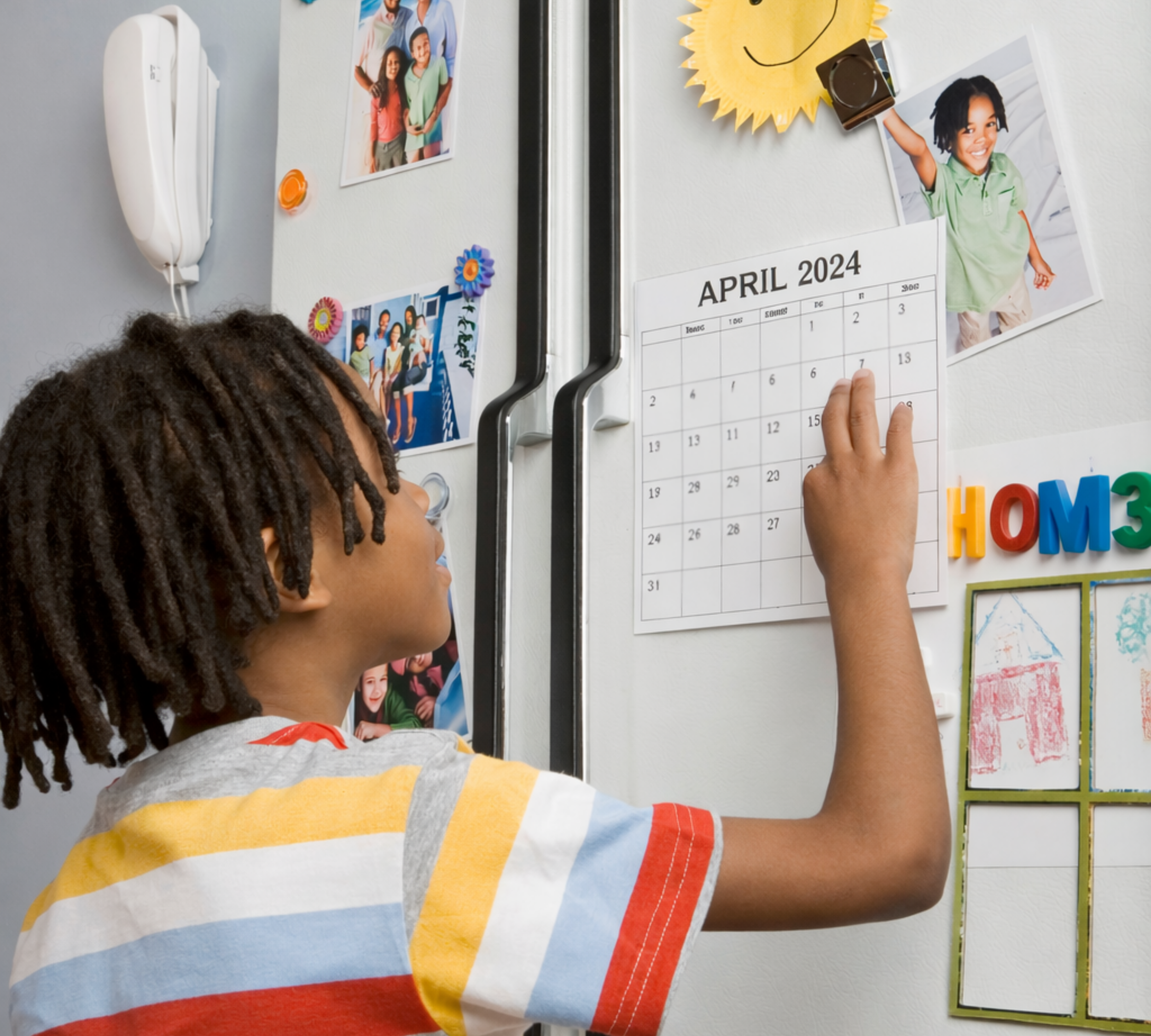
⦿ Post the sleep and meal schedule somewhere visible, such as on the fridge, on your child’s bedroom door, or both.
⦿ If you have not yet set up times for sleeping and eating, check the Sleeping and Eating chapters. It will be easier to set up the schedule of privileges and routines if you set up the schedule for sleeping and eating first.
What Next Steps Are You Going to Take?
⦿ I will set a consistent bedtime of ___________ for school nights, starting this week.
⦿ I will set regular meal times: Breakfast ___________, Lunch___________, Dinner ___________.
⦿ I will post the sleep and meal schedule somewhere visible in our home.
⦿ I will visit the Sleeping page and/or the Eating page before continuing.


OBJECTIVE #2
-
Privileges are the treats and fun activities your child loves and looks forward to. Scheduling them is the best place to start because children are immediately motivated by them.
A. Decide which privileges your child will have.
Common privileges include: solo play time, play time with family or friends, screen time, sugary snacks, a new toy, or special outings like pizza and movie night.
B. Decide when and for how long each privilege will occur.
⦿ Use a clock to show your child when a privilege starts and when it ends.
⦿ For privileges that don’t happen every day (like a special outing), use a calendar to show when they will occur.
⦿ Screen time is the most important privilege to schedule carefully. Aim for less than two hours of recreational screen time per day.
C. Make sure fun time follows routines and tasks.
As a general rule, privileges happen after routines or tasks are completed — for example, playtime after homework. That said, children do get some free play time regardless, because play is important for development.
What Next Steps Are You Going to Take?
⦿ I will list my child’s three favorite privileges and add them to our schedule.
⦿ I will set set a daily screen time limit of ___________ minutes/hours.
⦿ I will create one screen-free time during the day (e.g., at meals).
⦿ I will choose one special weekly privilege to add to our family calendar.
Schedule Fun Time
When you start using a schedule, begin by planning the fun stuff, or privileges. These are treats and fun activities that your child loves, giving them something to look forward to.
Erik’s Choice ★
Tackle Screen Time First

Out of all the privileges to schedule, screen time is the one that makes the biggest difference and the one most families struggle with. Many parents notice significant improvements in their child’s behavior, focus, and flexibility when screen time is limited to under 2 hours per day. This does not apply to screens used for homework or video calls with family.
A practical way to start: schedule one screen-free hour per day; mealtime is a natural choice. Once that feels normal, gradually extend it.


OBJECTIVE #3
Schedule Your Child’s Routines
Routines are the second essential part of the schedule, and they work hand-in-hand with privileges. They are the tasks, chores, or activities your child needs to complete.
-
Routines include personal care tasks (washing, dressing, toileting), household chores (tidying up, helping with meals), and schoolwork (homework, studying). Assign each routine to a time of day — morning or evening — and make sure your child knows which routines happen every day and which happen less often.
⦿ List all of your child’s daily routines. Divide them into morning routines and evening routines.
⦿ List any weekly routines (like cleaning their bedroom or helping with laundry) and add them to a calendar.
⦿ Place routines before privileges whenever possible. This reinforces the ‘first-then’ principle: first the routine, then the fun.
⦿ Use a visual schedule — pictures, photos, or icons alongside words — especially for younger children or those with limited language skills. You will know the visual schedule is working when your child walks over to check it on their own, without being prompted.
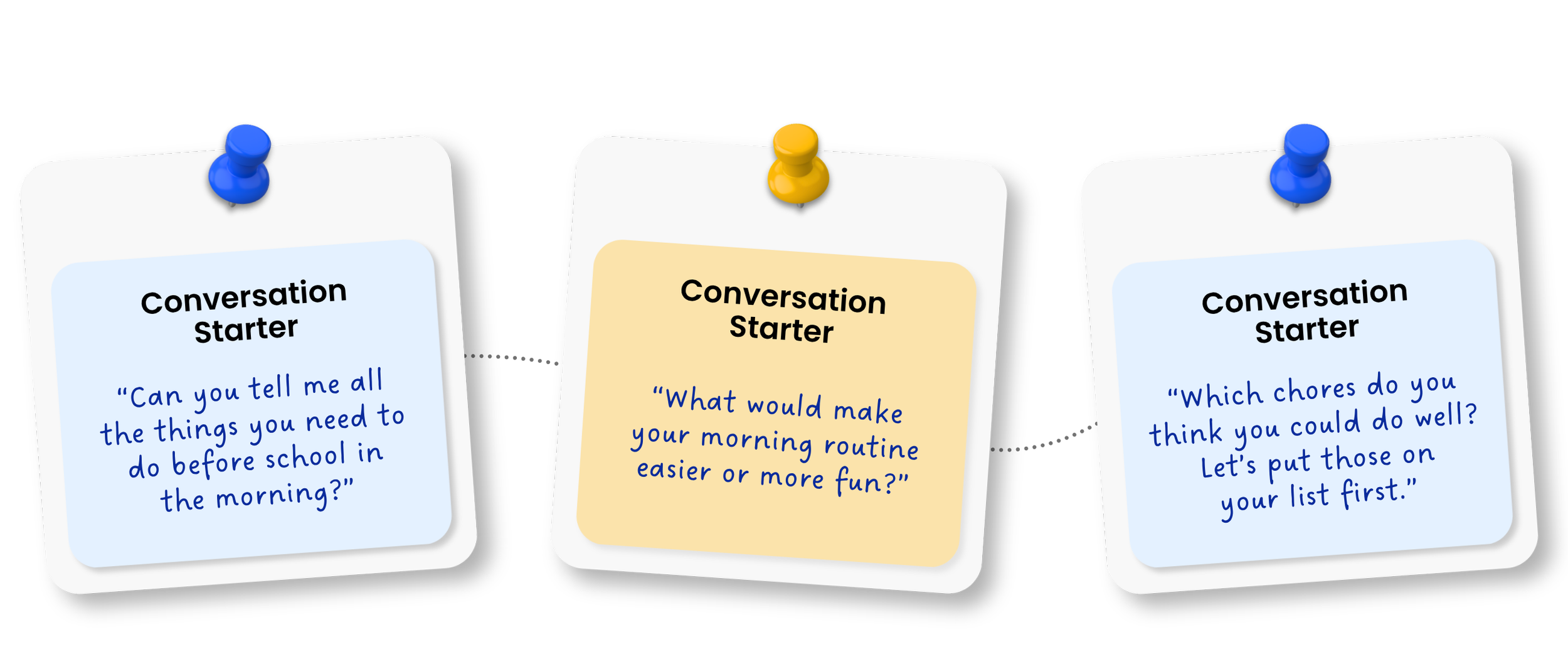
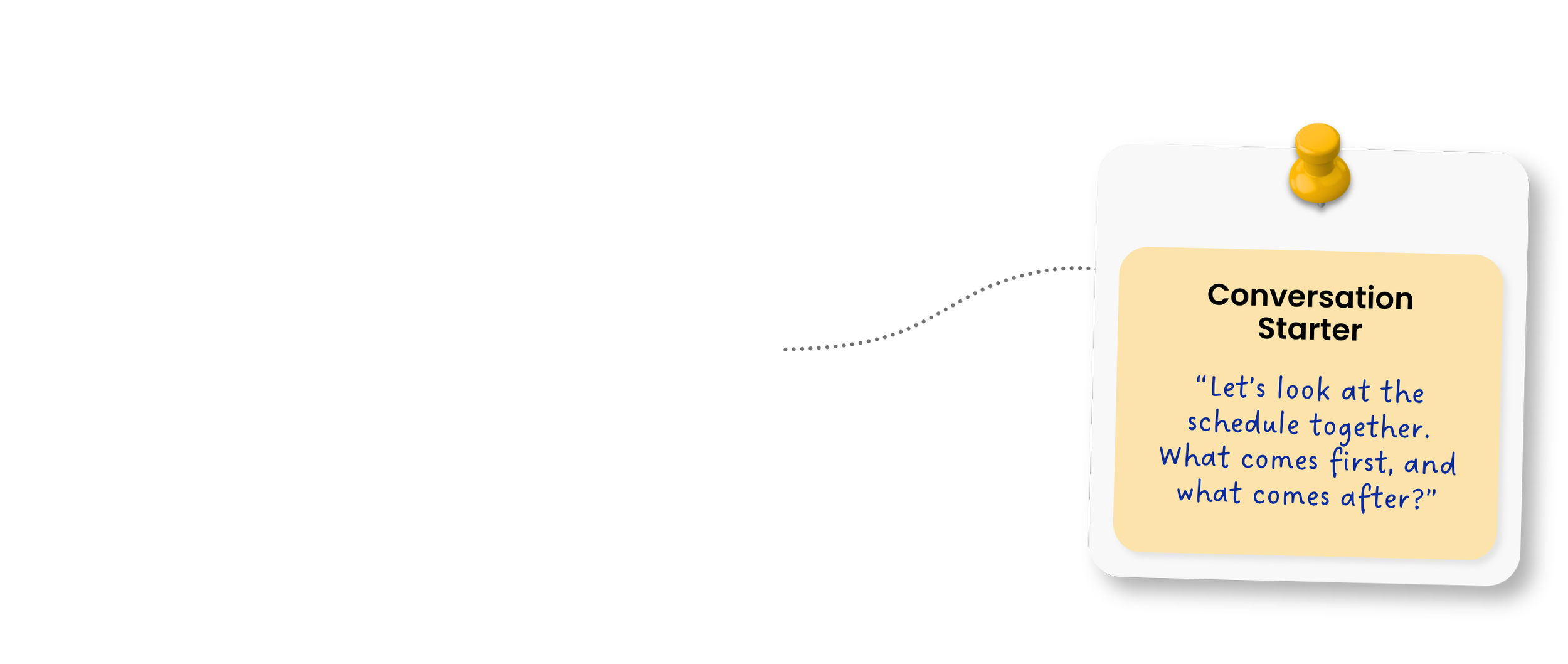
Conversation Starters For You and Your Child:
What Next Steps Are You Going to Take?
⦿ I will write out all of my child’s daily routines and divide them into morning and evening.
⦿ I will create a visual schedule to post in our home.
⦿ I will practice giving my child a 5-minute warning before transitioning to a routine.
⦿ I will identify one routine that always causes conflict and focus on that one first.
Erik’s Choice ★
Give Advance Notice
Before you ask your child to stop what they are doing and start a routine, give them a warning. Say: “In five minutes, it will be time to put the toys away and start your homework.” This simple step reduces resistance significantly, not because children suddenly love routines, but because they no longer feel ambushed by them. The schedule makes advance notice natural and consistent.
Talk to an Expert
Talk to professionals to gain new ideas, learn from other parents, share your success stories, and receive trusted advice and support when things feel tough or stop working.

Want the Deep Dive?
Download the full 20 page E-Book for more in-depth information.
⦿ Erik’s Clinical Tips ✓
⦿ Conversation Starters ✓
⦿ Readiness Checklists ✓


Schedule your Child’s Fun Time
When you start using a schedule, begin by planning the fun stuff, or privileges.
These are treats and fun activities that your child loves and needs to know are coming, giving them something positive to look forward to.
A. What Are Some Privileges?
Privileges may include playing with friends or toys, watching a TV show or movie, playing board or computer games, enjoying special treats like dessert, or going on fun outings.
B. Why Schedule Fun Time?
Scheduling fun time does more than add enjoyment to the day. It supports your child’s overall development and helps strengthen positive daily habits.
-
⦿ Play supports brain development.
⦿ Helps build social & learning skills.
⦿ Boosts creativity & imagination.
-
⦿ Makes tasks easier to complete.
⦿ Helps children wait more patiently.
⦿ Helps reduce feelings of frustration.

Types
of play




C. How Should Privileges Be Scheduled?
You should decide when and how long fun time happens each day by choosing the types of privileges to include:
⦿ Step 2: Once that works, try turning off all screens for one hour each day (meal times are a great choice).
⦿ Step 3: Turn the TV & other screens off for a little more time each day.
Does Knowing the Schedule Help?


⦿ Step 1: Begin by scheduling a time when all screens are off (maybe only at night to begin with).





D. Why Does Screen Time Need Clear Limits?
It's important to schedule screen time carefully, as spending too much time in front of a screen can make children’s behavior more difficult to manage.
-
⦿ Entertainment screen time should be limited to less than two hours per day. Many parents notice improved behavior when screen time is reduced or removed entirely.
-
⦿ The two-hour limit applies only to entertainment. Screen time used for learning or video calls with family and friends does not count.
E. How To Manage Household Screen Time?
Managing screen time works best when changes happen gradually. Start with small, realistic steps and build from there so the whole family can adjust more easily.
How Often to Schedule Big Treats?
Important: Children do get some play ”time free of charge.”
This means they can still play with toys or socialize with friends even if they haven't finished their work yet. This ensures they still have time to play for general development.
G. When and How Long Should Privileges Last?
Your schedule should clearly show when fun starts and ends, and as a helpful tip, use an analog clock to teach your child about timing.
Remember screen time applies to everyone
☺︎
Remember screen time applies to everyone ☺︎
Lead by Example: Reducing screen time can be hard, even for adults. Practice this skill yourself!
Reduce for All: Cut back on screen time for everyone in the house, not just the child.
F. Do Privileges Follow Work?
Yes! Fun time should usually happen after routines or tasks are finished—for example, playtime after homework or special time with parents once responsibilities are complete.
Big events, like family pizza or movie night, going to the cinema, or buying a new toy, should not happen every day and are best scheduled weekly, monthly, or even less often.
-
⦿ Choose a clock where the big and small hands look very different, using bold contrasting colors or placing a noticeable sticker on one hand for easy understanding.
-
⦿ Show start and stop times by using the analog clock to indicate when activities like sleeping, eating, and fun times (privileges) will begin and end.
Knowing the schedule builds two important skills:
-
⦿ When your child knows exactly when fun starts, they have something to look forward to. This teaches them to wait patiently for a reward.
-
⦿ When your child knows exactly when fun stops, they are less upset when it ends. This helps them manage frustration.
Hard time Handling Flexible Schedules?
Check-in Daily: It can be hard to keep the exact same schedule every day, so if it changes, review it that morning or afternoon.
-
⦿ For children who don't have strong language skills yet, use pictures to show the schedule.
-
⦿ For most children, a mix of pictures, photos, and words works best for understanding the schedule.
OBJECTIVE #3
Start Scheduling
Your Child’s Routines
Routines are the second essential part of the schedule, and they work hand-in-hand with privileges. Routines are the tasks, activities, or chores your son or daughter needs to complete.
Types of Routines to Schedule
⦿ Personal Care Routines: These usually happen every morning and evening and include toileting, washing, dressing, and keeping personal belongings tidy.
⦿ Daily & Weekly Routines: These may include doing homework, cleaning up after meals, and helping prepare food or assist around the house.
Setting the Routine Frequency
A good routine doesn't mean everything has to happen every single day; the timing depends on the task. Some routines, like homework, need to happen daily. Other tasks, such as cleaning the bedroom or helping with a big chore, need to happen less often (maybe just once a week). To make sure everyone knows when to do each routine, use a calendar or weekly schedule to clearly show the plan.
Why is Scheduling so Important?
Scheduling routines brings seven important benefits for both you and your child:
-
⦿ If a task is always done at the same time, children aren't surprised and find it easier to complete boring tasks.
-
⦿ Schedules help kids learn a key life skill: how to be on time. This is especially important for getting to places like school.
-
⦿ It's easier for children to handle tough tasks when they know when the task will be over. This helps them focus on finishing before they can get a break or a treat.
-
⦿ The "First-Then" idea is a strong way to get kids moving. It means: "First, do the routine; then, you get the fun thing (privilege)."
-
⦿ Following a routine establishes the concept of order ("1, 2, 3, done"). This ability to sequence things is essential for school and life.
-
⦿ Announcing the routine in advance means the child is prepared. This makes them less upset when fun ends and helps them start the required task more quickly.
-
⦿ When you create the schedule together, it respects the child's needs. This teaches them to work with the family and helps them become more independent.


OBJECTIVE #4
Teach your Child to Follow the Schedule Independently
Routines are the second essential part of the schedule, and they work hand-in-hand with privileges. Routines are the tasks, activities, or chores your son or daughter needs to complete.
Be Present (Physical Support): Stay close while your child does the routine. Start by helping them physically (like dressing) and then gradually do less.
⦿ Always tell them what they did right before pointing out mistakes.
⦿ Move from doing the task for them into providing support until they master the skill.
Stay Present (Verbal Support): Stay close but do not physically help. Only use words
⦿ Start by complimenting their successful actions (e.g., "Good job brushing your front teeth!").
⦿ Give clear reminders ("Now, brush the back ones"). Then, pull back your help bit by bit until you just ask gentle guiding questions ("I wonder if your teeth are all clean?").
⦿ Provide Feedback (Error Detection): Once they can complete the task alone, step out of the room. Give verbal feedback less often (intermittently).
⦿ Offer corrective feedback only once or twice per morning or evening. This reduces frustration and builds independence.
Ask, Don't Tell: Stop telling your child what to do. Ask them to tell you what's next on the schedule.
⦿ If they "forget," go look at the schedule together instead of giving them the answer.
Strategies to Build Schedule Independence:
1
2
3

OBJECTIVE #5
Teach your Child to be Flexible
What Should Be Fixed vs. Flexible:
-
⦿ Sleeping and eating times should be mostly fixed, especially on school/work days.These routines are vital for wellness and help your child get through the day so time them strictly by the clock.
-
⦿ You can mix up privileges and some routines. For example you can surprise them sometimes by saying, "I'll clean your room for you today!" or "We're going out for ice cream!" Spontaneous fun is important.
Handling Changes and Spontaneity:
The schedules create predictability, but life often gets in the way. Use these moments to teach flexibility.
⦿ Tell your child why you can't follow the plan.
⦿ Create a "mini-schedule" so they know what to expect for the rest of the time, or show them on the clock when the original schedule will restart.
When Schedules Get Boring:
If the schedule is always the same, it can get boring for everyone. Go slowly when making changes, as most children prefer consistency.
Scheduling 'Un-Scheduled' Time:
If your child is too rigid about the schedule, introduce changes occasionally to teach flexibility.
⦿ You literally schedule a time for no schedule and ask, "What do you want to do until bedtime?"
⦿ You can also try a spontaneous change without warning to help them tolerate surprise adjustments.
Knowing When Your Child is Ready for Changes:
Your child may be ready for flexibility if they show these skills:
⦿ They can recite the schedule back to you.
⦿ They consistently complete routines without much supervision.
⦿ They are able to follow rules inside and outside the house.
⦿ They can manage anxiety and frustration without much help from an adult.
Handling Two Homes ( when parents are separated/divorced):
⦿ It's easiest if both parents try to keep the schedules similar in both homes.
⦿ Children can learn two different schedules, but it may take more time.
⦿ Be sure to use a visual schedule in both homes, especially if the schedules are different.

OBJECTIVE #6
Building New Skills
Use the schedule to build new skills by planning extra-curricular activities such as learning a musical instrument, taking a drawing class, or joining a sports team.
Only begin scheduling extra-curricular activities after your child has successfully learned to follow their daily routine schedule.