Sleeping
Good sleep is one of the most important things you can do for your child's health, mood, and learning.

Every guide in The IEP for Home library has the same simple structure: one big goal, & a handful of small objectives. Stack the objectives, you reach the goal. Stack the goals, you raise a thriving child.
T H E S T R U C T U R EGOAL VS OBJECTIVE
What is a goal?
A goal is the big picture you are working toward. For this guide, the goal is to help your child sleep well every night—falling asleep easily, staying asleep, and waking up rested.
What is an objective?
Objectives are the smaller steps that get you to that goal. Each one covers a part of building healthy sleep habits: tracking sleep, sleep helpers, setting a schedule, and teaching independent sleep.

-
Choose one of the three methods below to find out how many hours your child sleeps in a 24-hour period.
Method 1 — Counting Method (most accurate):
⦿ For seven days, note your child's wake-up time each morning.
⦿ Record the exact time your child falls asleep each evening.
⦿ Note how long they nap during the day, if at all.
⦿ Add up all hours of sleep for each day, then calculate the average.
Method 2 — Estimation Method (quick review):
⦿ Think back over the past three nights or the past week.
⦿ Come up with the average number of sleep hours your child gets per day.
Method 3 — General Guide (rough estimate):
Typical Sleep Needs by Age
Infants: 14–16 hours per day
Toddlers: 12–14 hours per day
Preschool-aged children: 11–13 hours per day
School-aged children: 10–11 hours per day
Older school-aged children: 9–10 hours per day
Important: If you're unsure how to track your child's sleep or whether they're getting enough rest, speak with your child's doctor for guidance.
Conversation Starters For You and Your Child

OBJECTIVE #1
Gather Information About Your Child's Sleep
Before you can improve your child's sleep, you need to know exactly how much sleep they are currently getting. This is your starting point.
Erik’s Choice ★
For objective #1

"If you teach your child good sleeping habits, you will feel more confident as their best teacher — and your child will feel more confident as a successful learner." — Erik
-
⦿ Pay attention to how you feel when you wake up each morning.
⦿ Tell a parent if you feel tired during the day or have trouble sleeping at night.
⦿ Try going to bed at the same time tonight as you did last night.
-
⦿ Pick one method above and track your child's sleep for the next seven days.
⦿ Write the results down so you have a clear starting point.
⦿ If you are worried about the numbers, call your child's doctor before moving on.

-
Step 1 — Choose a comfort object:
⦿ Let your child pick one item to keep with them at bedtime — a favourite toy, blanket, or pillow.
⦿ This object becomes a steady signal that sleep time is coming.
Step 2 — Choose a bedtime ritual (about 10 minutes total):
⦿ Have a short talk about the day.
⦿ Say a prayer together.
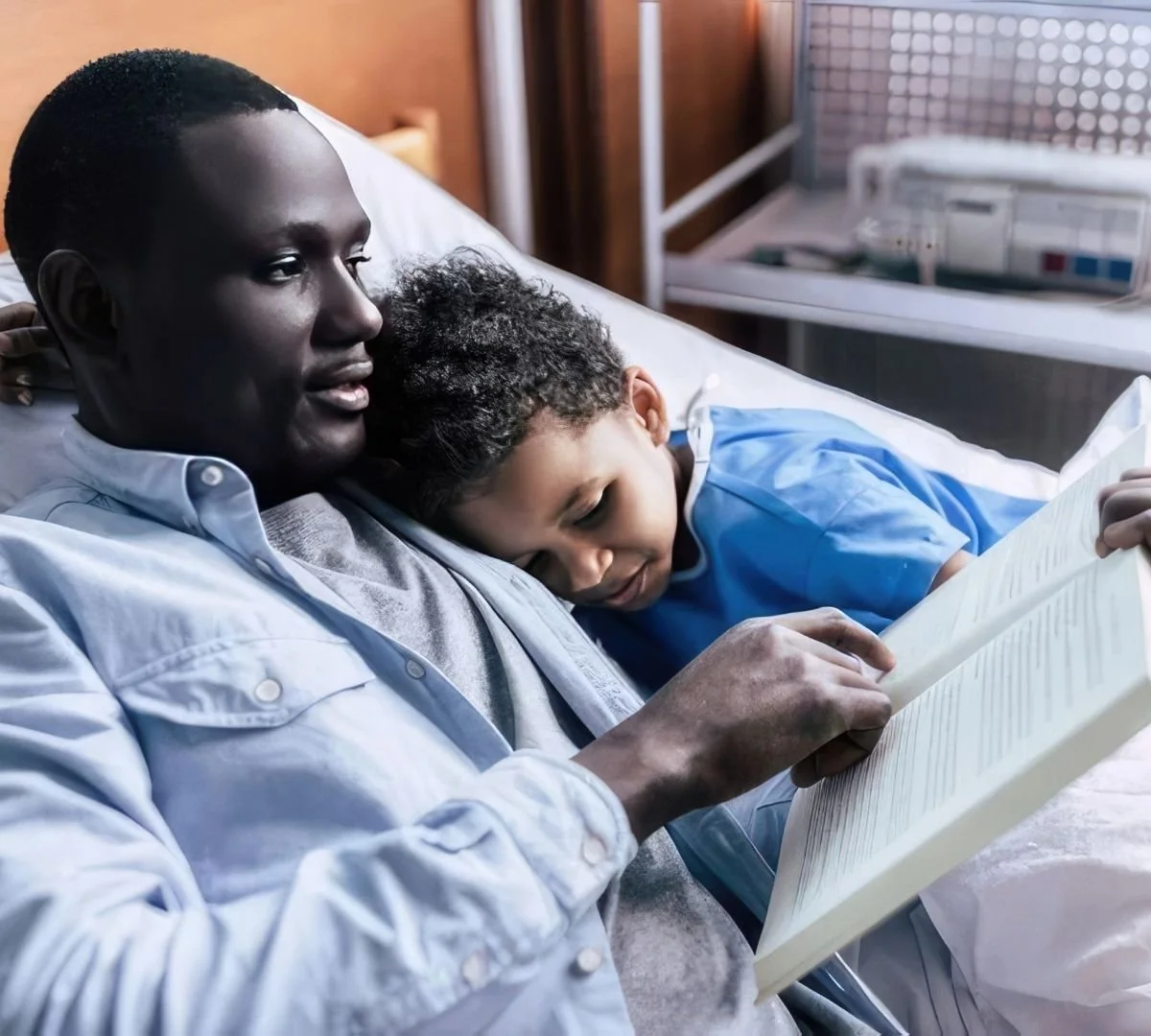
⦿ Read a short story together.
Note: These steps work well for young children and older children with developmental delays.
What NOT to use as sleep helpers:
⦿ Food or drinks — stop these at least one hour before the bedtime routine.
⦿ Screens (phones, tablets, TV) — these stimulate the brain and make it harder to fall asleep.
Set up a sleep-friendly room:
⦿ Keep the room dim or dark.
⦿ Keep the temperature cool.
⦿ Make sure the room is quiet.
Conversation Starters For You and Your Child
OBJECTIVE #2
Choose Sleep Helpers (Sleep-Onset Associations)
Sleep helpers are special objects and short routines that signal to your child's brain that it is time to relax and fall asleep. Choosing the right ones makes bedtime much easier.
-
⦿ Pick your special sleep helper — a toy, blanket, or pillow — and keep it just for bedtime.
⦿ Choose one bedtime ritual you enjoy and do it every night.
⦿ Turn off all screens at least one hour before bed.
-
⦿ Help your child choose one comfort object and one bedtime ritual this week.
⦿ Remove all screens from the bedroom at least one hour before bed.
⦿ Set up the room to be dark, cool, and quiet every night.
Erik’s Choice ★
For objective #2
"The right sleep helper is the one your child chooses. Give them ownership of that choice — they will hold onto it every night." — Erik

-
Step 1 — Fix the wake-up time first:
⦿ The wake-up time is more important than the bedtime because it sets the whole sleep cycle.
⦿ Choose a wake-up time that works for your family — this is your decision, not your child's.
⦿ Keep this wake-up time the same every day, including weekends, for the first 2 to 4 weeks of training.
⦿ Do not allow your child to sleep in, even if they had a rough night — it makes training harder.
Step 2 — Handle naps carefully:
⦿ Most children do not need a nap after the age of five.
⦿ If a nap is needed, keep it under 1 to 2 hours and at the same time every day.
⦿ Do not allow extra naps to make up for a bad night — this disrupts the nighttime schedule.
⦿ For school-age children, reduce daytime sleep gradually until it is fully eliminated.
⦿ Let your child's school know that sleeping during the day is not permitted.
Step 3 — Choose the bedtime:
⦿ Once the wake-up time is fixed and naps are reduced, you are ready to set bedtime.
⦿ Bedtime should be 9 to 11 hours before the wake-up time for most children.
Recommended Bedtimes
⦿ Wake up at 6:00 AM → Aim for 10 hours of sleep → Bedtime: 8:00 PM
⦿ Wake up at 7:00 AM → Aim for 9 hours of sleep → Bedtime: 10:00 PM
Optional — Mild sleep deprivation to speed up training:
⦿ If your child takes a long time to fall asleep, try starting bedtime one hour later than usual for the first 5 to 7 days.
⦿ This makes your child more tired and helps them fall asleep faster.
⦿ Keep the wake-up time fixed throughout. After a week, move bedtime back to the ideal time.
Conversation Starters For You and Your Child
OBJECTIVE #3
Set a Consistent Sleep Schedule
A regular sleep schedule helps your child's internal body clock work properly. The most important part is keeping the same wake-up time every single day.
-
⦿ Get up at the same time every morning, even on weekends.
⦿ Avoid napping during the day unless a parent says it is okay.
⦿ Start your bedtime routine at the same time every night.
-
⦿ Decide on a fixed wake-up time tonight and stick to it for at least two weeks.
⦿ Use the table above to calculate the right bedtime based on your child's sleep needs.
⦿ Let your child's school know about the new sleep schedule and ask them not to allow daytime napping.
Erik’s Choice ★
For objective #3
"Fix the wake-up time first — everything else follows. That one decision changes the whole sleep pattern." — Erik

-
Why this matters:
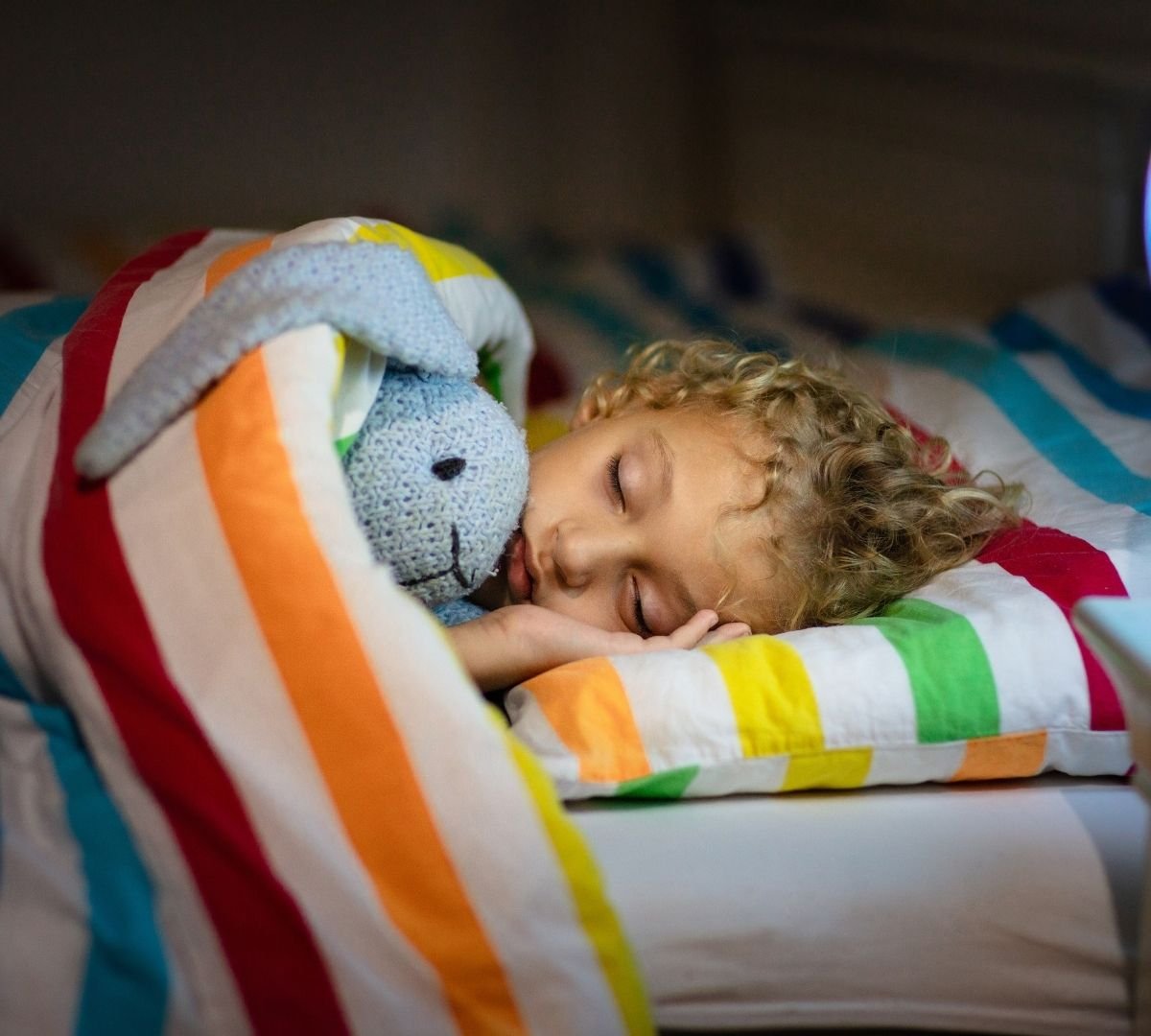
⦿ Children who need a parent to fall asleep are developing a dependency that is hard to break over time.
⦿ Children can learn to sleep independently at any age — ideally before age eight.
⦿ Both you and your child may lose some sleep at the start, but consistency leads to success.
Choose your training method:
Method 1 — Quick Method ("Cold Turkey"):
⦿ Remove all parent support at once.
⦿ The parent no longer joins the child in their bed.
⦿ The child falls asleep completely on their own from the very first night.
Method 2 — Slow Method ("Fading"):
⦿ Night 1: the parent stops lying in bed but sits right next to the child's bed.
⦿ Next nights: the parent moves their seat a little further from the bed each night.
⦿ Then, the parent sits by the bedroom door.
⦿ After that, the parent moves out of sight, keeping some quiet verbal contact.
⦿ Finally: All contact — including talking — stops completely.
Important things to remember:
⦿ Fussing and crying are a normal part of learning — do not panic. The key moment is when your child eventually falls asleep on their own for the first time.
⦿ Do not allow sleeping in or extra naps just because the night was hard — consistency is everything.
⦿ Most families see major improvement within 3 to 5 nights.
⦿ If the process feels too hard, it is okay to pause and try again during a school break or holiday when you have more energy.
⦿ Always let your child's doctor know before starting sleep training.
Conversation Starters For You and Your Child
OBJECTIVE #4
Teach Your Child to Fall Asleep Independently
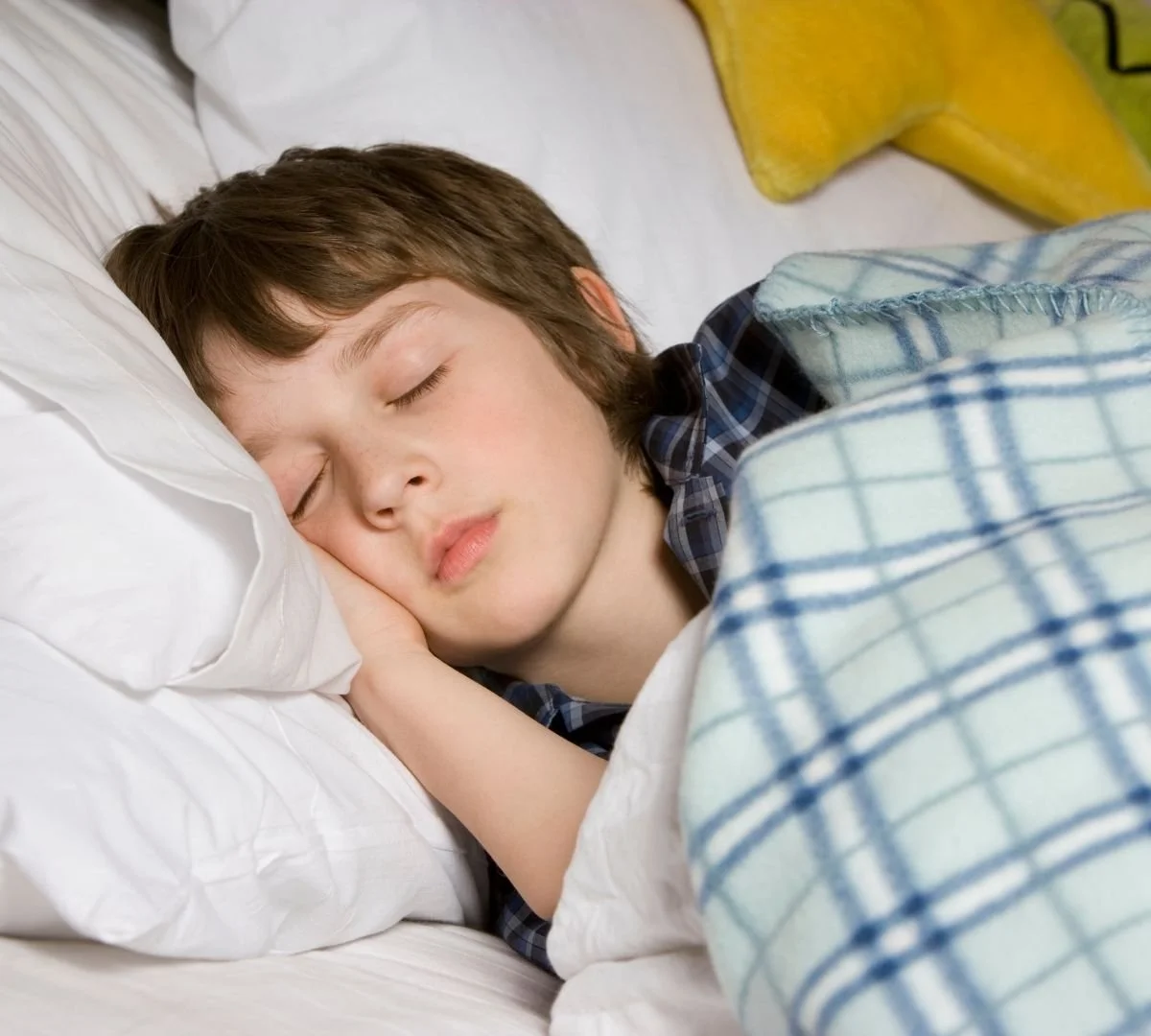
Some children rely on a parent to fall asleep and to stay asleep. This objective helps your child use their comfort object and bedtime ritual — instead of a parent — to fall asleep on their own.
-
⦿ Hold your comfort object and try to close your eyes on your own tonight.
⦿ Remember: feeling a little uncomfortable is part of learning — it will get easier each night.
⦿ In the morning, tell a parent how it went — even if it was hard.
-
⦿ Choose your training method — Quick or Slow — and commit to it fully.
⦿ Keep the wake-up time fixed no matter how the night goes.
⦿ Celebrate with your child every morning — focus on their effort, not just the outcome.
Erik’s Choice ★
For objective #4
"Every child who falls asleep on their own for the first time has achieved something huge. Make sure they know that in the morning." — Erik

-
Before thinking about medication, ask yourself:
⦿ How many hours does my child need versus how many they actually get?
⦿ Where does my child sleep — in their own bed, or with a parent?
⦿ What are their current sleep helpers and bedtime rituals?
Many parents find that their child does not have a sleep problem once they have gathered this information and made simple habit changes. Medication may not be needed at all.
If you are considering medication:
⦿ Go through Objectives 1 to 4 first and establish a solid sleep routine before discussing medication with a doctor.
⦿ If a medical condition — such as snoring, seizures, or pain — is disrupting your child's sleep, speak with your child's doctor about it specifically.
If your child is already on sleep medication:
⦿ Talk to your child's doctor about the safest way to reduce or stop the medication.
⦿ Gradually lower the dose once sleep is stable — do not stop suddenly.
⦿ Sleep may temporarily get worse when medication is removed. If this happens, follow the steps in Objectives 1 to 4 and contact your child's doctor.
A note for parents:
⦿ Sleep-deprived parents do not function well. Before working on your child's sleep, make sure you are getting enough rest yourself.
⦿ Use the information in this guide for your own sleep habits as well, if needed.
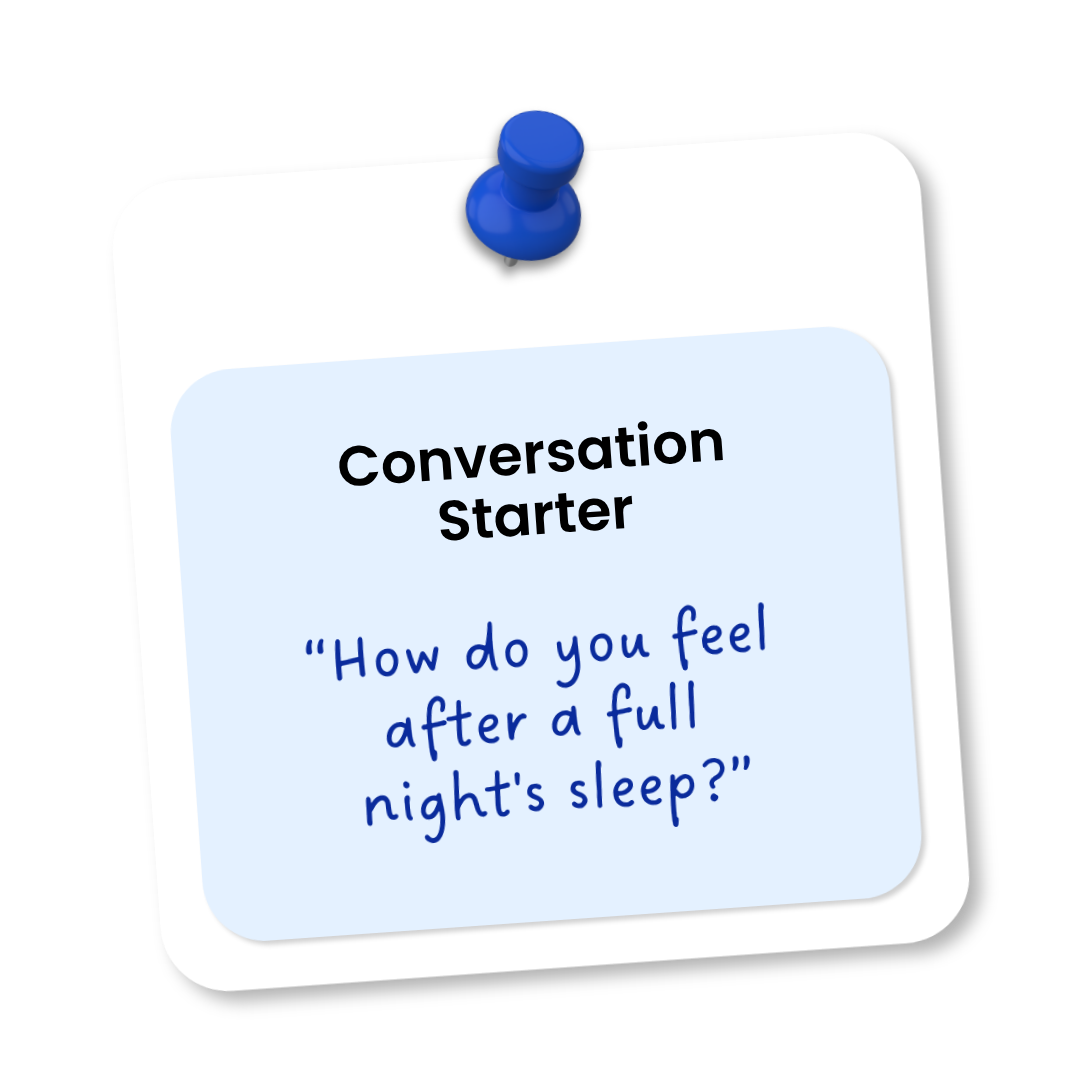
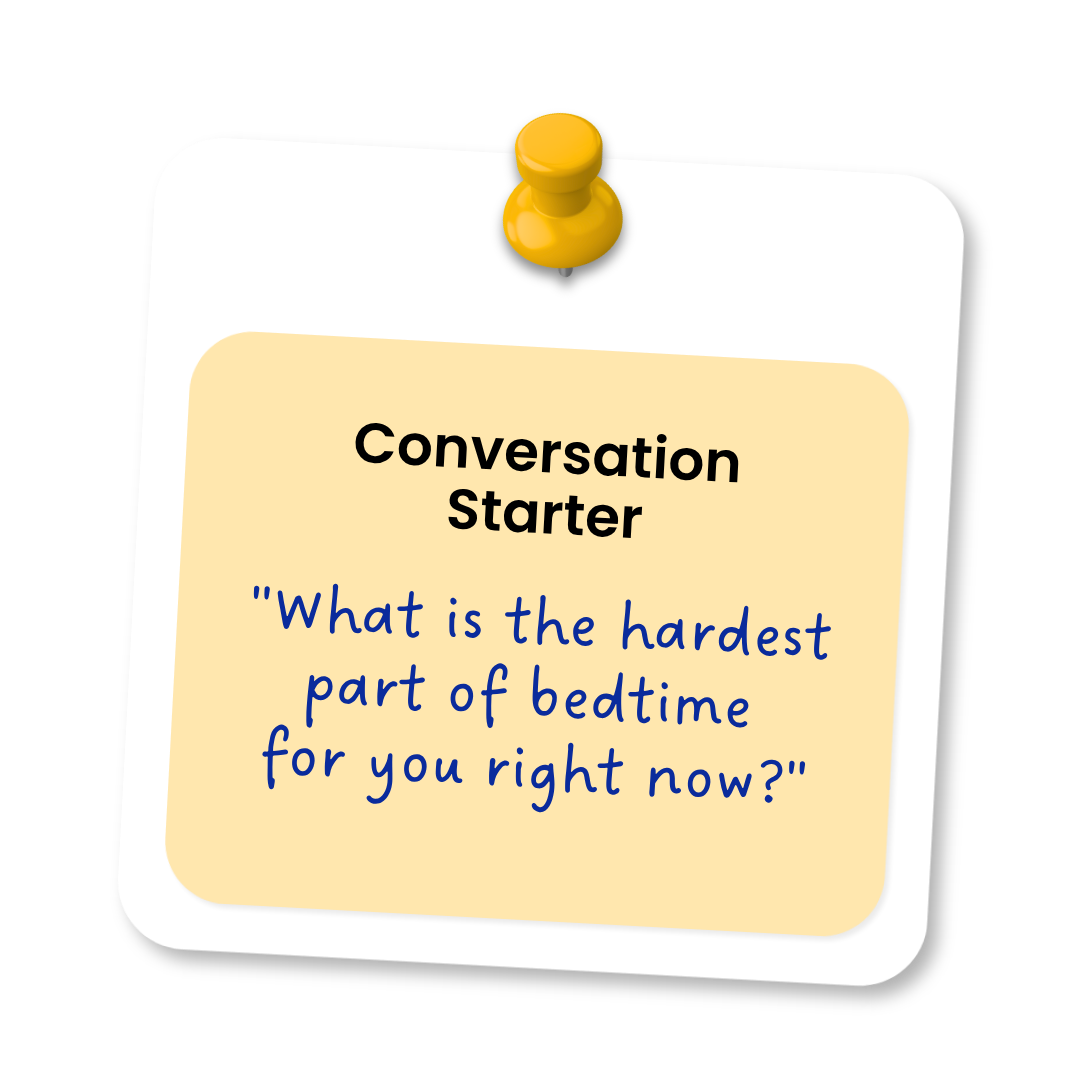
Conversation Starters For You and Your Child
OBJECTIVE #5
Manage Sleep Without Relying on Medication
Good sleep habits should always come before considering medication. This objective helps you decide whether medication is truly needed — and what to do if your child is already taking it.
-
⦿ Tell a parent if anything makes it hard to sleep — a pain, a noise, or a worry.
⦿ Keep following the sleep routine every night, even when it feels hard.
⦿ Notice how your energy and mood improve as your sleep gets better.
-
⦿ Complete Objectives 1 to 4 before considering any medication changes.
⦿ Speak to your child's doctor if you suspect a medical issue is interfering with sleep.
⦿ If your child is on medication, ask the doctor about a plan to safely reduce it once sleep is stable.
⦿ Prioritise your own sleep too — you cannot pour from an empty cup.
Erik’s Choice ★
For objective #5
"Children are not born knowing how to sleep well — they need to learn it. And when you teach them, you show them what a great teacher you are." — Erik
Talk to an Expert
These suggestions work well for most children, but every child is different. Check with your child's doctor to make sure the advice fits your family. If things get hard, reach out. You do not have to do this alone.