Movement
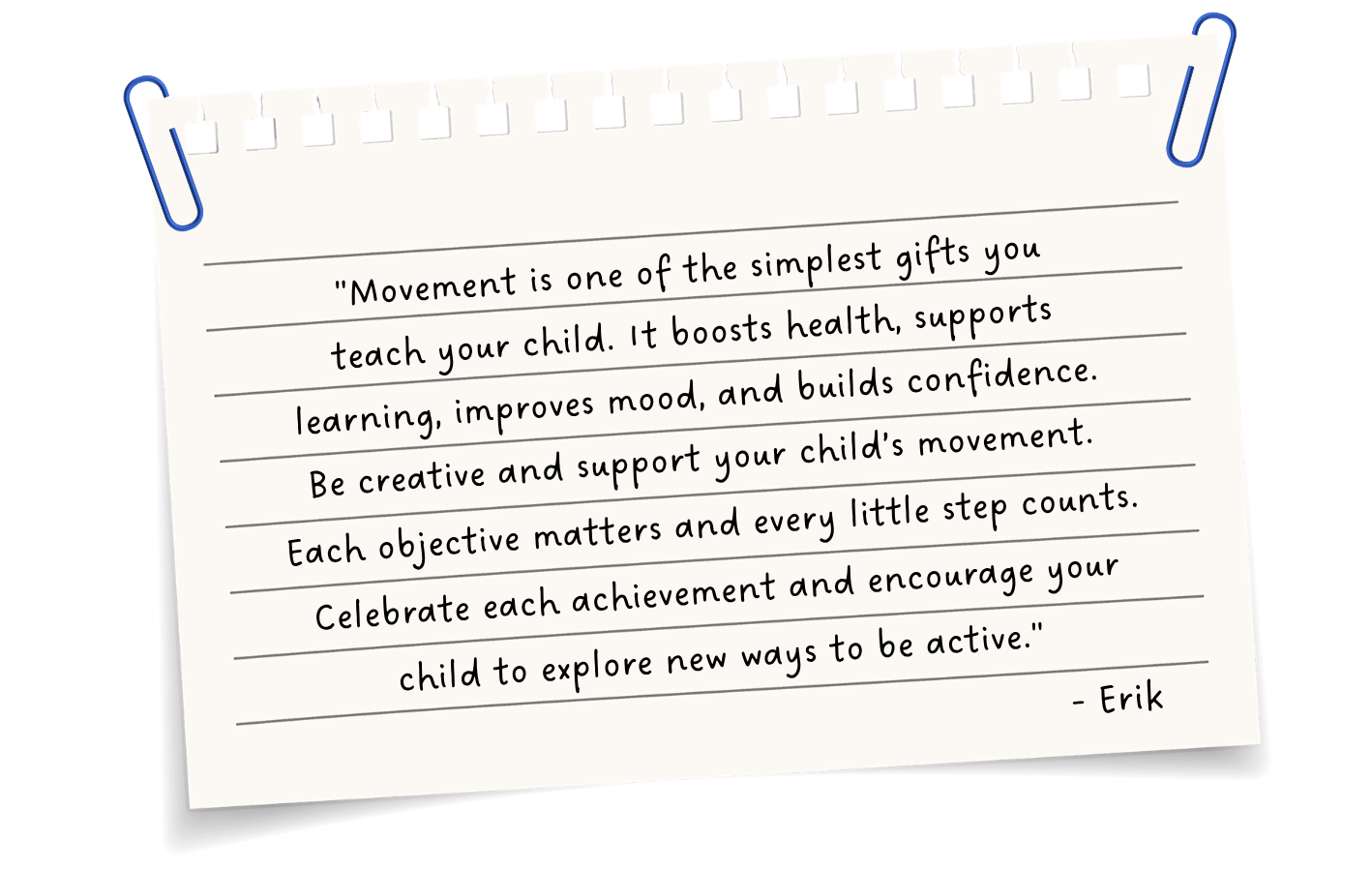
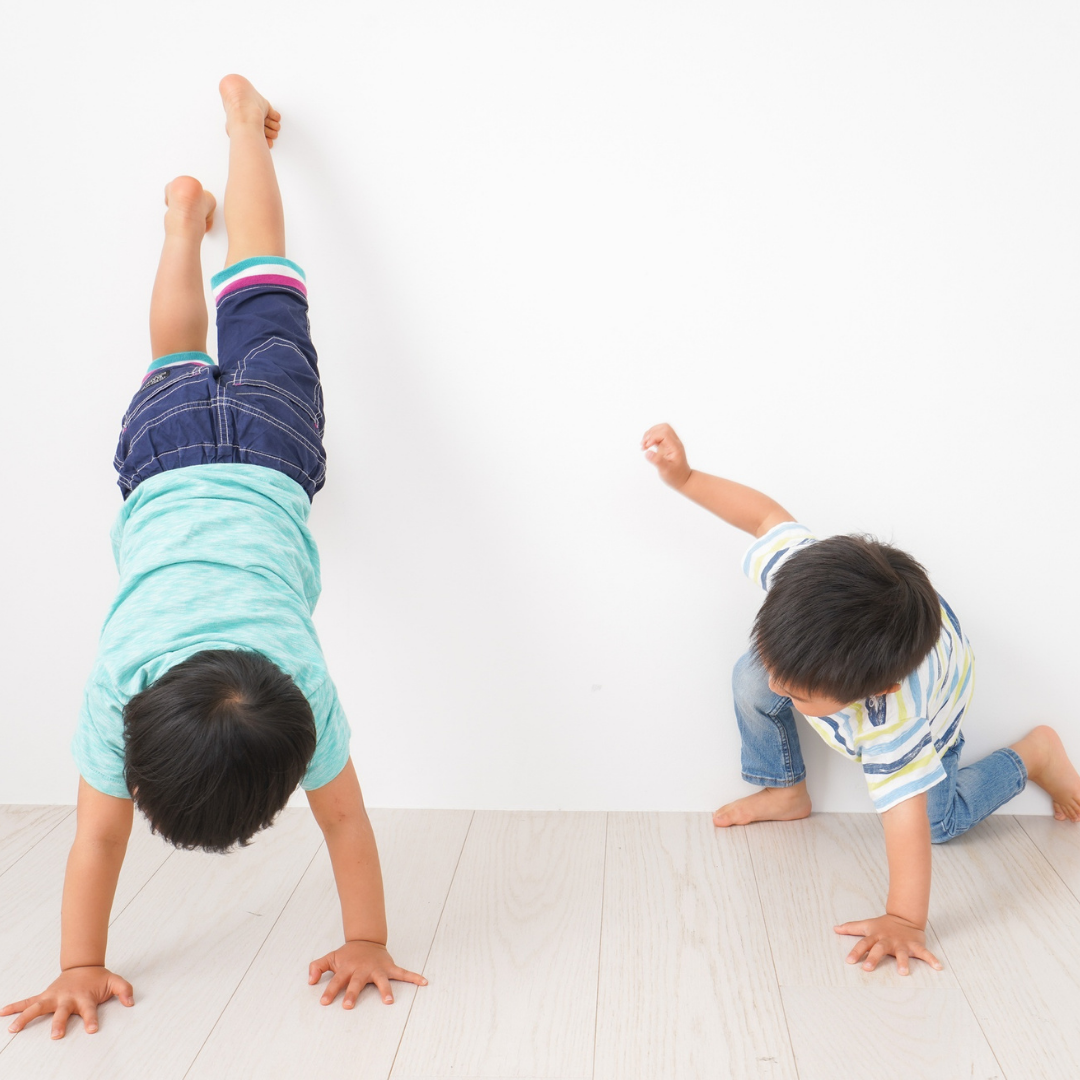
Movement is one of the simplest gifts you can give your child.

Every guide in The IEP for Home library has the same simple structure: one big goal and a few small objectives. Work through the objectives one at a time to reach the goal. Each goal helps your child build skills for everyday life.
T H E S T R U C T U R EGOAL VS OBJECTIVE
What is the goal?
For this Parent Guide, the goal is to help your child move a little more each day. Every bit of movement counts, no matter how small.
What are the objectives?
There are five objectives for this Parent Guide. Each objective shows one way to add more movement. The other objectives ask you to reduce screen time and sitting time and replace them with movement. Then add exercise and variety.
Y O U R R O A D M A PFive objectives. Each focuses on a different movement strategy. Work through them in order and the goal takes care of itself.
THE OBJECTIVES

-
⦿ Everyday actions count: cooking a meal, taking out the trash, walking to the shop, stretching, and playing with your child are all movement.
⦿ Spend one day just noticing — write down every time you or your child moves, even briefly.
⦿ Do not change anything yet. Just observe. That is the whole point of this step.
⦿ You will have more success if you and your child learn to move more together.
Conversation Starters For You and Your Child

OBJECTIVE #1
Discover How Much Your Child Is Already Moving
Before making any changes, notice how much movement is already happening. You may already be doing more than you think.
Erik’s Tip ★
For objective #1

Most families move more than they think. Notice first, then build on it. — Erik
-
⦿ Pay attention to all the ways your body moves today.
⦿ Tell a parent one thing you did today that counted as movement.
-
⦿ Spend one day observing — write down every time you or your child moves.
⦿ Share what you noticed with your child so they can see it too.

-
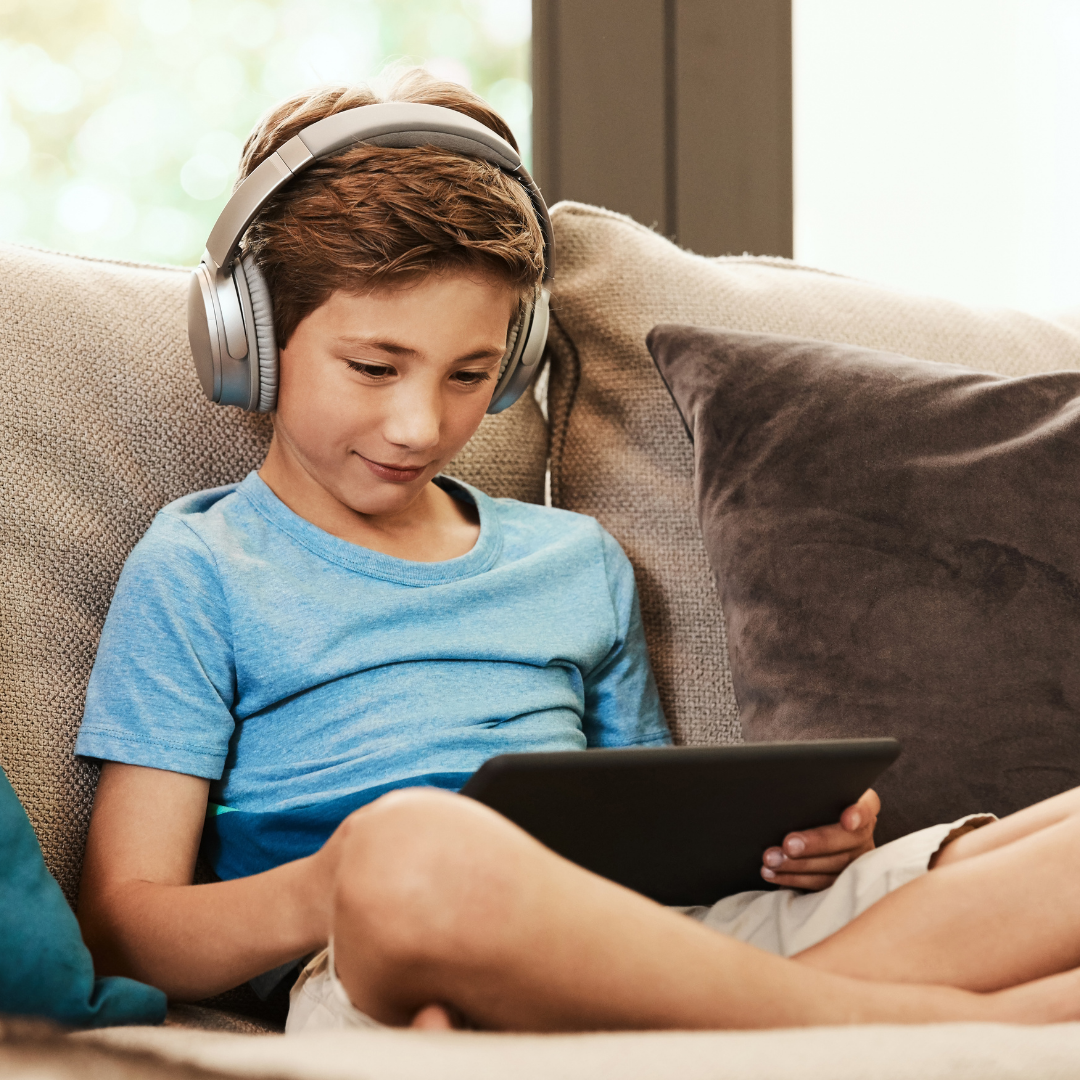
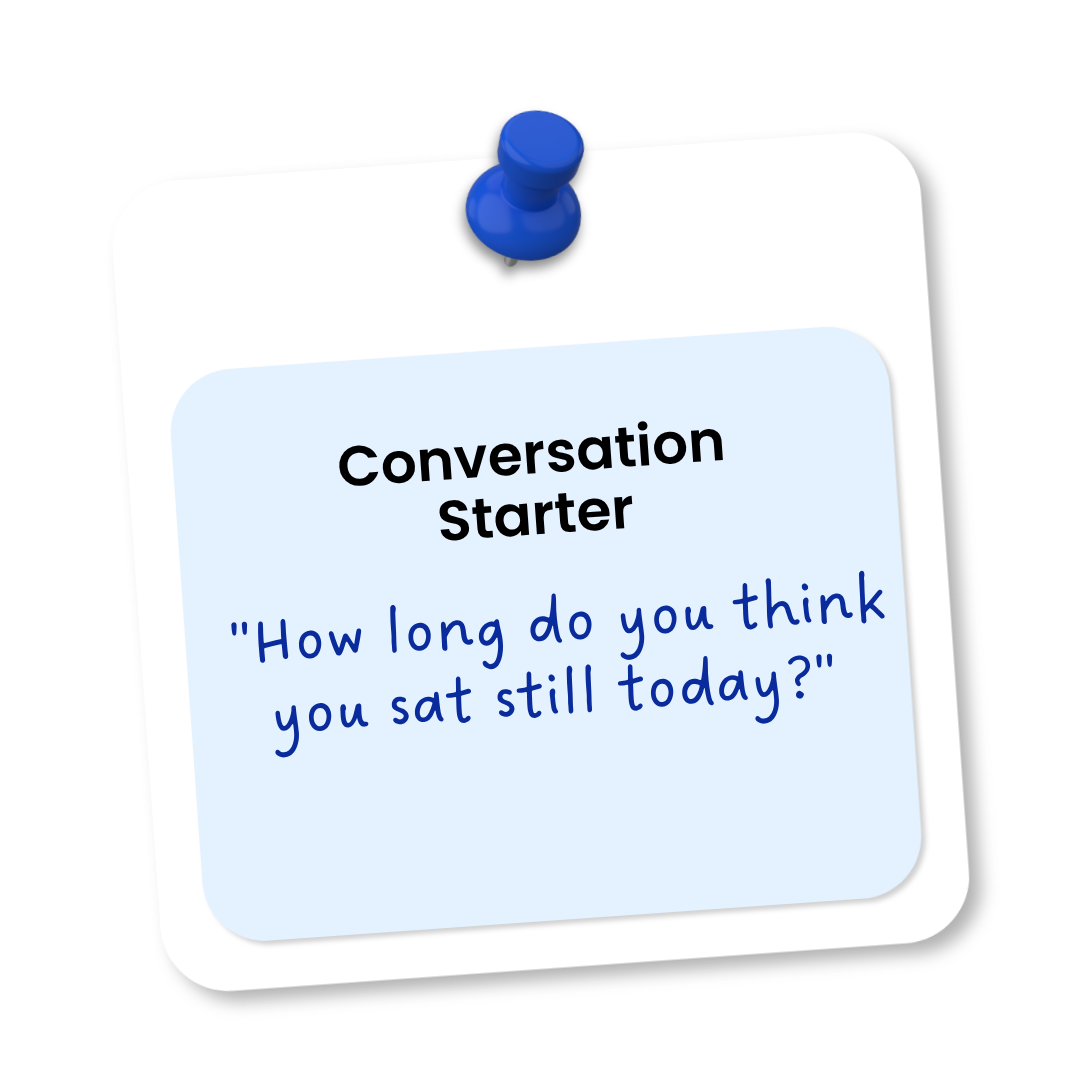
⦿ Break up screen time: have your child get up and move every fifteen minutes.
⦿ Swap passive screen time for interactive screens — like video calls with family — which give the brain and body a little more stimulation.
⦿ Replace some screen time with non-screen activities: reading, singing, puzzles, or socialising in person.
Conversation Starters For You and Your Child
OBJECTIVE #2
Reduce Screen Time & Swap It for Movement
If you and your child spend a lot of time sitting or lying down, breaking up screen time is the easiest first step toward more movement.
-
⦿ Set a timer and move every fifteen minutes during screen time.
⦿ Try replacing one screen session this week with something screen-free.
-
⦿ Set a household rule: movement break every fifteen minutes during screen time.
⦿ Put your own screen down and move with your child — lead by example.
Erik’s Tip ★
For objective #2
During screen time, aim for one movement break every 15 minutes. Start there. — Erik

-
⦿ For young children: keep time in a car seat or stroller to less than one hour at a stretch. If a trip is longer, take a break and let your child move around.
⦿ For school-aged children: take regular movement breaks during homework and limit recreational screen time to two hours per day maximum.
⦿ Use screens to promote movement: try dancing to a video or playing an interactive movement-based game together.
Conversation Starters For You and Your Child


OBJECTIVE #3
Add Movement & Reduce Sitting Time
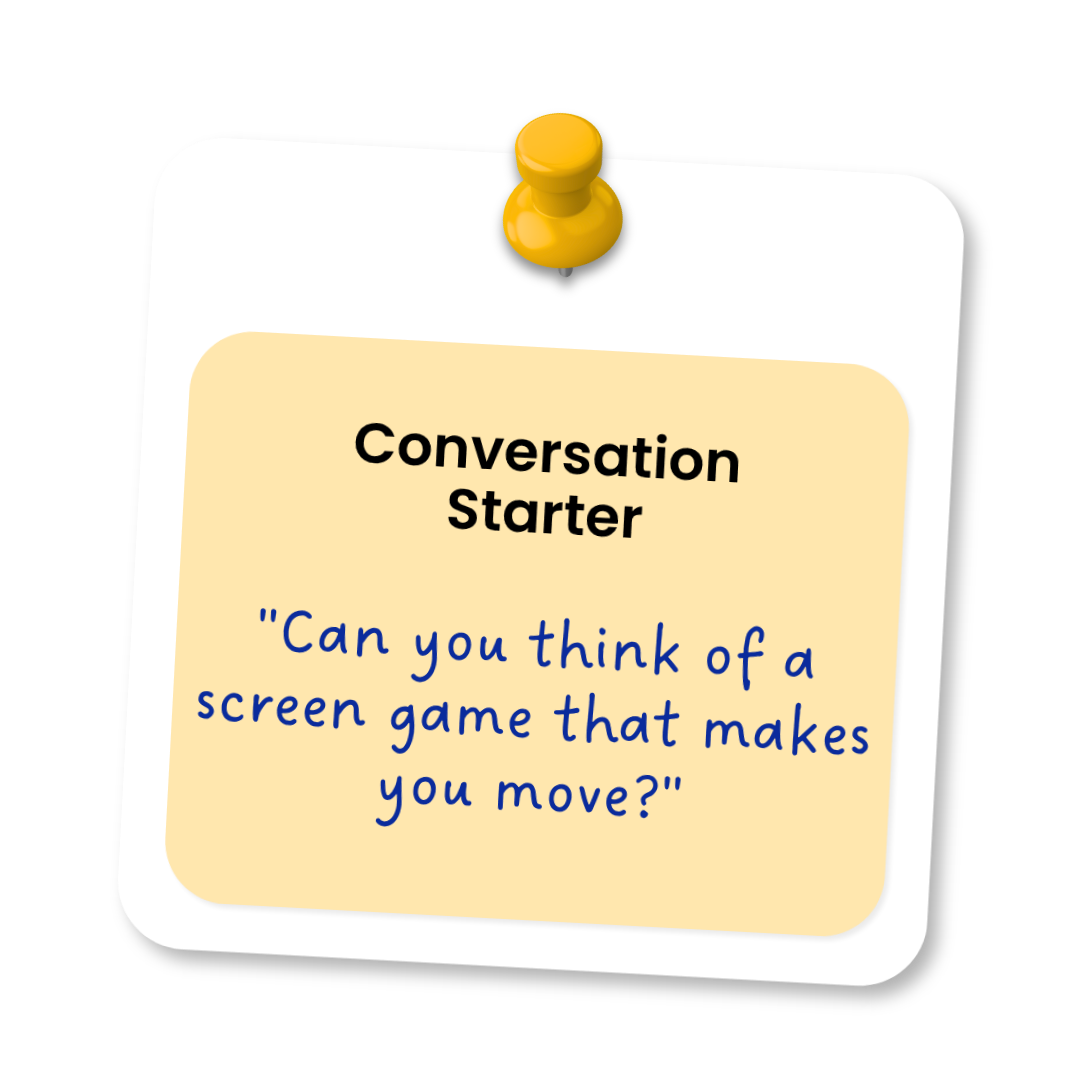
Too much sitting is not healthy — even if your child moves at other times. The goal is to break up long stretches of sitting throughout the whole day.
-
⦿ Stand up and move at least once every hour.
⦿ Take a short movement break between homework subjects.
-
⦿ Set a one-hour sitting limit and use a timer as a reminder.
⦿ Find one screen activity this week that involves physical movement.
Erik’s Tip ★
For objective #3
At a minimum, take a short movement break every hour; during screen time, aim for every 15 minutes. Small and often is the goal. — Erik


-
⦿ Young children: aim for 3 hours of physical activity a day. At least 60 minutes should be energetic play — running, jumping, active games. More is better.
⦿ School-aged children: aim for 2 hours of light or moderate movement a day. It does not have to be all at once — a few 15-minute sessions add up quickly.
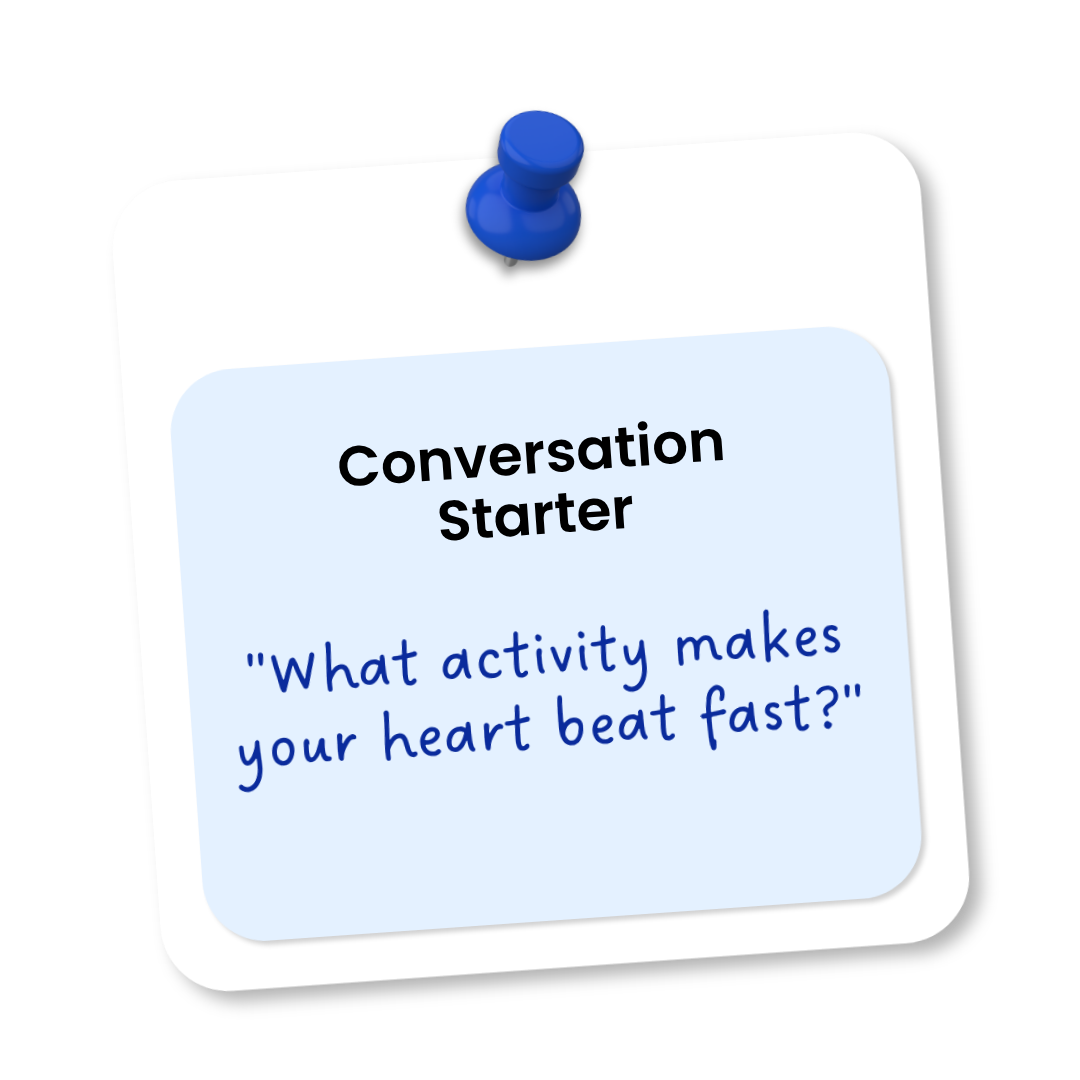
⦿ School-aged children (vigorous): aim for 60 minutes of vigorous exercise a day — enough to make the heart beat faster. Three times a week, include something that strengthens bones and muscles.
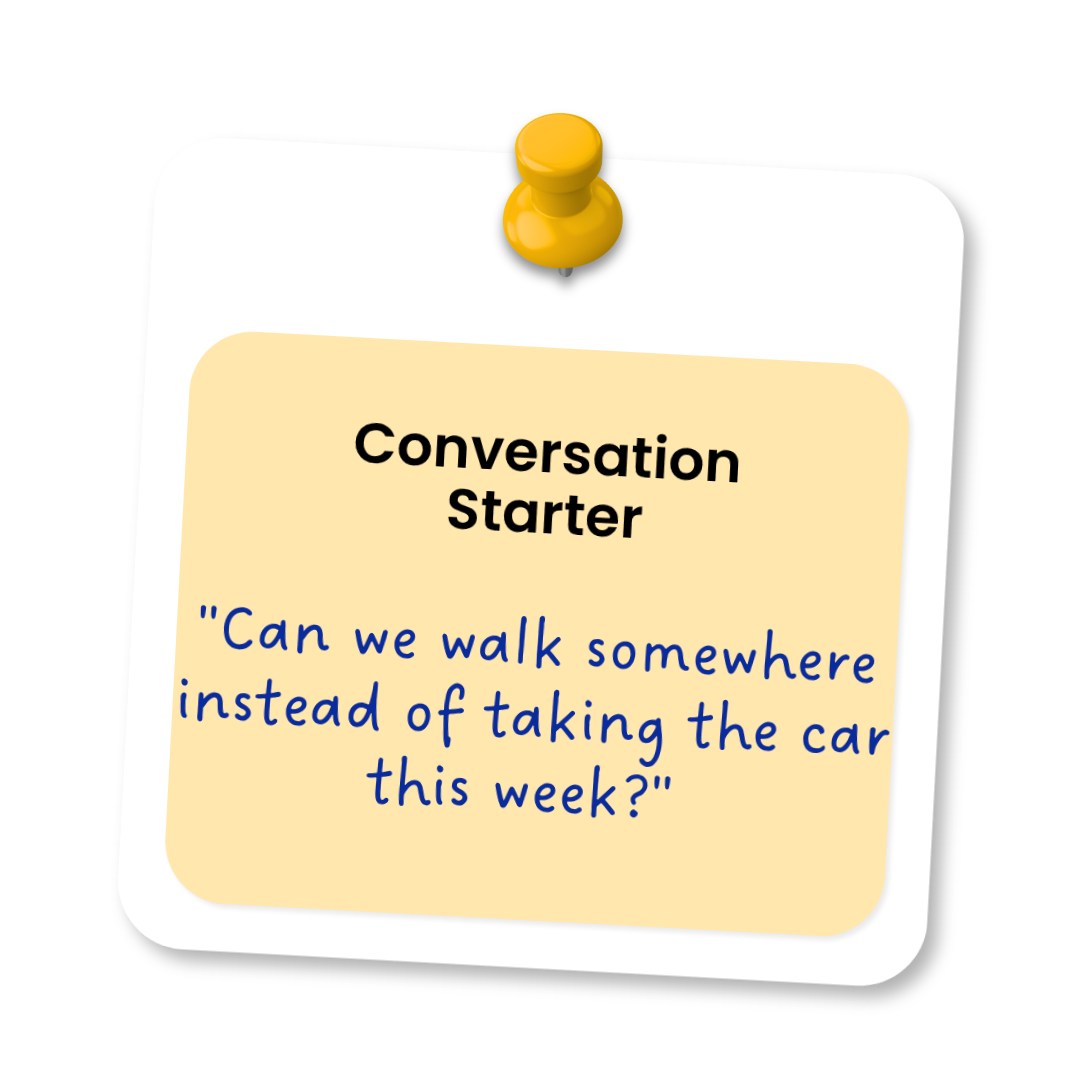
⦿ Look for easy swaps: walk instead of taking the car, use stairs instead of the lift.
Conversation Starters For You and Your Child
OBJECTIVE #4
Increase How Much Your Child Exercises
Now that sitting time is decreasing, it is time to gradually increase exercise. Start from where your child is now and add a little more over time—do not try to reach the full target overnight.
-
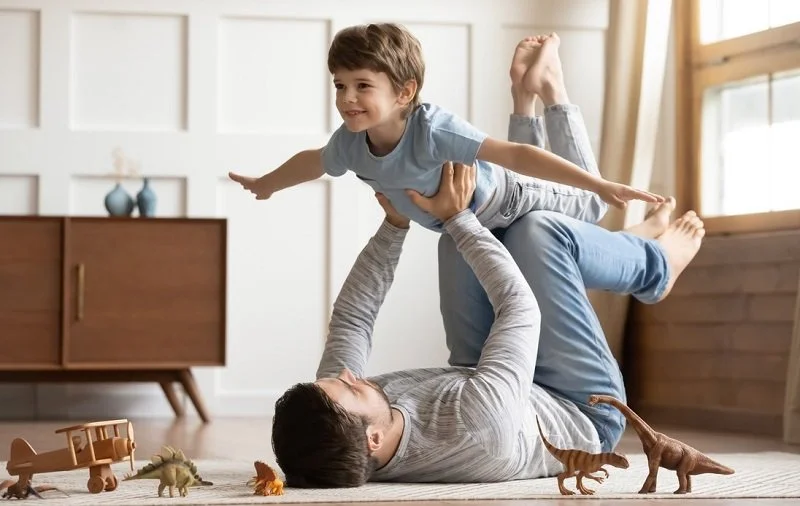
⦿ Do one activity today that makes your heart beat a little faster.
⦿ Try to beat your activity time from yesterday by just a few minutes.
-
⦿ Track your child's current activity level for a few days before making changes.
⦿ Add one extra 15-minute activity to your child's day this week.
Erik’s Tip ★
For objective #4
Aim for a little more than yesterday, or from the last time you counted. That is the only objective right now. — Erik

-
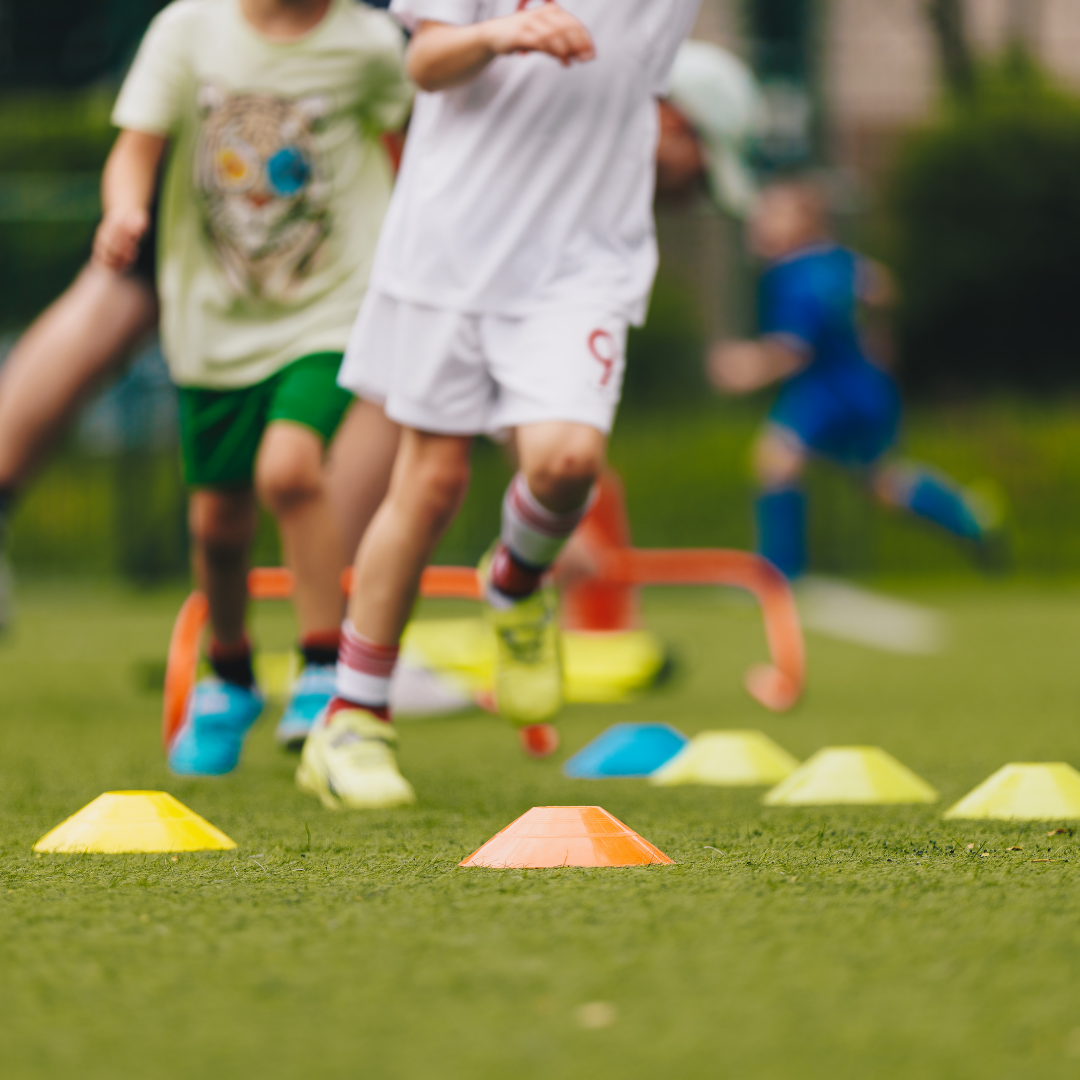
⦿ Light: leisurely walking, tossing a ball, walking to school. Do this whenever you can.
⦿ Moderate: bicycling, scooter, skateboard, walking at a steady pace. Aim for 1 to 2 hours a day.
⦿ Vigorous: running, skipping, basketball, swimming, soccer, jumping, push-ups. Aim for 60 minutes a day and 3 times a week for bone and muscle strength.
⦿ Check local community centres — places like the YMCA often offer low-cost or free movement activities for children.
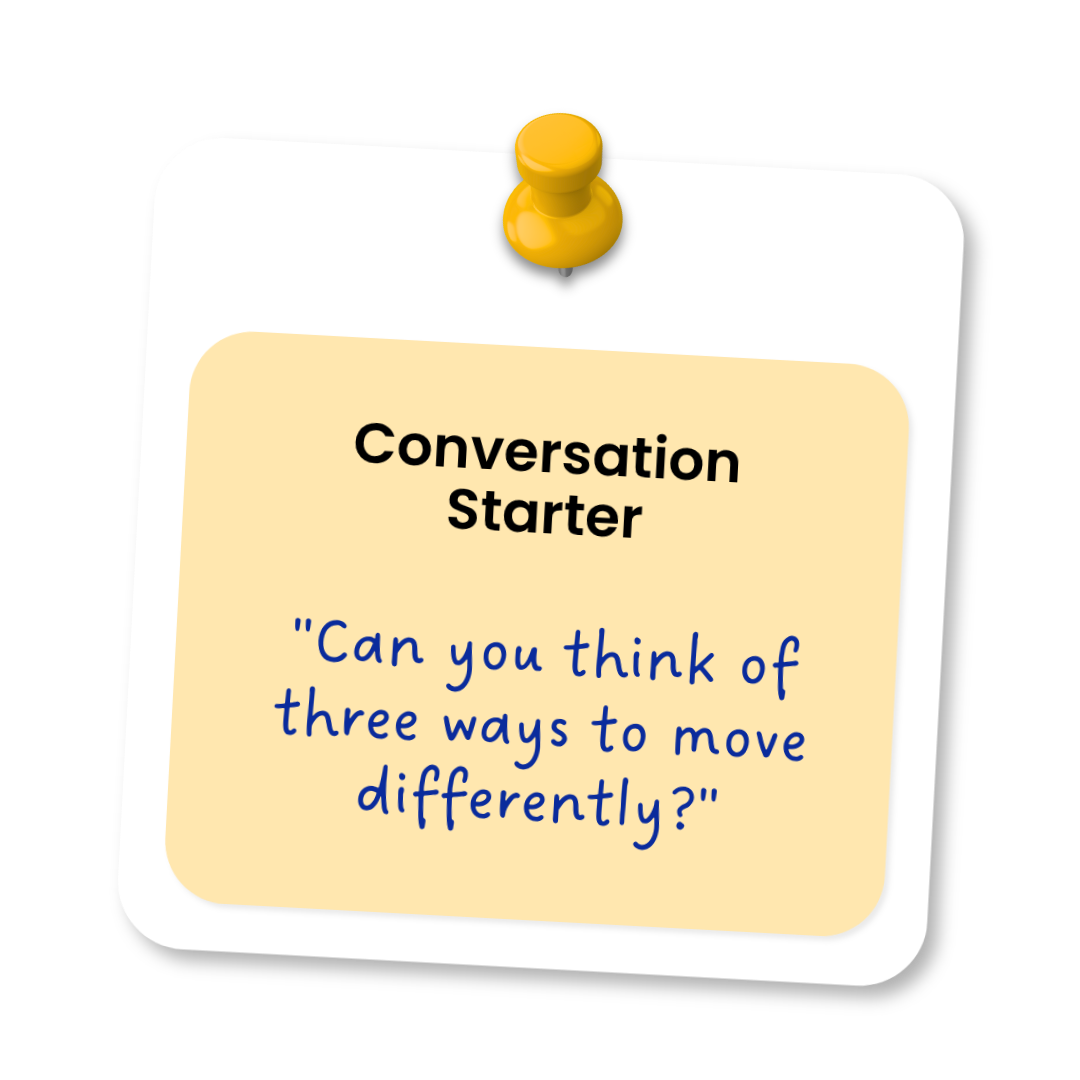
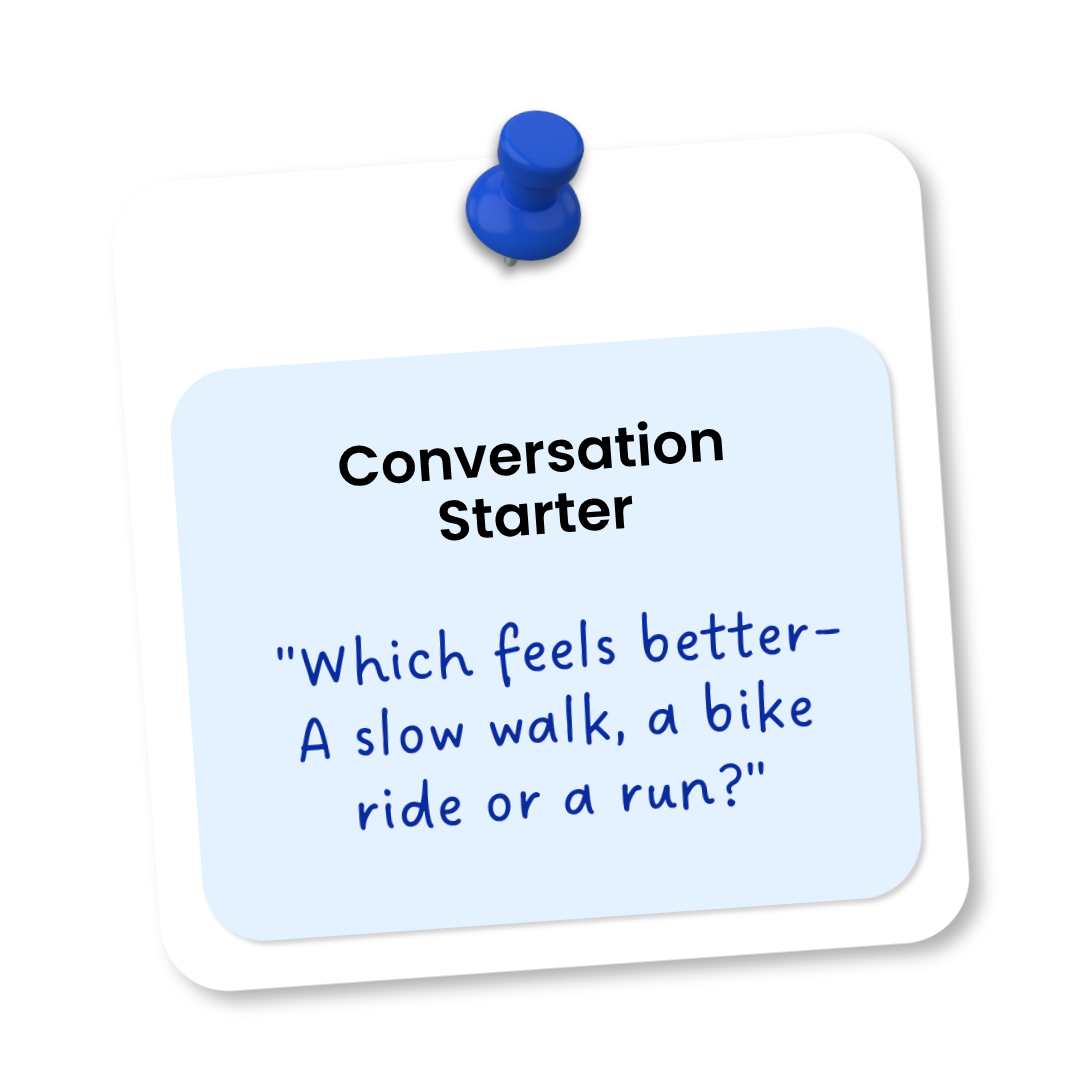
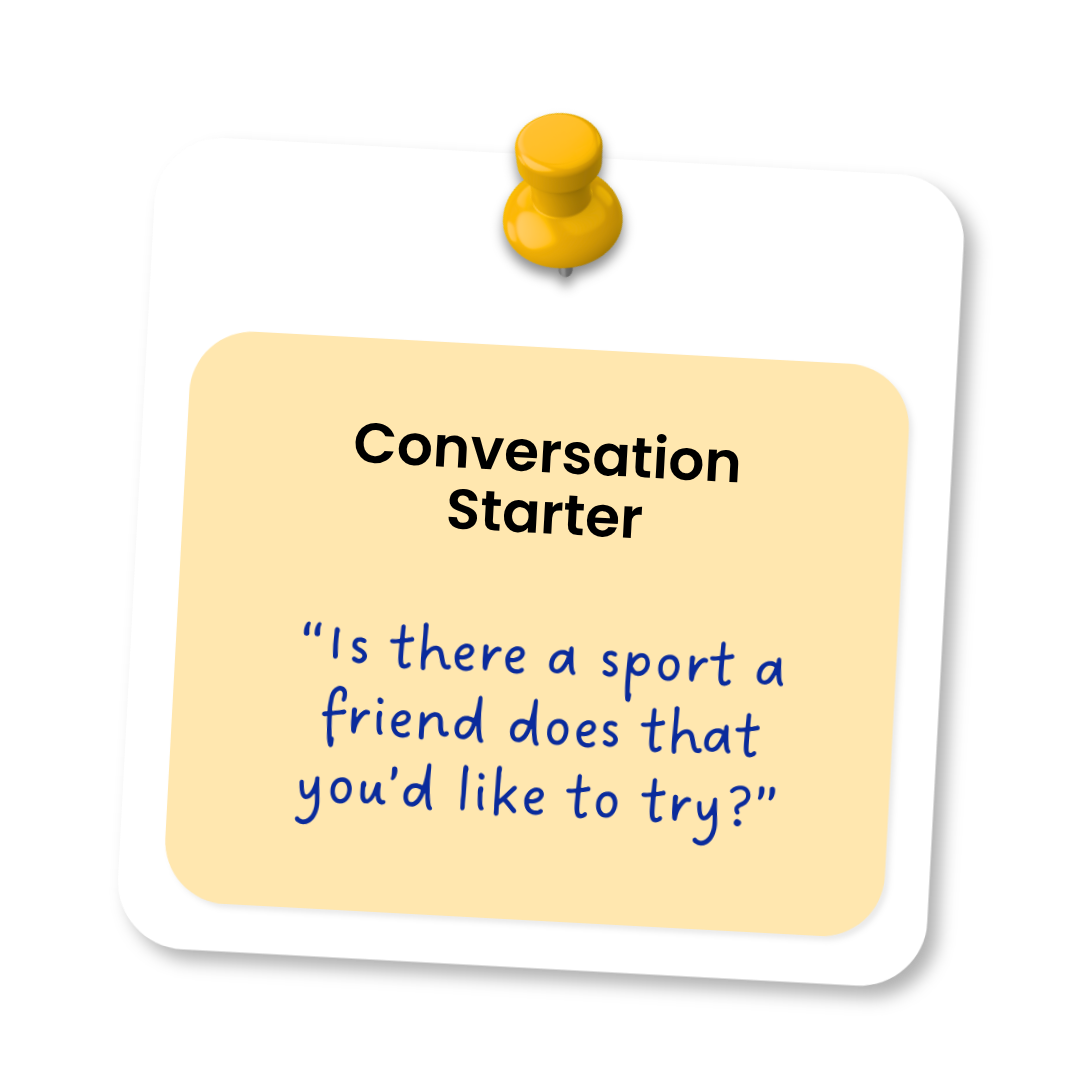
Conversation Starters For You and Your Child
OBJECTIVE #5
Increase the Variety of Movement
A mix of light, moderate, and vigorous activities is best for your child's body and keeps things interesting. Aim to include all three types throughout your week.
-
⦿ Try one new type of movement this week.
⦿ See if you can do one light, one moderate, and one vigorous activity today.
-
⦿ Look at what your child already does and find what type of movement is missing.
⦿ Add one new activity type to this week's schedule.
Erik’s Tip ★
For objective #5
Variety keeps it fun. Mix it up, and your child will keep coming back for more. — Erik
Talk to an Expert
These suggestions work for most children. But every child is unique. Some tips may not fit your son or daughter. Talk with your child's physician first. A physician knows your child's needs best. Trust their professional guidance over anything general.
If things get hard, reach out for support. You do not have to do this alone. Help is always within reach.