Homework
Building a consistent homework routine helps your child develop independence, responsibility, and
a love of learning.

Every guide in The IEP for Home library has the same simple structure: one big goal and a few small objectives. Work through the objectives one at a time to reach the goal. Each goal helps your child build skills for everyday life.
T H E S T R U C T U R EGOAL VS OBJECTIVE
What is a goal?
For this Parent Guide, the goal is to help your child build a homework routine. The routine will help your child feel independent, confident, and ready for learning at school.
What are the objectives?
There are four objectives for this Parent Guide. They cover getting started, building a routine, working independently, and exploring new topics. Learning is for life, not just the classroom.
Y O U R R O A D M A PFour objectives. Each one builds a stronger homework routine. Work through them in order and the goal takes care of itself.
THE OBJECTIVES

-
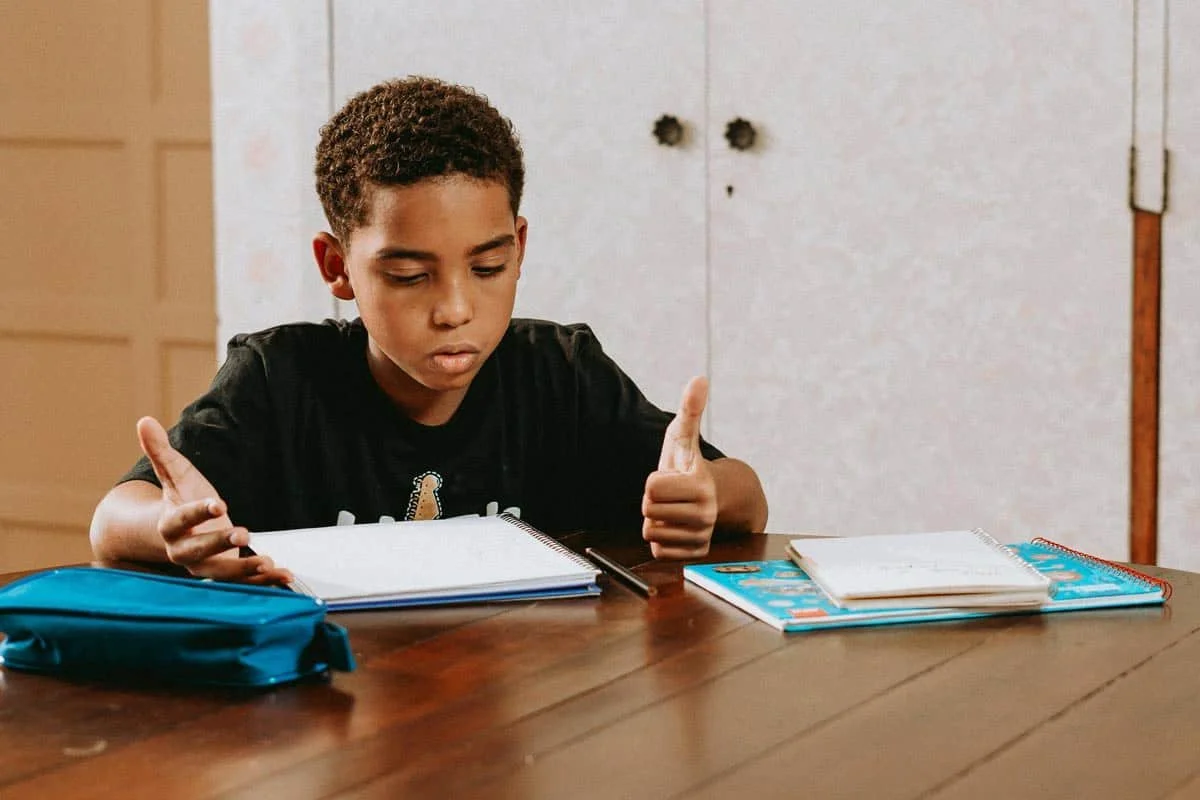
⦿ Guide them in gathering all required materials. Teach your child to make a list that helps them find what they need. That’s a great first step for doing homework independently.
⦿ Make sure they know what the teacher told them to do.
⦿ Tell them how much they need to do, from start to finish.
⦿ Then, tell them where to start.
⦿ Celebrate what they got done, each step of the way. As they become independent, you can celebrate a bit less often.
⦿ Make sure they know where to put their materials when they are finished.
⦿ Make sure they know where the homework is, so they can bring it back to the teacher tomorrow.
Conversation Starters For You and Your Child
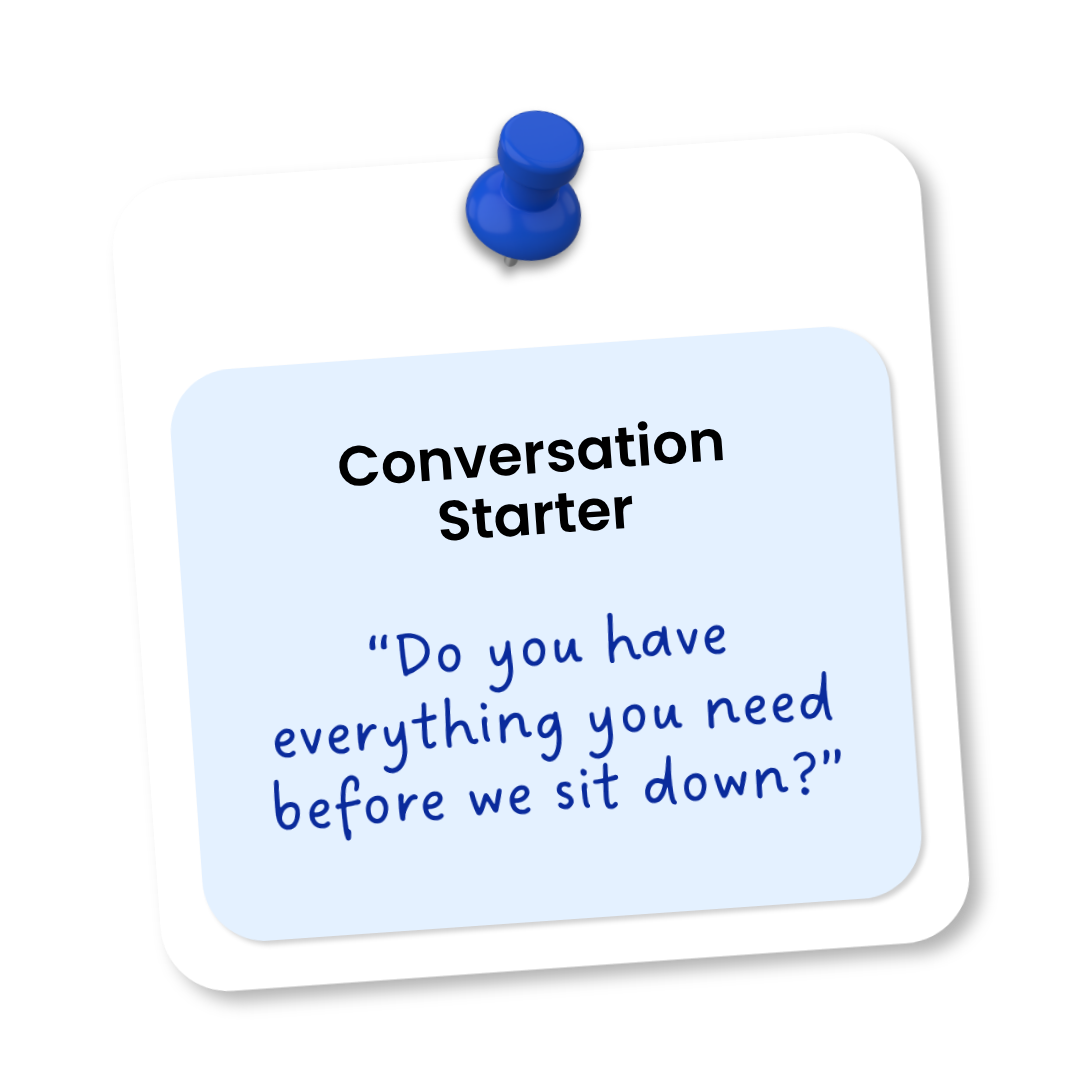
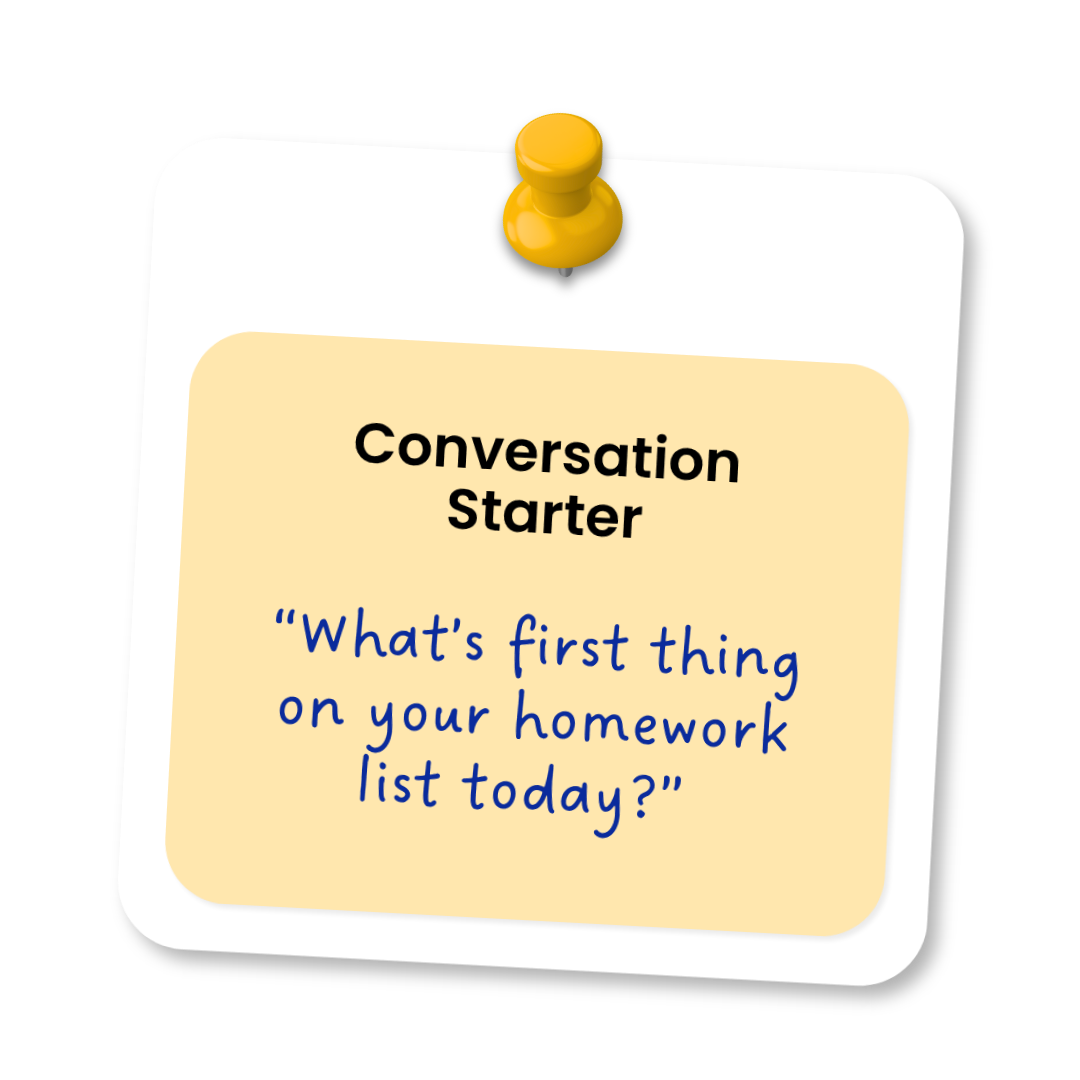

OBJECTIVE #1
Create a Starting Point
A homework kit changes everything. Help your child gather supplies before starting homework. Your child needs to know where the materials are kept. Keep your child’s materials organized, and you will organize your child’s brain!
Erik’s Tip ★
For objective #1

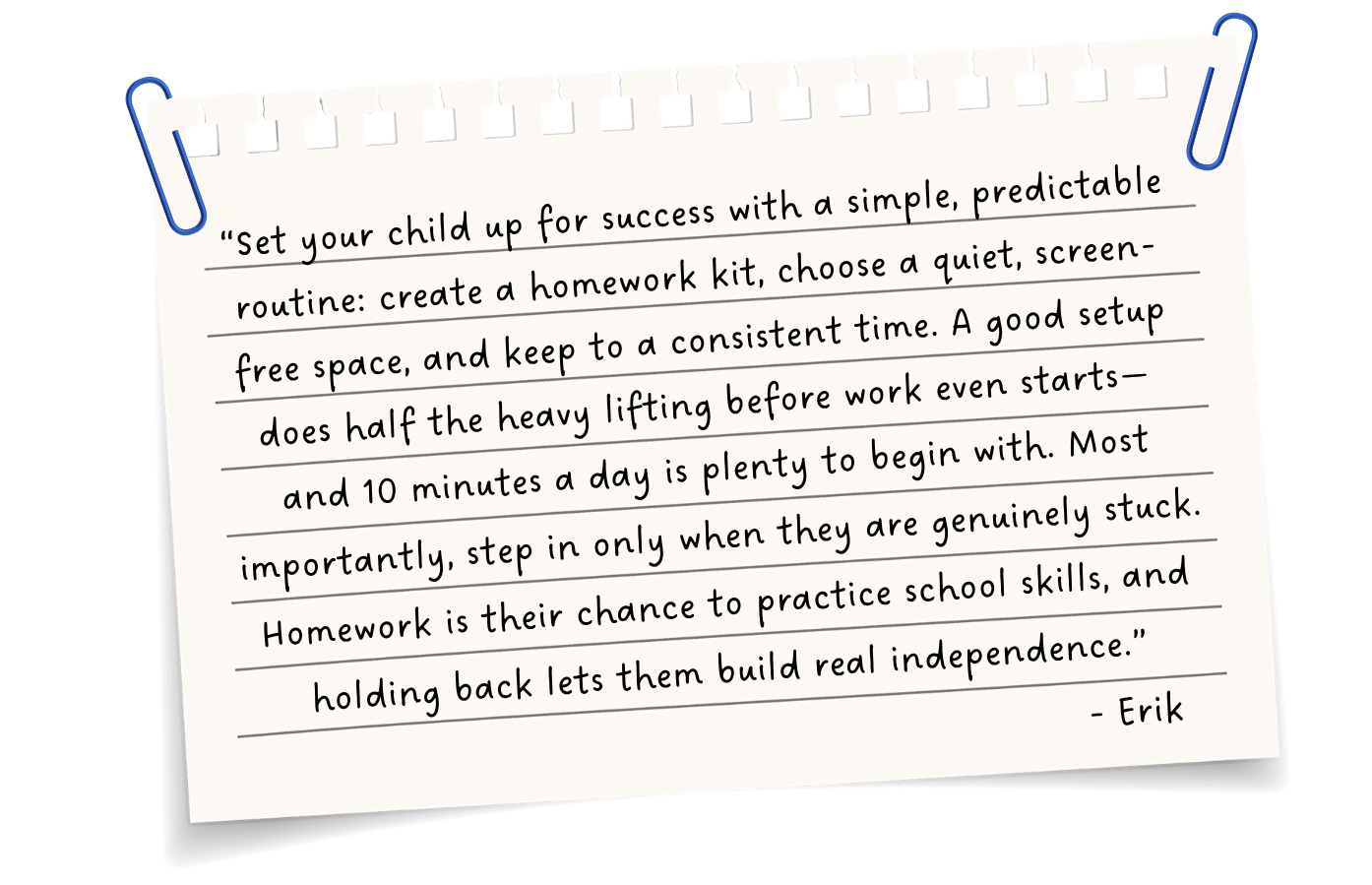
Getting started is usually the hardest part. Keep a homework kit in one place, with all your supplies ready. When your son or daughter does not need to search for materials, the real work can begin. — Erik
-
⦿ Before starting homework each day, go through a simple checklist: What do I need to do? What do I need to have? Where will I work?
-
⦿ Help your child create a “homework kit”—a consistent place where all their supplies and assignments live. Make it their responsibility to keep it ready.


-
⦿ Choose a regular, quiet, and consistent location for schoolwork.
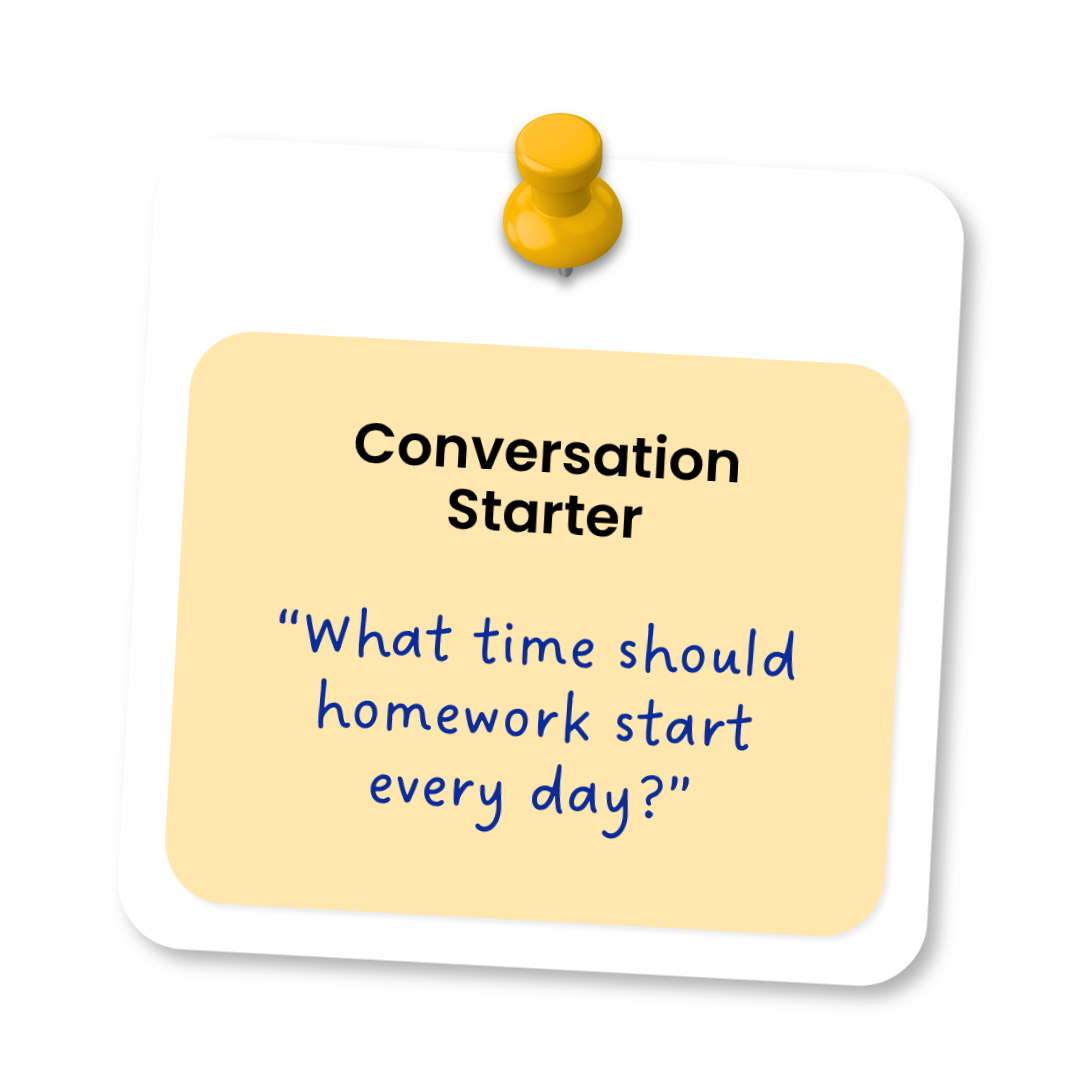
⦿ Set a fixed daily start time that stays the same each day.
⦿ Decide together how long homework should take.
⦿ Include short breaks if needed to support focus.
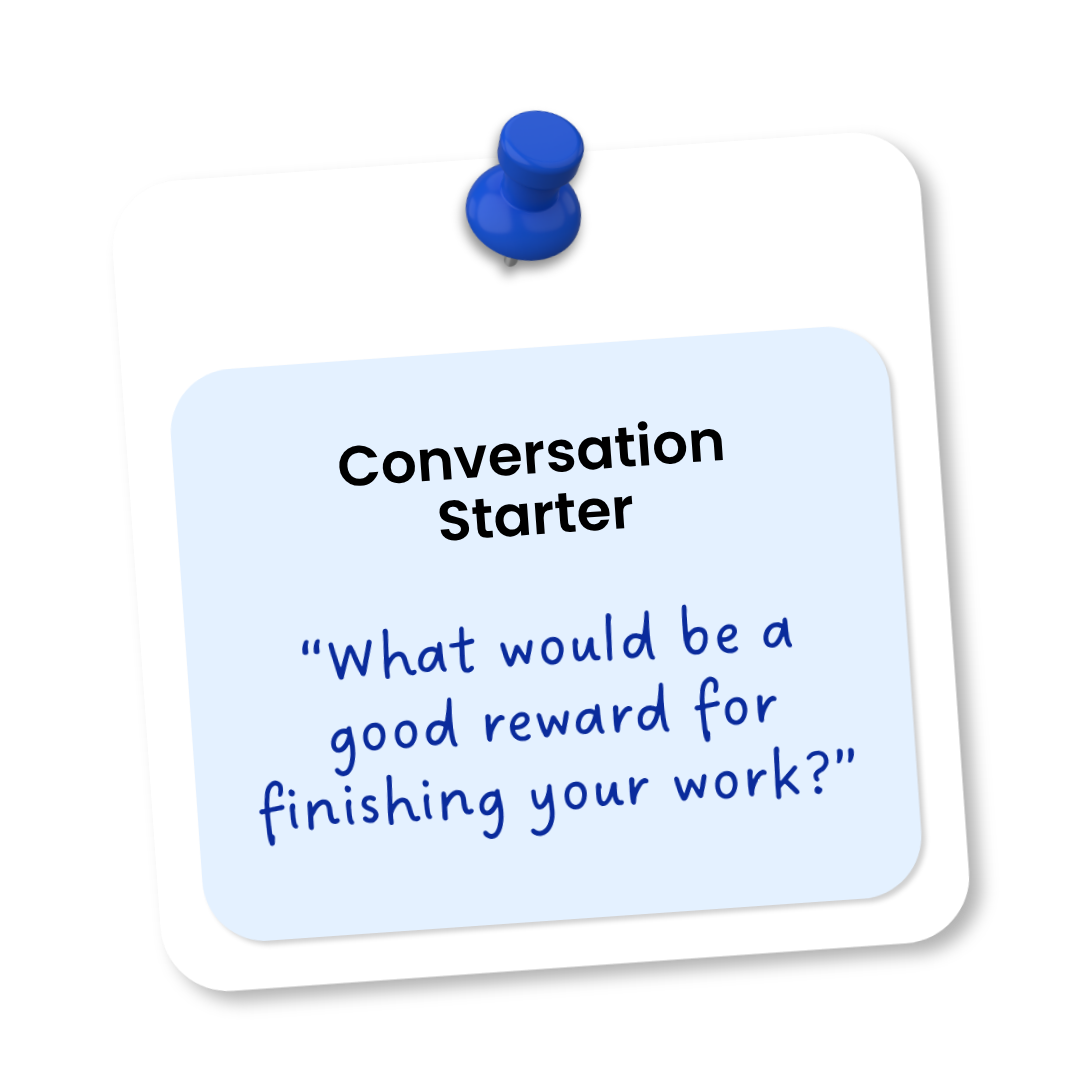
⦿ Use a simple positive reward linked to completion, not perfection. The reward can be access to a privilege.
⦿ Keep the routine consistent. Consistency is more important than intensity. Your child does not need homework to be perfect. Your child needs to practice learning.
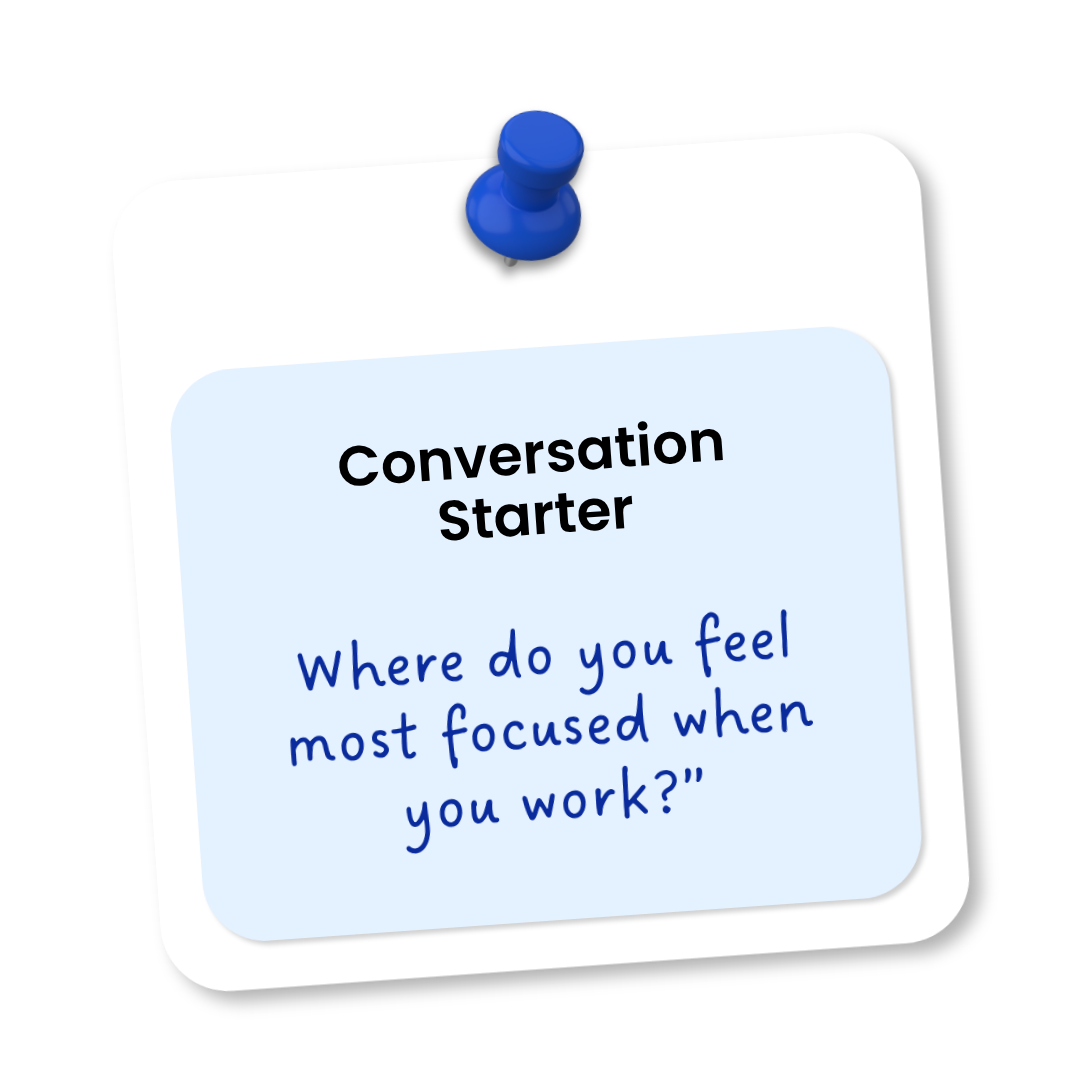
Conversation Starters For You and Your Child
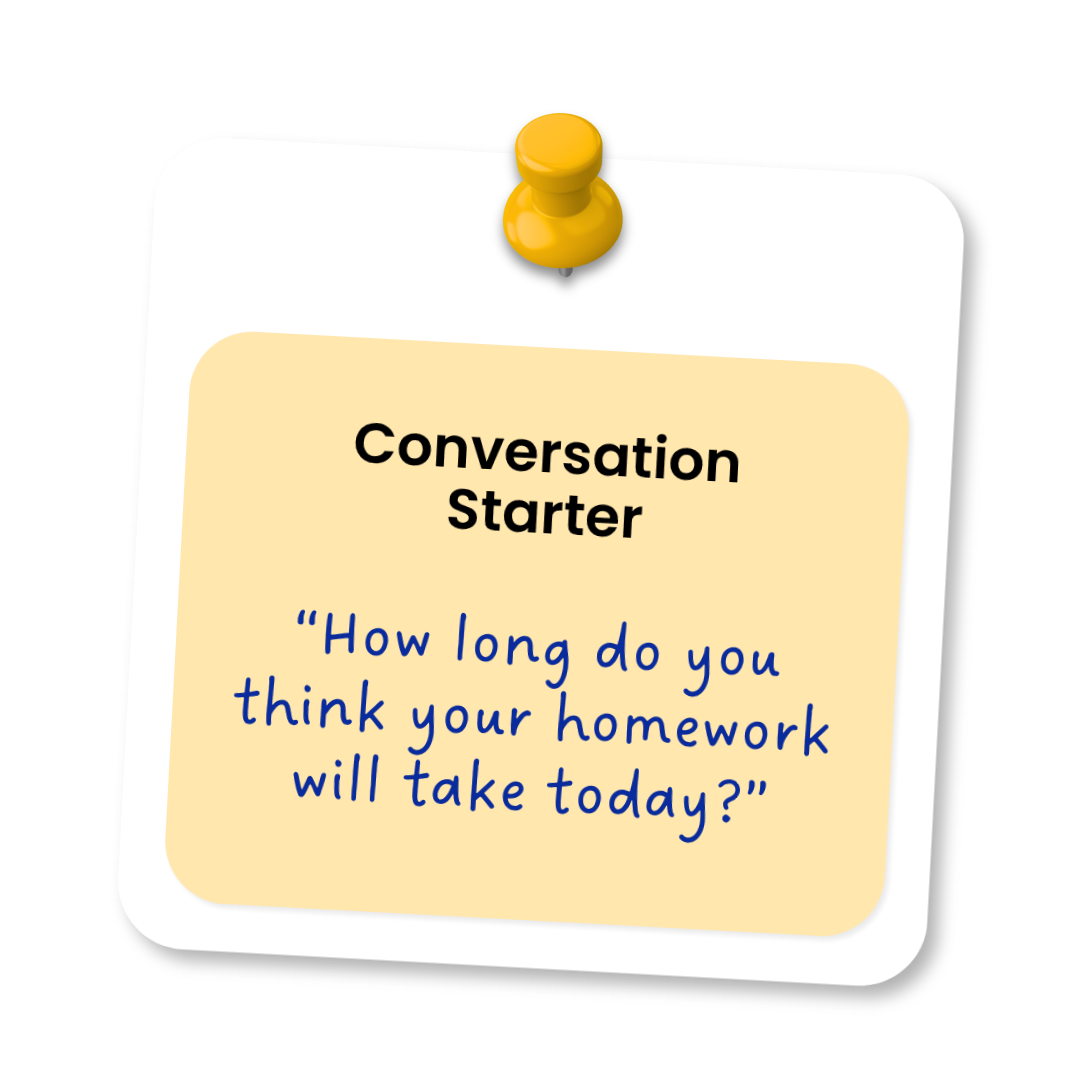
OBJECTIVE #2
Set Up a Routine
A consistent and predictable homework routine lowers barriers to homework. The routine reduces confusion or anxiety about homework. It helps your child to stay motivated and focused.
-
⦿ Follow the same homework routine every day this week—at the same time, same place. See how it feels by the end of the week.
-
⦿ Set the routine and protect it. Avoid scheduling conflicting activities during homework time, and follow through on the agreed incentives every time.
Erik’s Tip ★
For objective #2
Use the same place and time each day. A predictable routine helps homework feel less stressful and become a habit. — Erik


-
⦿ Teach your child how to approach homework independently by reading instructions carefully.
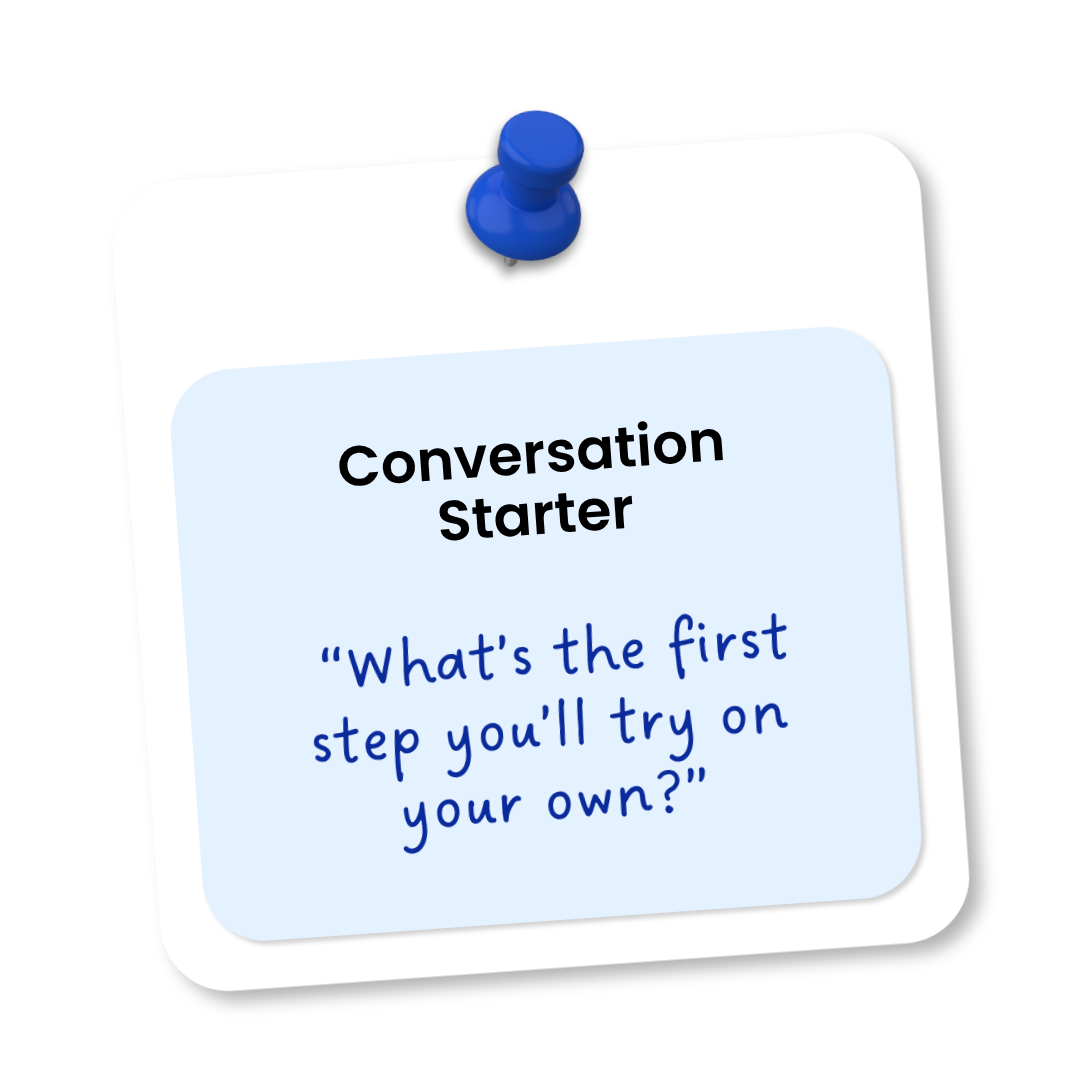
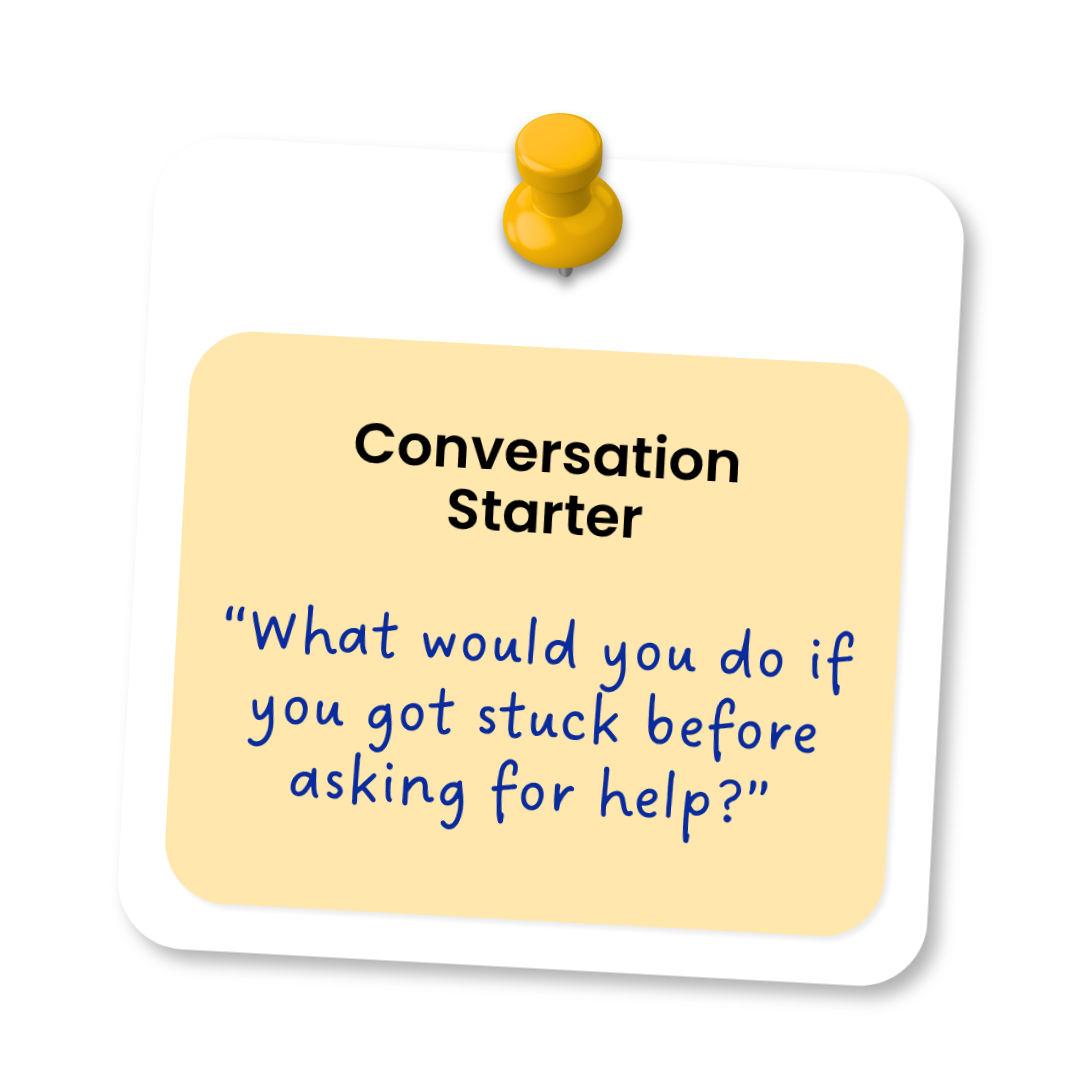
⦿ Encourage them to try on their own before asking for help.
⦿ Guide them to check their work once they finish.
⦿ Remind them to do their best, even when tasks feel difficult.
⦿ Step in with support only when they are genuinely stuck.
⦿ Stay in contact with teachers to receive feedback and understand your child’s needs.
Conversation Starters For You and Your Child
OBJECTIVE #3
Develop Independence
Remember, your goal as a parent is not simply for your child to complete homework. Help your child become a confident, independent learner. Teach good homework habits, and you are on your way.
-
⦿ Try to complete at least one part of your homework independently today before asking for help. Notice what you were able to do on your own.
-
⦿ Resist the urge to jump in too quickly. Let your child struggle a little—that’s where learning happens. Check in with their teacher once a week or biweekly for updates.
Erik’s Tip ★
For objective #3
Independence grows when you give your child room to try. Sit back and let them work through some frustration. You are showing that you trust them. The goal is not a perfect worksheet. The goal is a child who can focus, learn, and handle a challenge. — Erik



-
⦿ Start introducing skills beyond daily homework. Practice math, reading, and writing during everyday activities, such as cooking or grocery shopping.
⦿ Read about new topics, such as science, history, and geography.
⦿ Keep learning relaxed, hands-on, and fun.
⦿ Use books, libraries, and trusted online resources to solve problems together.
⦿ Follow your child’s curiosity. Where do their interests lead you?
Conversation Starters For You and Your Child

OBJECTIVE #4
Discover New Topics
Once the routine is solid and your child’s independence is steadily growing, it’s a great time to gently expand their world of learning with new activities, challenges, and small responsibilities that build confidence.
-
⦿ Pick one topic you’re curious about this week and find out one new thing about it using a book, the library, or a trusted website.
-
⦿ Follow your child’s lead. If they show curiosity about a topic, help them find a book, visit the library, or explore a trusted resource together. The goal is to show them that learning doesn’t stop when homework ends.
Erik’s Tip ★
For objective #4
Follow your child’s curiosity. Help them ask questions and find answers. When children choose what to explore, they build a lifelong love of learning. — Erik
Talk to an Expert
These suggestions work for most children. But every child is unique. Some tips may not fit your son or daughter. Talk with your child's physician first. A physician knows your child's needs best. Trust their professional guidance over anything general.
If things get hard, reach out for support. You do not have to do this alone. Help is always within reach.