Rules
Rules give kids structure to stay safe, build good habits, and grow independent. Start with one rule. Consistency does the rest.

Every guide in The IEP for Home library has the same simple structure: one big goal and a few small objectives. Work through the objectives one at a time to reach the goal. Each goal helps your child build skills for everyday life.
T H E S T R U C T U R EGOAL VS OBJECTIVE
What is the goal?
For this Parent Guide, the goal is to help your child learn and master the rules of life. Rules help them to stay safe, build healthy habits, and become more independent. This goal is big. It includes a lot of lifelong learning.
What are the objectives?
Start with physical safety. Then teach your child how to wait and handle frustration. After that, build independence and confidence. Finally, teach rewards and consequences. Take your time. These skills grow over a lifetime.
Y O U R R O A D M A PFour objectives. Each one teaches an essential set of rules for everyday life. Follow them in order, and your child will build the skills for lifelong success.
THE OBJECTIVES


-
Kitchen safety:
⦿ Always keep caps secured on poisonous fluids — store them in a locked cupboard only.
⦿ Always keep the knife drawer locked. Handle knives by the handle only.
⦿ Always unplug or switch off appliances after use.
⦿ Never touch hot surfaces.
Outdoor and travel safety:
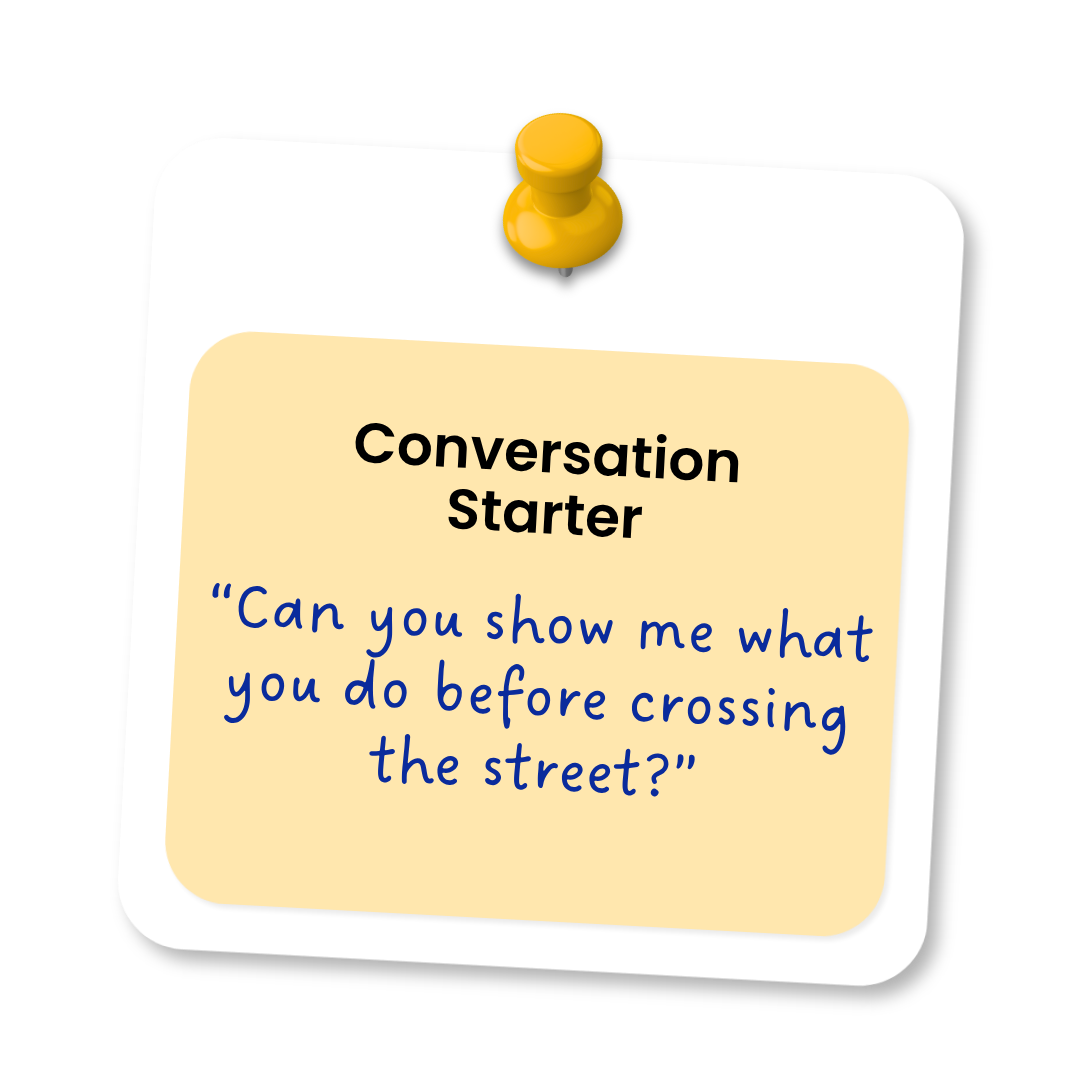
⦿ Always look both ways before crossing the street.
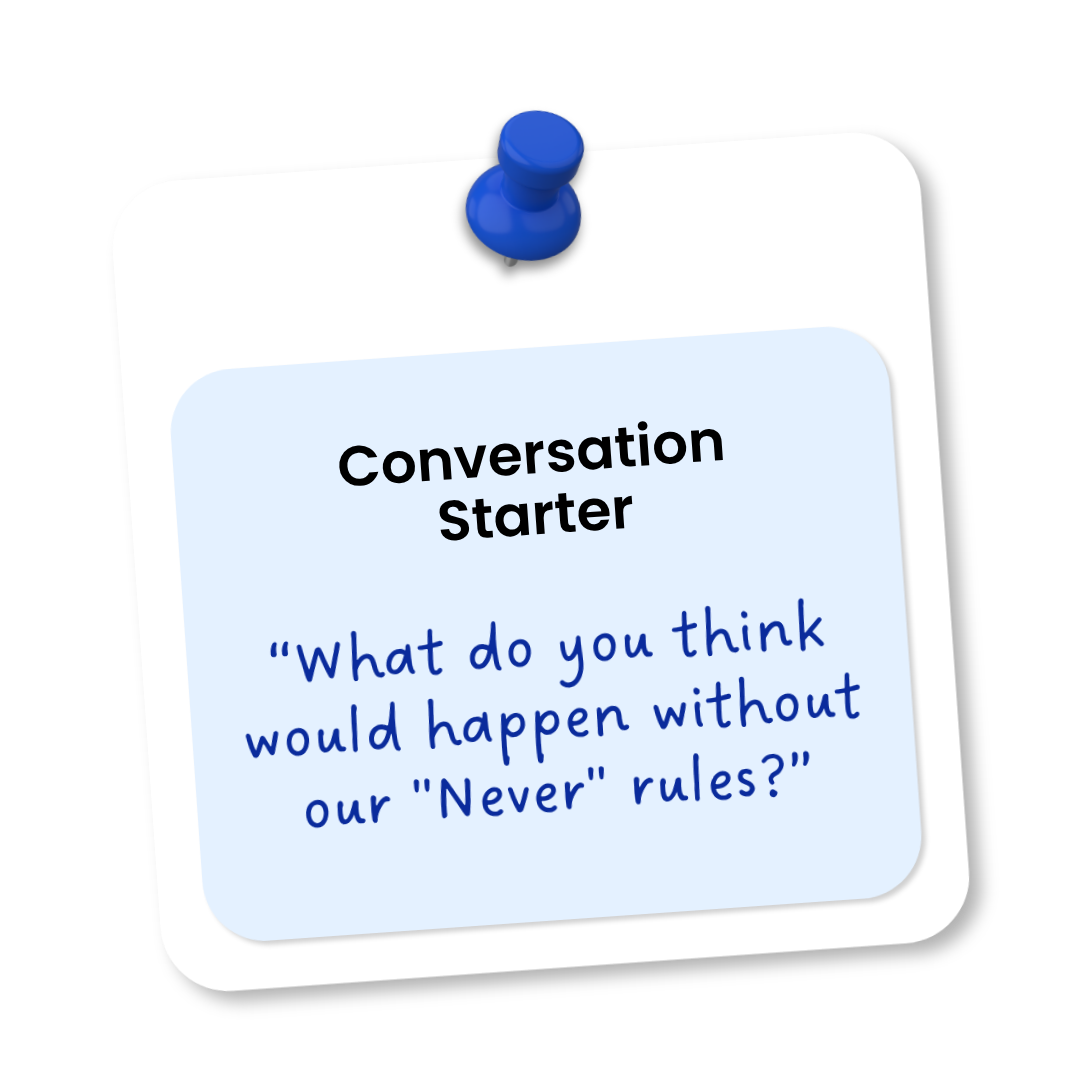
⦿ Never ride a bicycle on the street.
⦿ Always wear a seatbelt in the car.
⦿ Never stand behind a parked or running car.
⦿ Always stay close to a parent or guardian when outside the home.
Conversation Starters For You and Your Child

OBJECTIVE #1
Rules for Physical Safety and Security
Some rules exist to keep your child physically safe. These use the words 'Always' or 'Never' — and they are non-negotiable. Think about every place your son or daughter spends time and what rules apply there.
Erik’s Tip ★
For objective #1

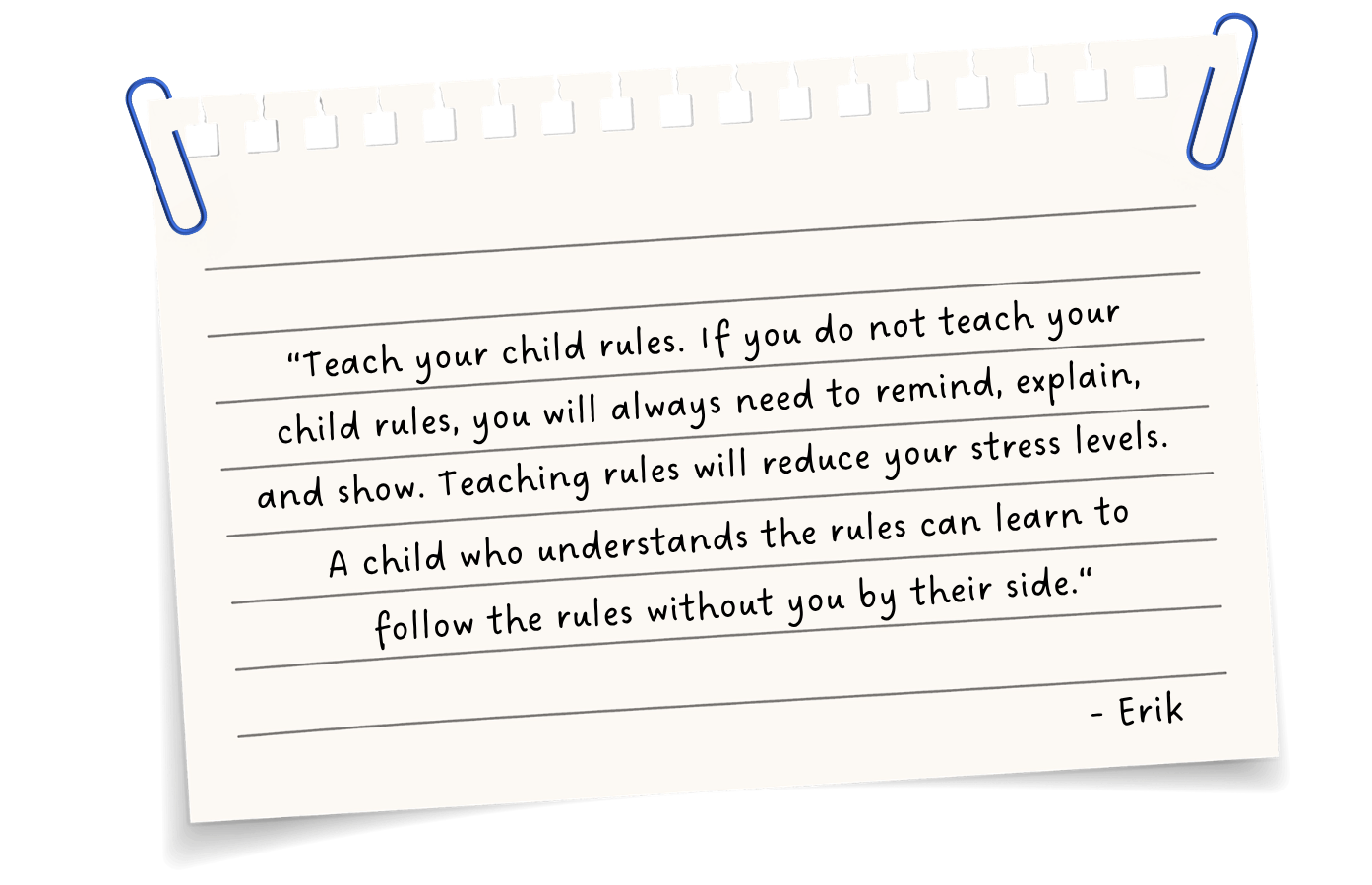
Always and Never rules are not up for debate. Teach them early, repeat them often, and mean them every time. — Erik
-
⦿ Say out loud one Always rule and one Never rule you follow every day.
⦿ Next time you are in the kitchen or outside, follow the safety rule without being reminded.
-
⦿ Walk through your home and outside spaces — write down every safety rule your child needs to know.
⦿ Practice one safety rule with your child this week until they can do it without a reminder.


-
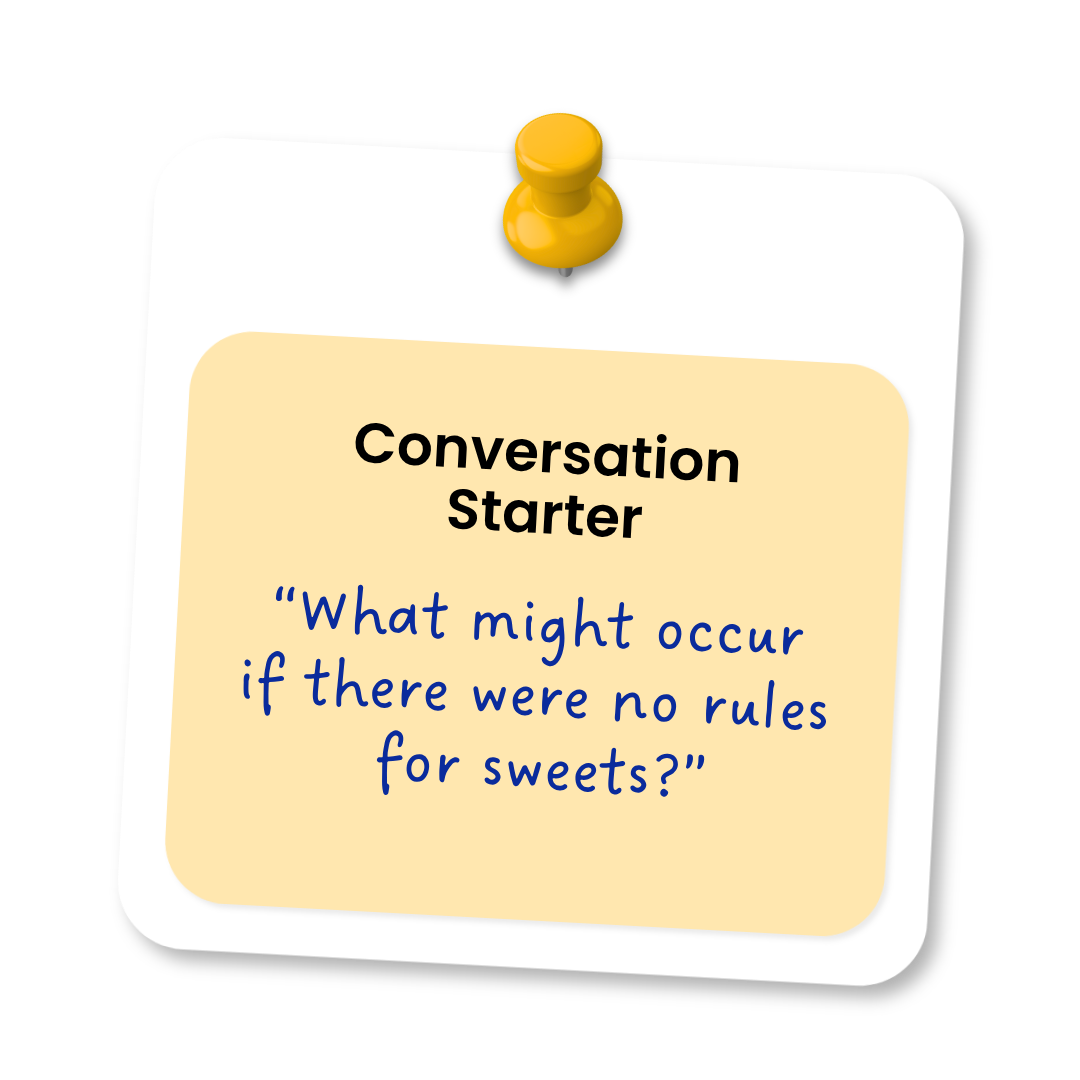
⦿ Frustration tolerance means learning to be patient when you cannot have something, or cannot have it yet. Parents teach this by saying No, Not now, or Later with confidence and consistency.
⦿ Use these words to set limits on screen time and sweets — both of which need clear rules.
⦿ Decide in advance: which privileges are allowed, how often, and for how long? Write them on the schedule so your child always knows.
⦿ Decide how many tasks or routines need to be completed before a privilege is granted.
⦿ Set clear rules for special privileges too — like outings or purchases at the shop.
⦿ Remember: sometimes not getting what you want is the best thing that can happen. It helps children figure out what truly matters to them.
Conversation Starters For You and Your Child
OBJECTIVE #2
Rules for Handling Frustration & Waiting
The words “No,” “Not now,” and “Later” are powerful teaching tools. They help children handle frustration, excitement, and disappointment. They also teach children to wait and keep trying.
-
⦿ Practice waiting for one privilege today without arguing or asking again.
⦿ Name one rule about screen time or sweets that you already follow well.
-
⦿ Write down the limits you want to set on screen time, sweets, and special privileges.
⦿ Use No, Later, or Not now calmly and consistently — every time, without giving in.
Erik’s Tip ★
For objective #2
"No," "not now," and "later" are some of the most powerful tools a parent has. When children can't get what they want right away, they get the chance to calm down, problem-solve, and learn about what really matters. These words are not punishments. They are the best lessons you can teach. — Erik


-
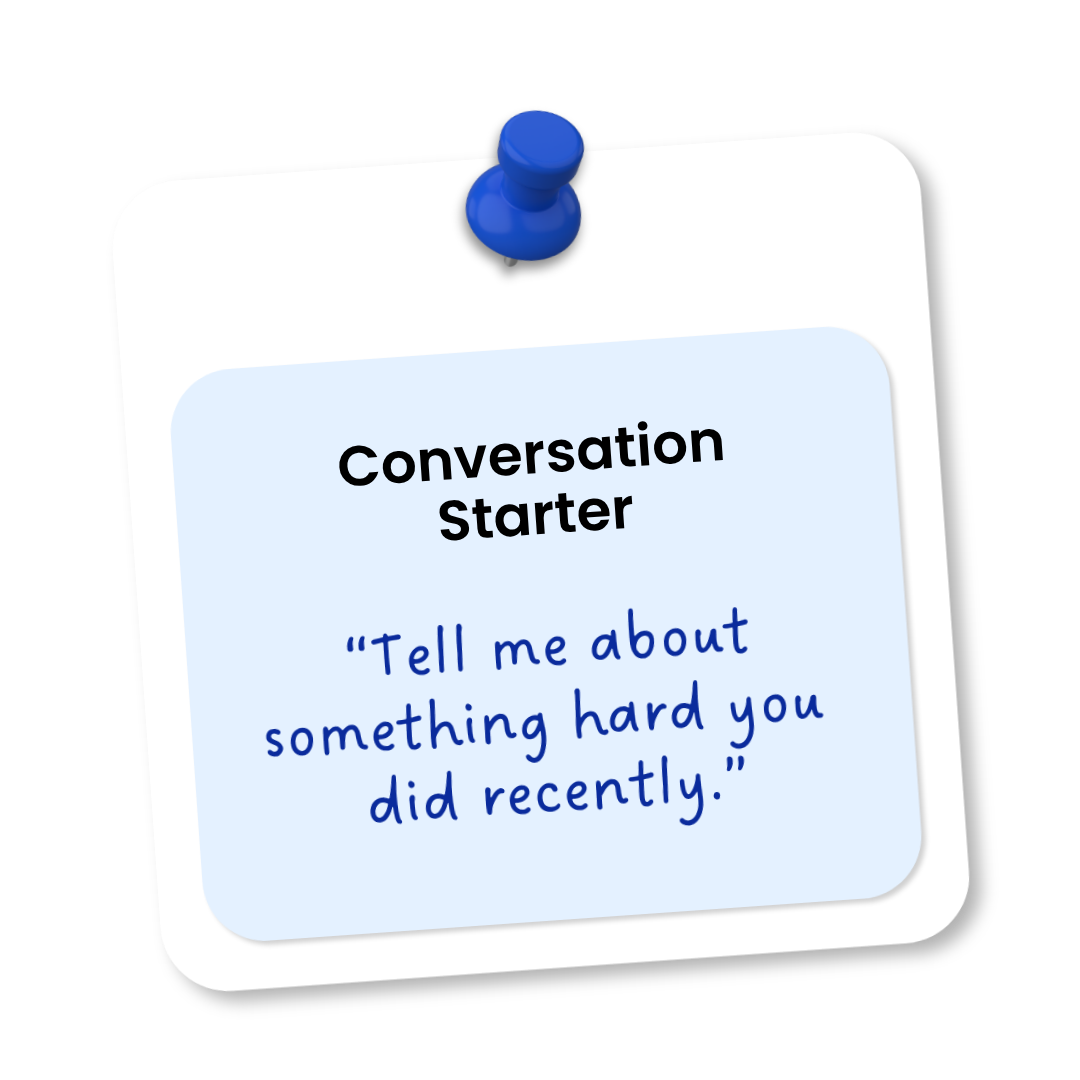
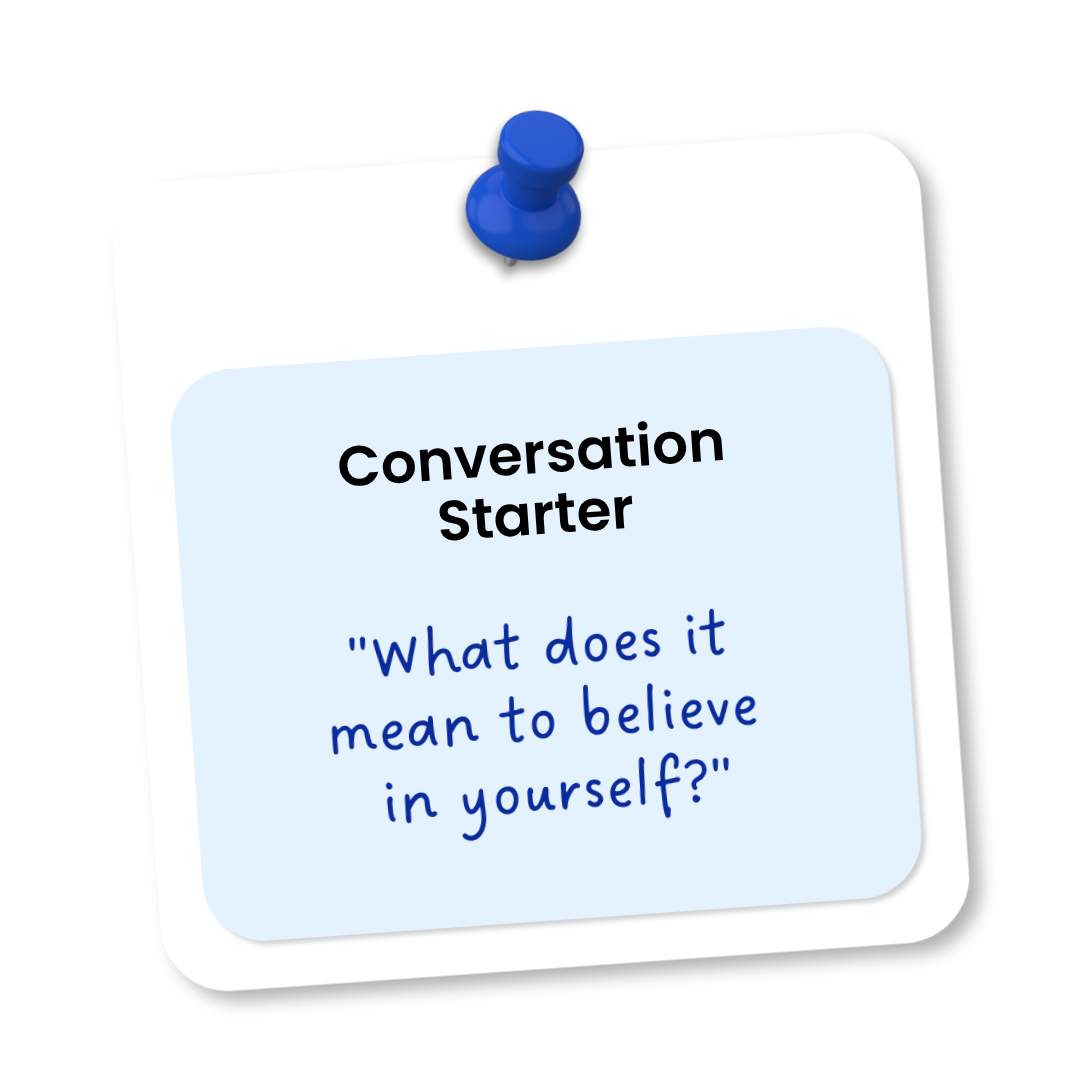
⦿ Self-efficacy means believing you can do something hard. Children build it in two ways: by waiting for what they want and by working at something until they succeed. They need practice handling frustration and hard work.
⦿ “No,” “not now,” and “later” help children learn to wait and keep trying. They feel proud when they work hard and succeed.
Task persistence means managing the frustration of learning. Do not offer help right away. Give your child time to try, make mistakes, and succeed on their own.
⦿ Waiting can also build motivation. Hard work today can lead to success later. Saying “no” or “not now” to a privilege can make room for a more important goal.
⦿ Teach your child that rules show what matters. For example: “You have to do your homework even when it is hard.” The same is true for rules such as practicing for a soccer team or learning to cook a meal.
Give your child chances to try hard tasks. Staying nearby without helping too quickly can build their confidence and strength.
⦿ Explain why the rule matters: “We finish homework now so you can feel proud and prepared for school tomorrow.”
Conversation Starters For You and Your Child
OBJECTIVE #3
Rules for Building Independence and Confidence
When children learn to accept “No,” “Not now,” and “Later,” they learn to keep going when things are hard. This helps them become more independent and confident.
-
⦿ Try to do something hard today without giving up when it gets difficult.
⦿ After finishing a task, tell a parent how it felt to complete it on your own.
-
⦿ Connect every ‘No’ or ‘Later’ to a clear reason your child can understand.
⦿ Notice and celebrate moments when your child pushes through something hard.
Erik’s Tip ★
For objective #3
Independence is not given — it is practiced. The word ‘no’ helps them work towards what they truly need, without you being there. Every time a child hears No and keeps going, they grow a little stronger. — Erik

-
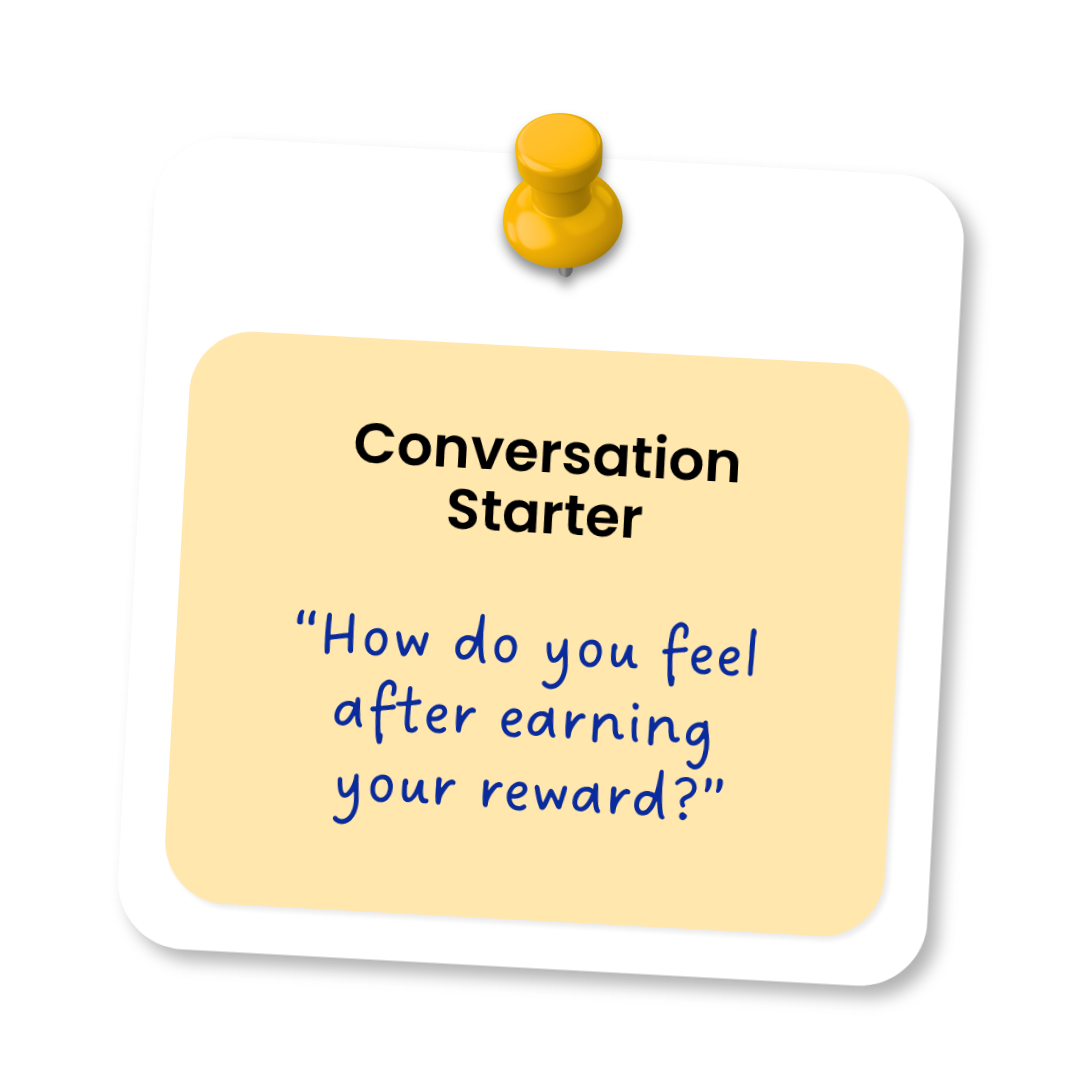
⦿ Use rewards to celebrate successful performance. Make sure that 'success' means a real benefit. Like, staying safe, finishing a hard task, or handling a frustrating situation successfully. It’s great to give praise for everything your kid does right, when they are just learning. Once your child is starting to show some successes, praise less. Or, praise other skills that your child needs to master.
⦿ For young children, a concrete reward (praise, a small treat) helps them understand they did something well. Young learners cannot always see long-term benefits yet. The concrete reward helps them understand. For older kids, a concrete reward or praise is not obligatory. In fact, it’s not necessary once your child shows the skill consistently.
⦿ Always connect the reward to the reason: 'You waited patiently — that shows real self-control. That is something to be proud of.'
As your child becomes more skilled, shift from praising to noticing. “Just notice” when they are being independent and successful.
⦿ Consequences. A consequence works best when your child has already mastered a skill and chooses not to show the skill. If they choose to do the wrong thing, tell them what you noticed. Then, decide if a consequence is needed. A consequence might be taking away screen time privileges for that day. Or, giving an extra chore. It’s not usually a good idea to make the consequence last several days.
⦿ Rewards and consequences lose their power quickly. Use them sparingly.
⦿ Over-use of rewards and consequences can make it harder for your child to feel successful. Your child does not want to behave successfully because of the reward or the consequence. They want to behave successfully because you make them feel proud.
⦿ It gets better: Your child will feel proud when they are successful, even when you don’t notice. Teach them that success is its own reward.
Conversation Starters For You and Your Child
Rewards and Consequences
Rewards and consequences can help, but only when your child is already set up for success. Use them sparingly, or not at all.
-
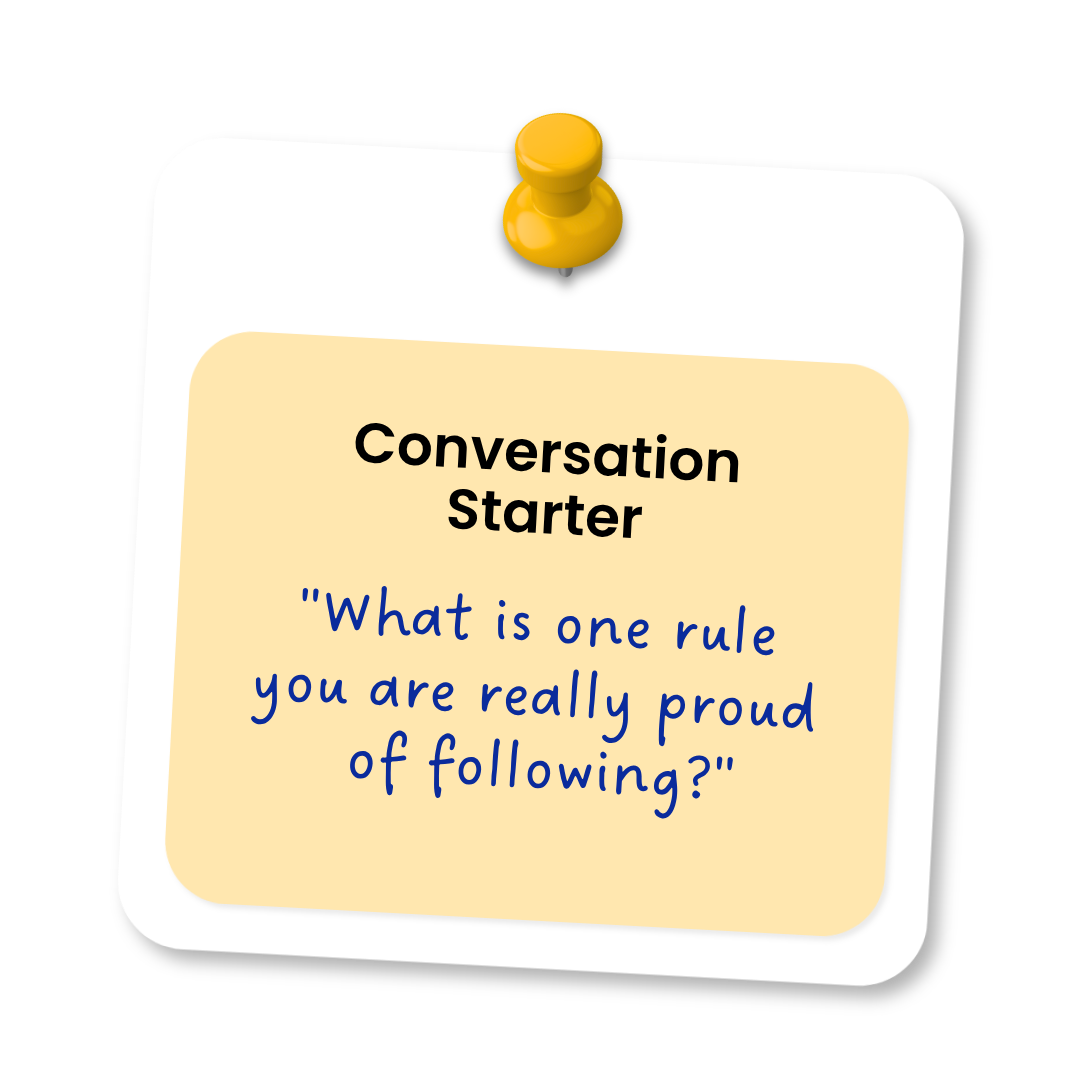
⦿ Name one rule you follow well and explain why it matters to you.
⦿ Next time you earn a reward, say out loud what you did to earn it.
-
⦿ This week, notice at least three moments when your child follows a rule well—and say so out loud.
⦿ Give rewards less often than praise. Let the connection to the benefit do the real work.
Erik’s Tip ★
For objective #4
Praise the effort, not just the result. A child who tries hard and fails is doing better than one who succeeds without trying. — Erik

OBJECTIVE #4
Talk to an Expert
These suggestions work for most children. But every child is unique. Some tips may not fit your son or daughter. Talk with your child's physician first. A physician knows your child's needs best. Trust their professional guidance over anything general.
If things get hard, reach out for support. You do not have to do this alone. Help is always within reach.