Eating
Simple routines that help your child build healthy, lasting eating habits, one step at a time.

Every guide in The IEP for Home library has the same simple structure: one big goal and a few small objectives. Work through the objectives one at a time to reach the goal. Each goal helps your child build skills for everyday life.
T H E S T R U C T U R EGOAL VS OBJECTIVE
What is the goal?
For this Parent Guide, the goal is to help your child build healthy eating habits that include eating wholesome foods.
What are the objectives?
There are five objectives for this Parent Guide: create a simple meal schedule; create a simple snack schedule; choose healthy foods for meals; choose healthy foods for snacks; and support the picky eater.
Y O U R R O A D M A PFive objectives. Each one helps your child build healthy eating habits. Work through them in order and the goal takes care of itself.
THE OBJECTIVES

-
⦿ Set fixed times for breakfast, lunch, and dinner — same time every day.
⦿ Aim for a 15-to-30-minute window for each meal; a kitchen timer can help your child understand when the meal starts and when the meal is over.
⦿ Serve the same food to everyone in the household— avoid making a separate meal for the picky eater.
⦿ Let your child decide how much they eat from what is offered. This teaches them to listen to their own body.
⦿ Turn off all screens during meals so your child can focus on eating.
⦿ When your child asks for snacks between scheduled times, gently encourage them to wait for the next meal to help them develop natural hunger cues.
Conversation Starters For You and Your Child

OBJECTIVE #1
Create a Simple Meal Schedule
A regular meal schedule is the most important first step. When your child eats on a schedule, their body will learn what it means to be “hungry,” learn what it means to be “full,” and be more excited to try different kinds of foods.
Erik’s Tip ★
For objective #1

A meal schedule is not about control; it’s about teaching. Children need to learn what it means to be hungry and what it means to feel full. All you have to do is adhere to the times and let the routine take effect. Then watch and notice all of the great places this can take you and your child. — Erik
-
⦿ Sit down at mealtime without being reminded.
⦿ Keep screens off during the whole meal.
Your child can eat as much food as they want at mealtime. But they should finish within the 15 to 30 minutes you set for the meal. This is different from snacks—see the next objective.
-
⦿ Set fixed times for all three meals and write them on the family schedule.
⦿ Serve the same food to everyone — no separate meals.
If the above steps seem like too much all at once, try scheduling one family meal per week. You can use meals as connection time.
After that, work on scheduling one meal per day. Then, schedule the remaining meals.
Your child can eat as much as they want at meal times- but they have to wait until the right time before eating is allowed. They should also finish eating within the 15 to 30 minute window of time.

-
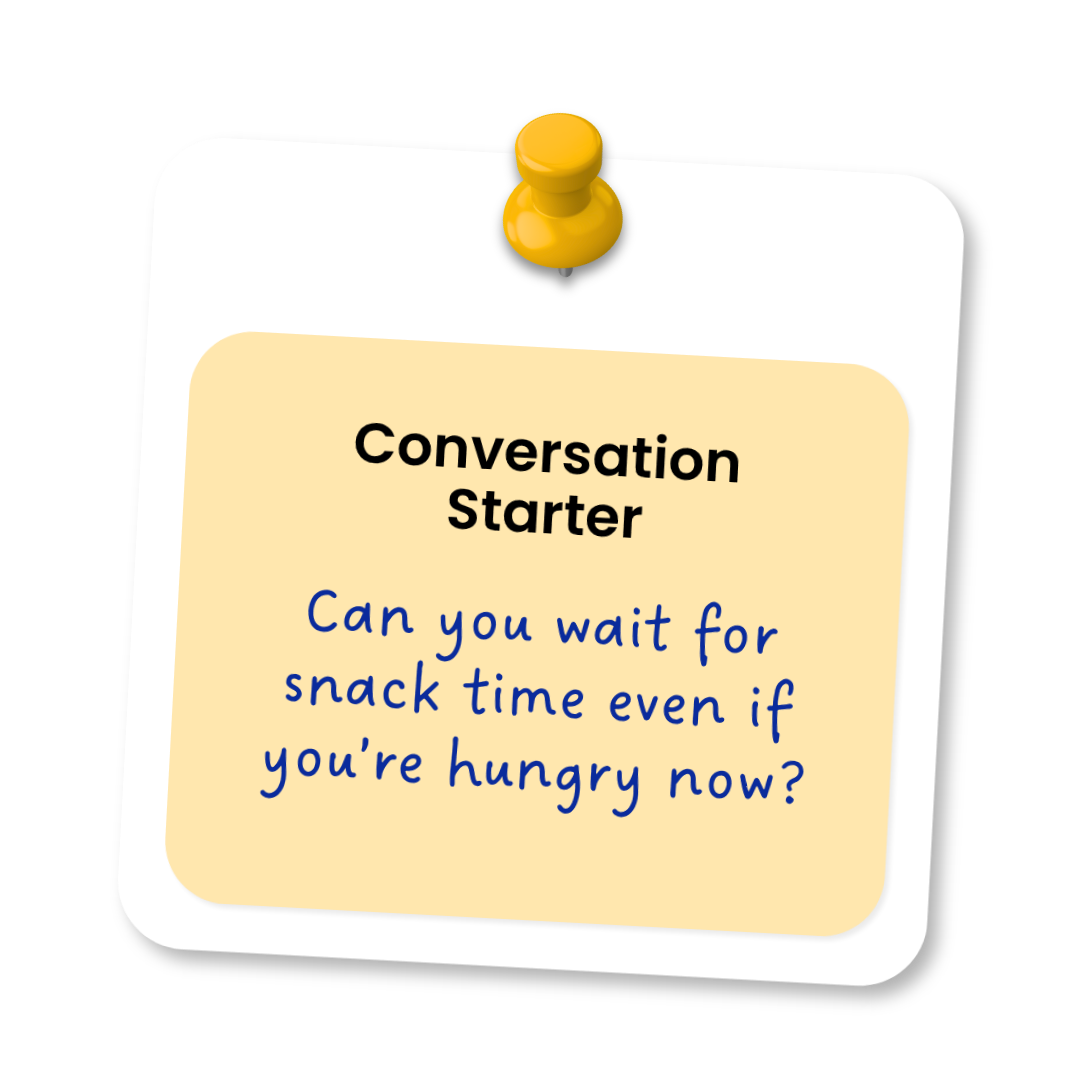
⦿ Offer snacks only once or twice a day at a fixed time — not whenever your child asks.
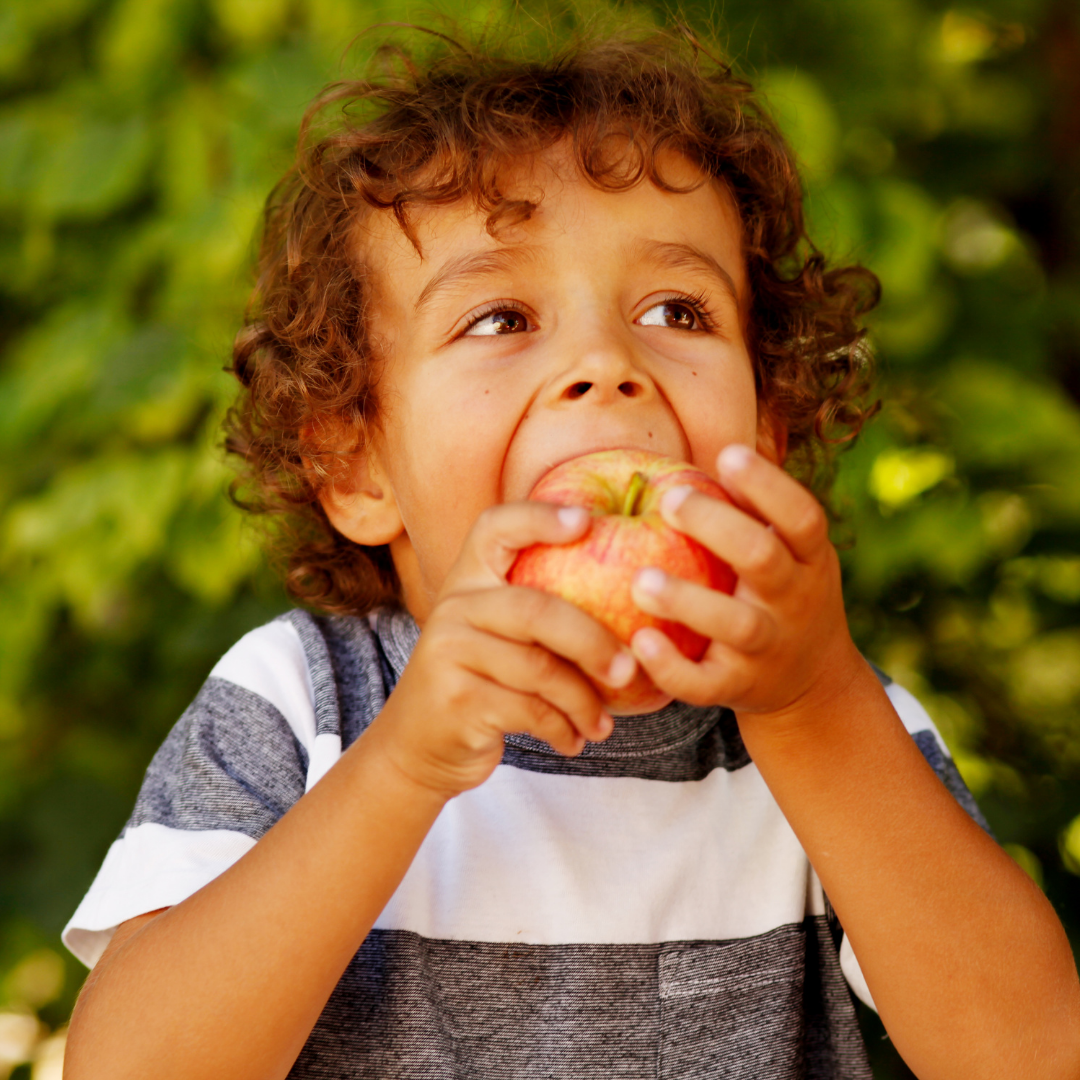
⦿ Keep portions small: one piece of fruit, one carrot stick, or one small granola bar. Small portions make sure they arrive hungry at the next meal.
⦿ If your child is still hungry after the snack, ask them to wait for the next meal. Over time, this teaches them to eat enough at mealtimes.
⦿ Turn off screens during snack time so your child stays focused on eating.
⦿ As the routine settles, gradually replace sugary snacks with healthier ones. Save treats for special occasions or a set day of the week.
Conversation Starters For You and Your Child
OBJECTIVE #2
Create a Simple Snack Schedule
Snacks need a routine too. Scheduled snack times prevent grazing. Your child does not have to have a snack more than once per day. They should not be eating all day long. Your child should eat most of the food they need during meal times.
-
⦿ Wait for scheduled snack time instead of asking in between.
⦿ Try one new healthy snack this week.
-
⦿ Set one or two snack times and add them to the family schedule.
⦿ Control the portion — one small item only — and hold firm if they ask for more.
Erik’s Tip ★
For objective #2
Snacks are controlled by portion size. Meals are different. Your child can eat until full at meal times. For a snack, give one serving of food. — Erik

-
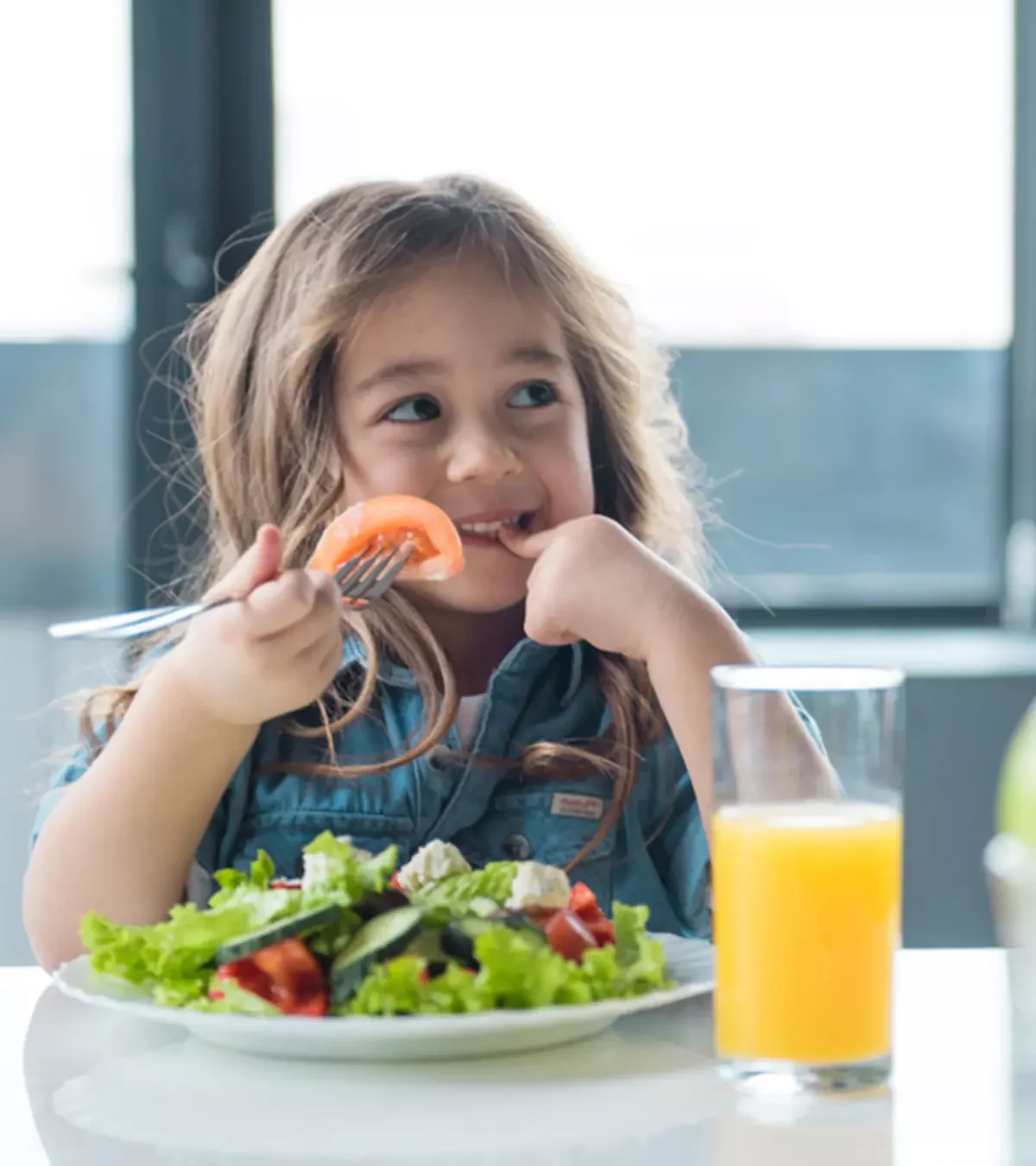
⦿ Choose unprocessed foods over packaged ones whenever you can. If you have to chop, cook, or prepare it yourself, it is usually the healthier choice.
⦿ Serve slow-energy foods first at every meal — vegetables, meats, whole grains, and beans. These foods keep your child full for longer. Fast-energy foods like white bread or pasta come after.
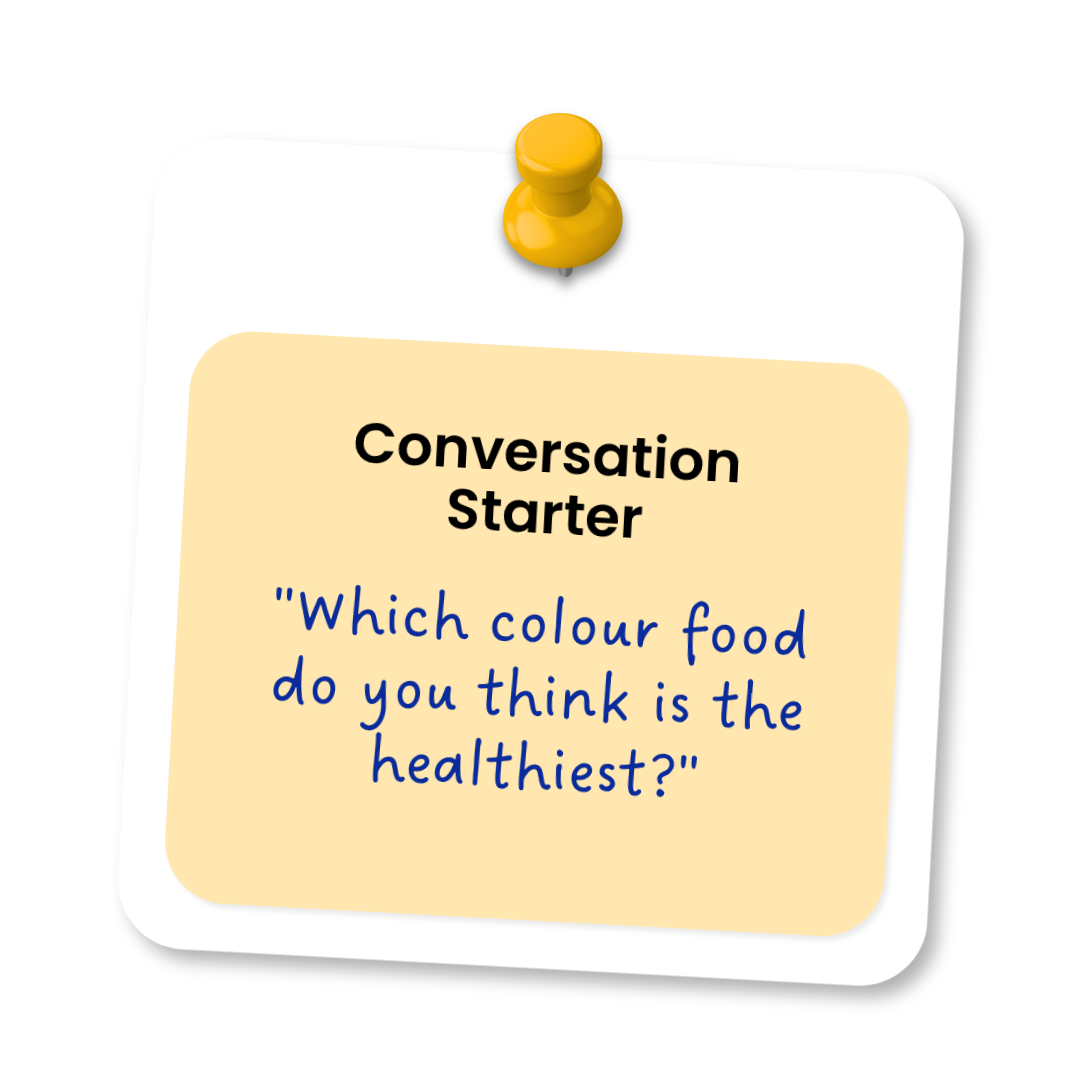
⦿ Make vegetables more appealing: chop them small, blend them into sauces, or start with mild options like corn, carrots, or cucumber.
⦿ Cook grains and beans until very soft. Mix them into meals your child already likes and gradually increase the amount.
⦿ Fish and eggs are usually well accepted by children and are a great source of protein. Animal protein does not need to make up more than a third of the meal.
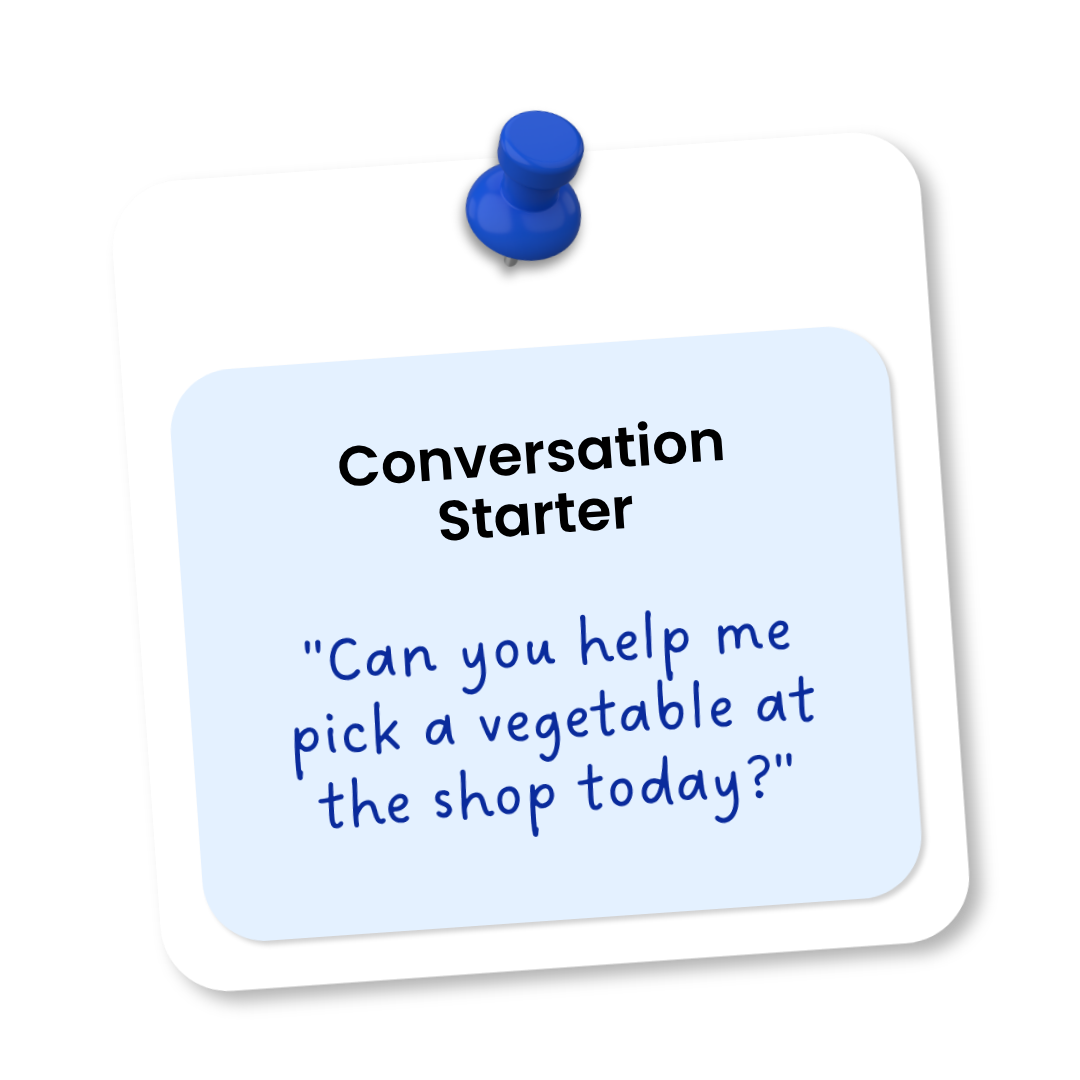
⦿ Let your child help choose food at the grocery store. Or, ask them to help you prepare the meal — children eat better when they are involved with all aspects of food preparation.
Conversation Starters For You and Your Child
OBJECTIVE #3
Healthy Foods for Meals
Once your child is eating on a schedule, start improving what goes on the plate. Two simple rules cover most of what you need: choose unprocessed foods, and serve slow-energy foods first.
-
⦿ Try one slow-energy food at your next meal before eating anything else.
⦿ Help choose or prepare one part of dinner this week.
-
⦿ Make one meal from scratch this week — build the habit from there.
⦿ Serve slow-energy foods first at every meal, before bread, pasta, or rice.
Erik’s Tip ★
For objective #3
Slow-energy foods first means starting meals or snacks with something that digests slowly. Foods that digest slowly have protein (e.g., meat), fat (e.g., butter, dairy, meat), or fiber (whole vegetables and fruits). Your child should eat these foods before eating foods that digest quickly, like white bread or sugar. — Erik

-
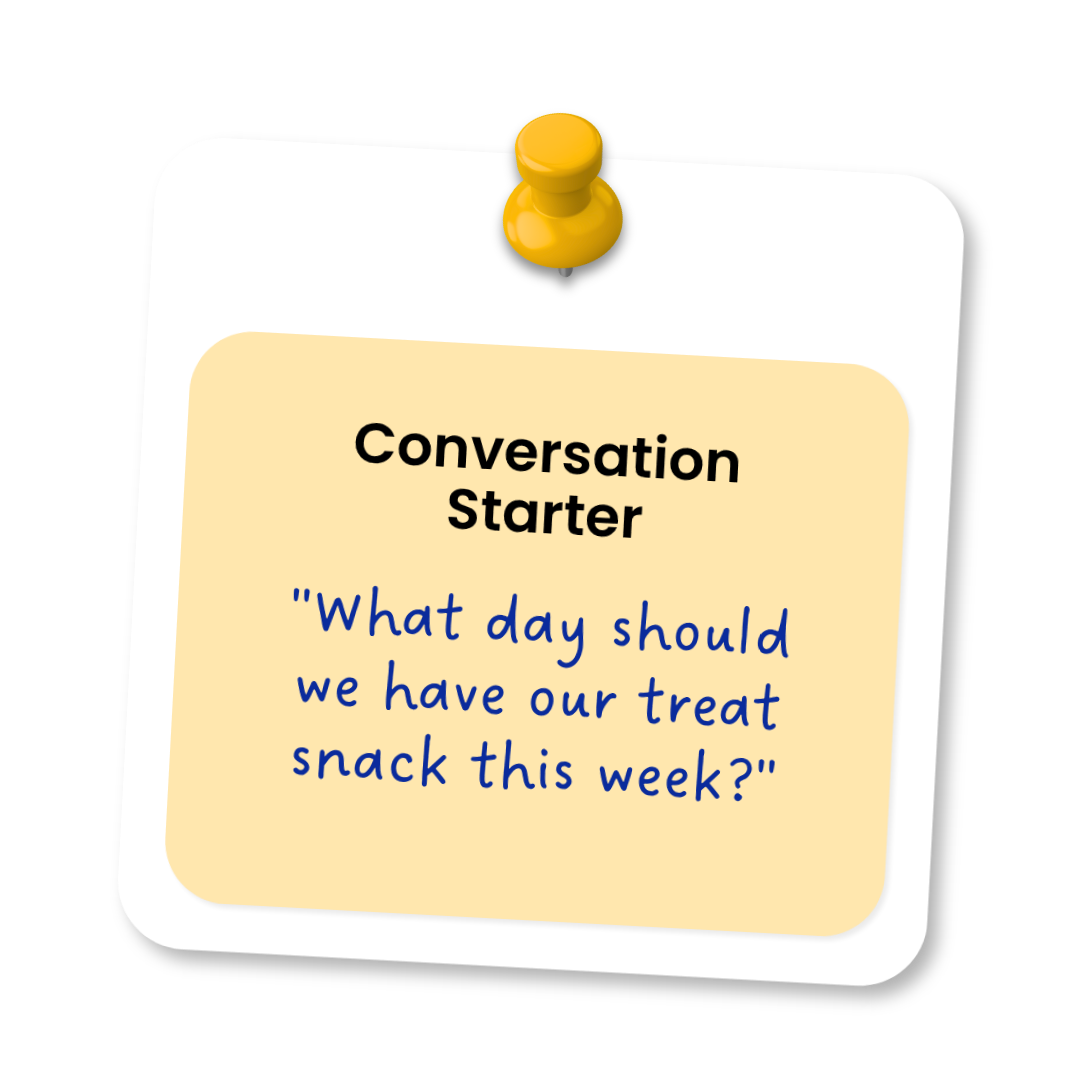
⦿ Decide when sugary or fatty snacks are allowed — for example, weekends only or special occasions. Write it on the schedule so your child knows when to expect them.
⦿ Remove soda and cake from daily snacks straight away. These are never a necessary part of a child's diet.
⦿ If you offer something sweet, choose snacks made with slow-energy ingredients — like oat-based cookies instead of those made with white flour.
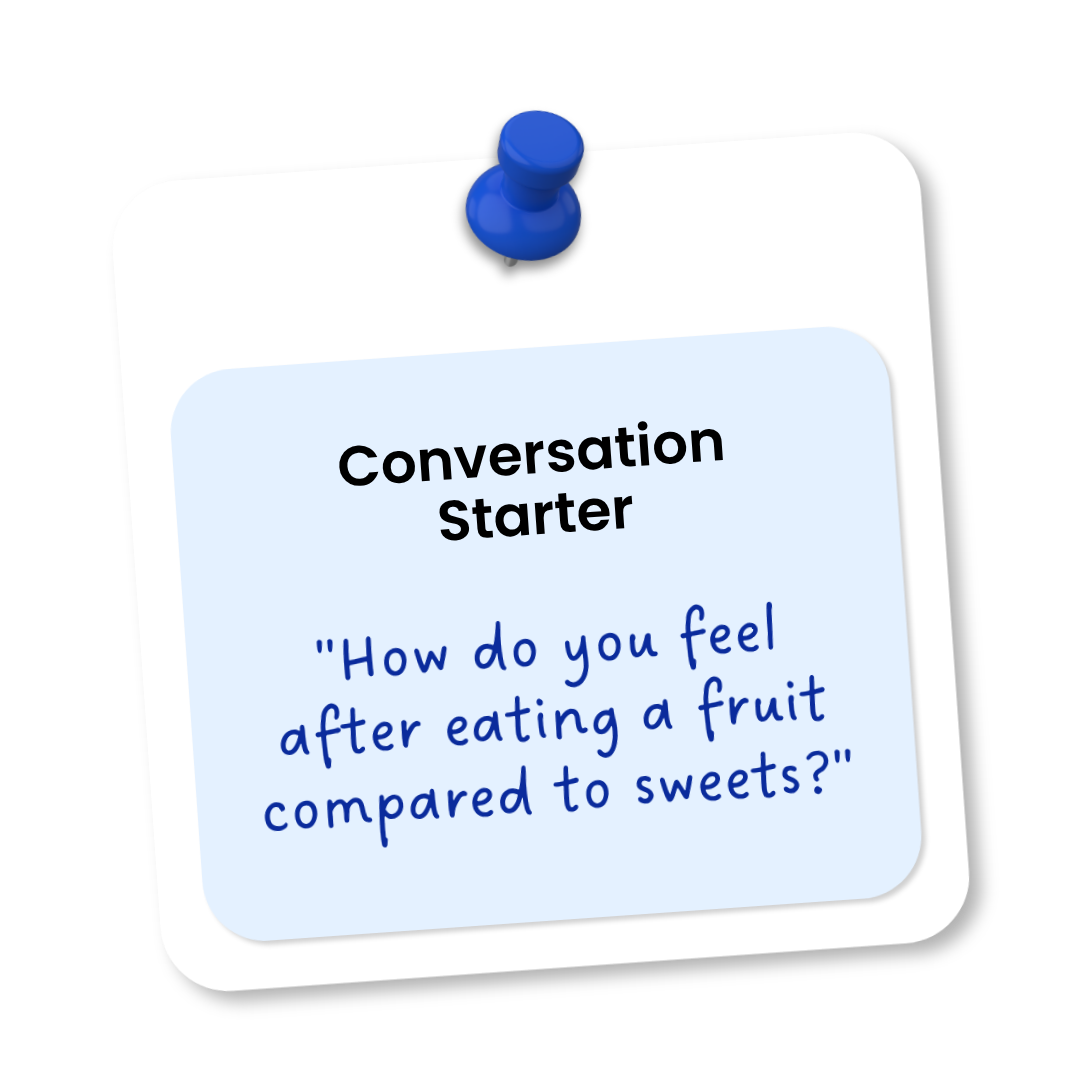
⦿ Replace sweets gradually with fruit. Fresh or dried fruit can be offered daily and satisfies a sweet craving in a healthier way.
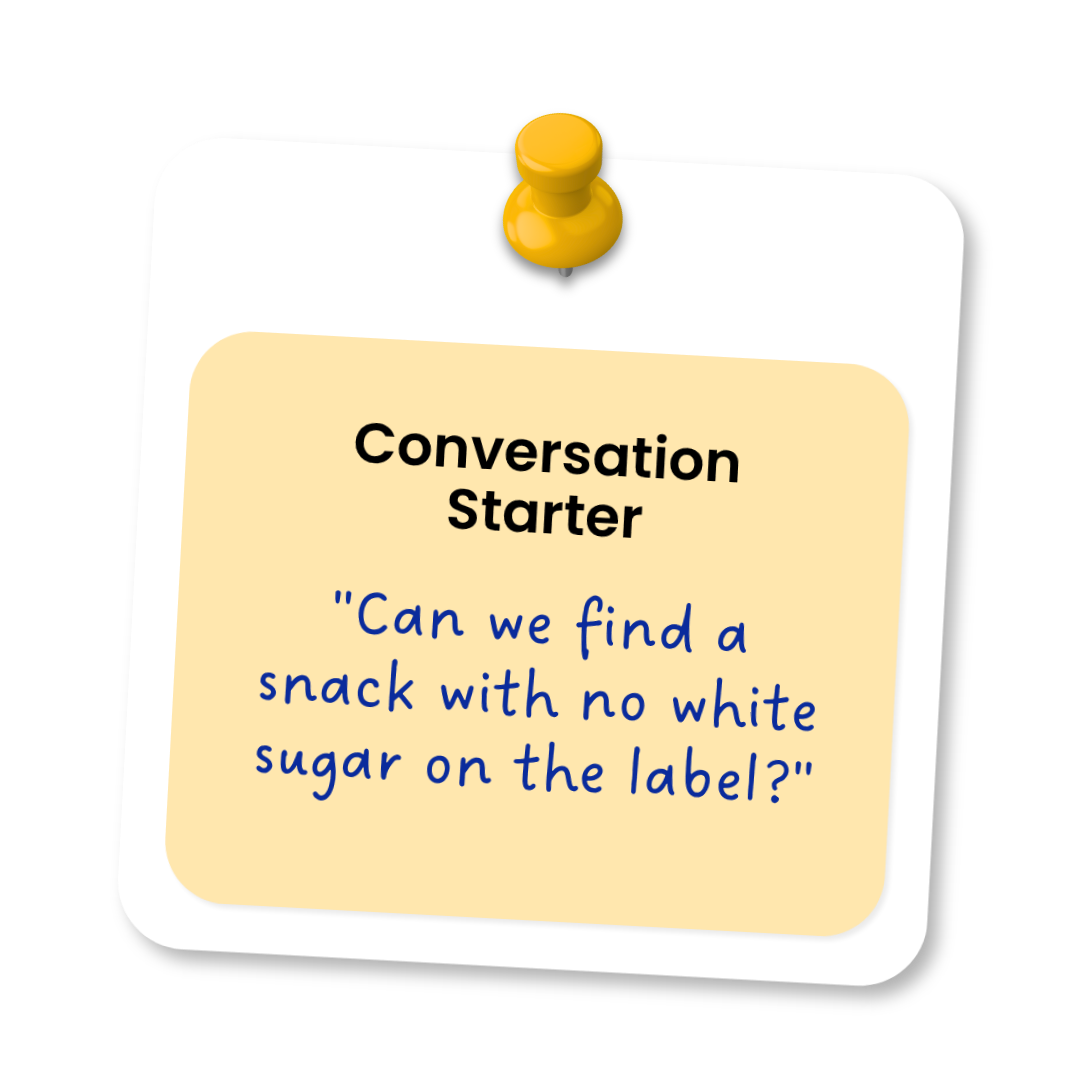
⦿ When shopping, check labels: if white sugar or white flour is at the top of the ingredient list, it is a fast-energy food. Choose slow-energy options when possible.
Conversation Starters For You and Your Child
-
⦿ Try a piece of fruit instead of a sweet snack today.
⦿ Help read a food label at the shop — look for white sugar at the top.
-
⦿ Pick one treat snack day and write it on the schedule.
⦿ Replace one daily sweet snack with a fruit option this week.
Erik’s Tip ★
For objective #4
Scheduling the treat means the child knows in advance exactly when the treat is coming. Give treats at the planned time. You don’t want your child to get treats because they asked, or whined, or because they showed ‘good behavior.’ The treat happens because the schedule says so. This usually means that a treat happens because your child ate some slow-energy foods earlier in the day. - Erik
OBJECTIVE #4
Healthy Foods for Snacks
Now that snack times are scheduled, use that control to guide what your son or daughter eats. The schedule gives you the power — use it to slowly shift toward healthier snack choices.


-
⦿ Check the basics first: children who snack too much or eat without a schedule are rarely hungry enough to try new foods. Fix the schedule before anything else.
⦿ Focus on your child's growth, not the size of one meal. Ask their doctor to check the growth curve — normal growth means they are eating enough.
⦿ Step 1 — Make a list: Write down every food your child already eats. Parents are often surprised by the variety.
⦿ Step 2 — For the truly picky eater, introduce similar foods: Choose a new food that is very close to something they already like—the same texture and flavor. For example, if they only eat one brand of chicken nuggets, try a different brand or homemade pieces of chicken. If they only eat french fries, serve potatoes in another way.
⦿ Step 3 — Start tiny: Serve one small bite of the new food before offering the preferred food. Ask them to swallow it. Progress should appear within a few weeks.
⦿ Step 4 — For very sensitive children: If they refuse to eat the new food, ask them to touch it to their lips. If they gag or refuse, place it on the plate without asking them to eat it. Try again the next day.
⦿ Children who have oral sensitivities may need professional supports. If you are not making progress after a few weeks, ask your child’s doctor to check your child’s weight, growth, and health. Ask them if a feeding specialist is needed.
Conversation Starters For You and Your Child
OBJECTIVE #5
Support the Picky Eater
Most kids go through a picky phase, and it’s usually a habit problem, not a food problem. Start by making sure the schedules from Objectives 1 and 2 are fully in place. Remember what we said in Objective #1? Set up the schedule and let the schedule do its magic.
Picky eating is way worse when meals and snacks are not delivered on a schedule. The child who eats all day long is going to become a pickier eater.
-
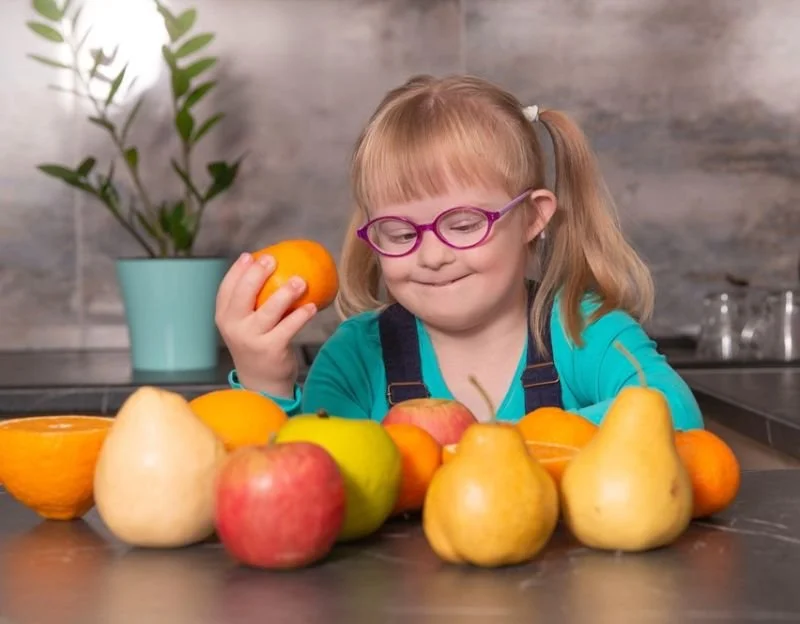
⦿ Try one tiny bite of a new food before eating your favourite.
⦿ Just smell or touch a new food if eating it feels too hard — that still counts.
-
⦿ List all the foods your child already eats before introducing anything new.
⦿ Introduce one similar new food this week — tiny portion, before their preferred food.
Erik’s Tip ★
For objective #5
Picky eating often looks like a food problem, but it’s usually a timing problem. If your child snacks just before a meal, they won’t be hungry enough to try new foods. Once eating times are set and spaced out, real hunger has room to build. A genuinely hungry child is more willing to try or accept foods they’d otherwise refuse. You do not need to pressure your child or negotiate. Let the schedule do the work. — Erik
Talk to an Expert
These suggestions work for most children. But every child is unique. Some tips may not fit your son or daughter. Talk with your child's physician first. A physician knows your child's needs best. Trust their professional guidance over anything general.
If things get hard, reach out for support. You do not have to do this alone. Help is always within reach.