Friendships
Friendships build confidence, kindness, and social skills. Start small, and watch that confidence grow.

Every guide in The IEP for Home library has the same simple structure: one big goal, & a handful of small objectives. Stack the objectives, you reach the goal. Stack the goals, you raise a thriving child.
T H E S T R U C T U R EGOAL VS OBJECTIVE
What is the goal?
A goal is the big picture you are working toward. For this guide, the goal is to help your child build the skills to make and keep lasting friendships.
What are the objectives?
There are seven objectives for this goal. they include sharing, taking turns, and learning social conventions. Use a mini-agenda or schedule to structure your child’s activities with peers. Practice social skills at home, then outside. After, you can teach your child about friendships. Just like rules, take your time with friendships. You’ve got a lifetime of learning about them.
Y O U R R O A D M A PSeven objectives. One for each friendship skill. Work through them in order and the goal takes care of itself.
THE OBJECTIVES

-
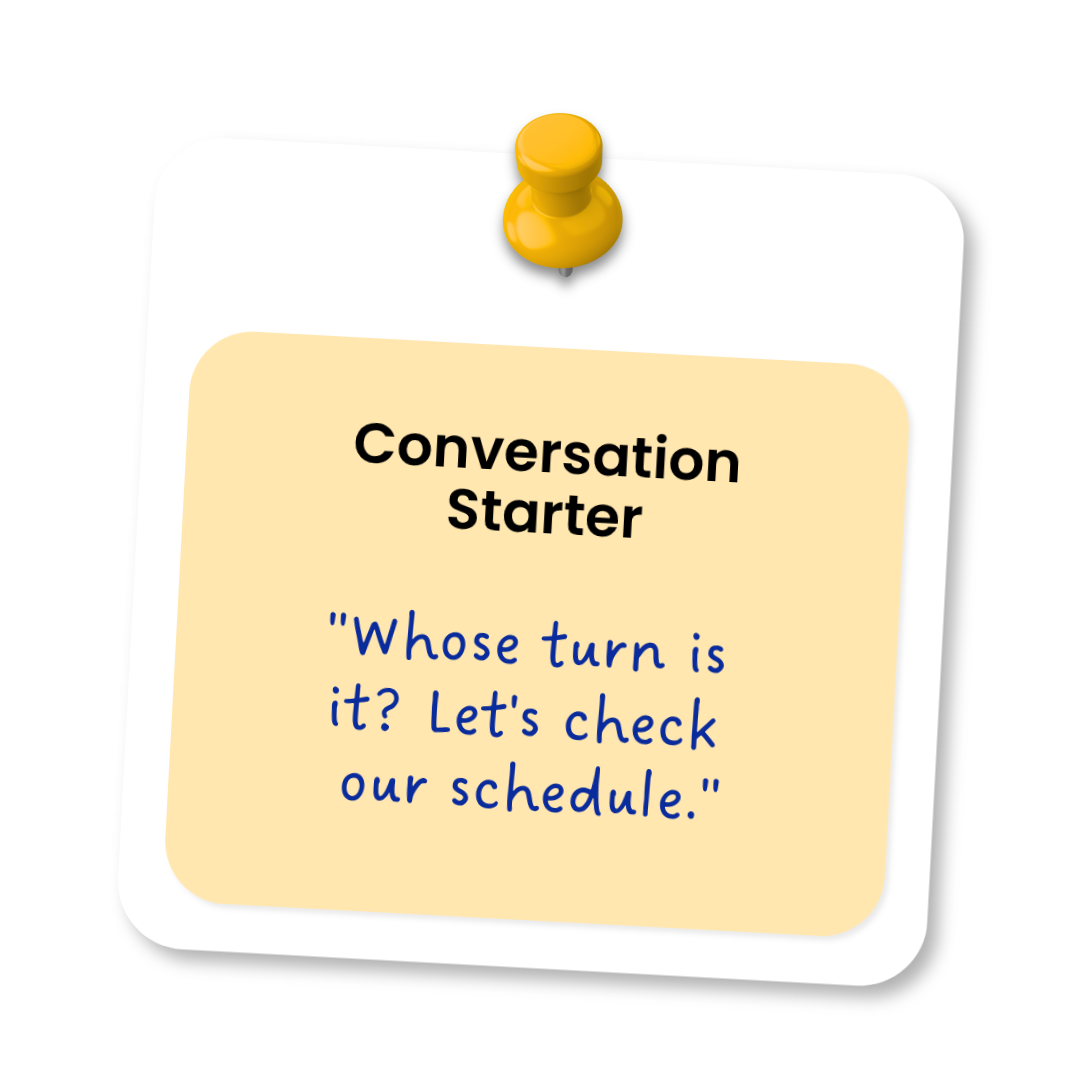
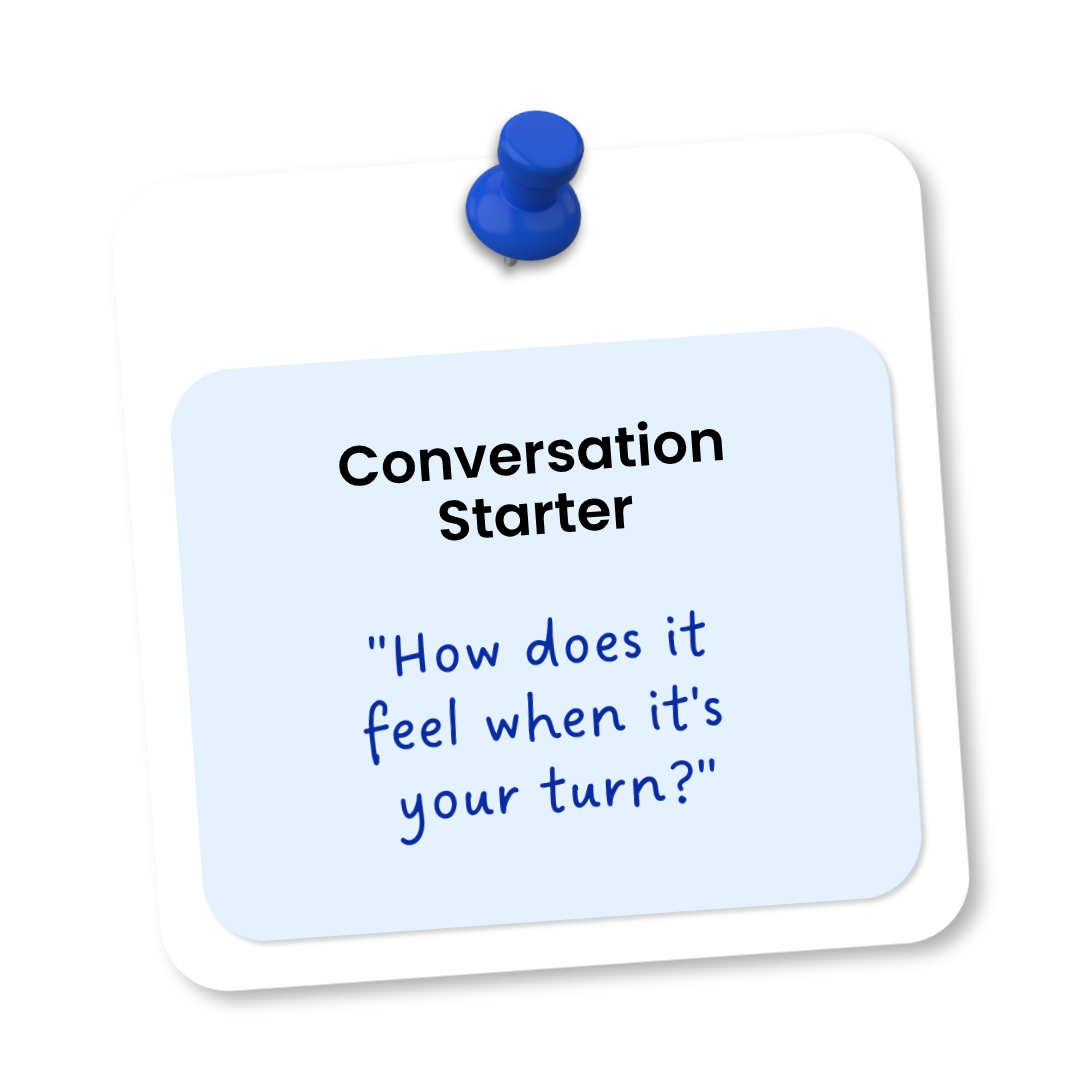
⦿ Taking turns can happen all day long. Whether it’s with meals, toys, or self-care routines, you can always do some turn-taking. Make sure your child knows what taking turns looks like.
⦿ Take turns deciding what you want to do. Use the words “first-then.”
⦿ Make a mini-schedule. Once you agree on an activity, write down whose turn is first, who is second, and how long each turn will last.
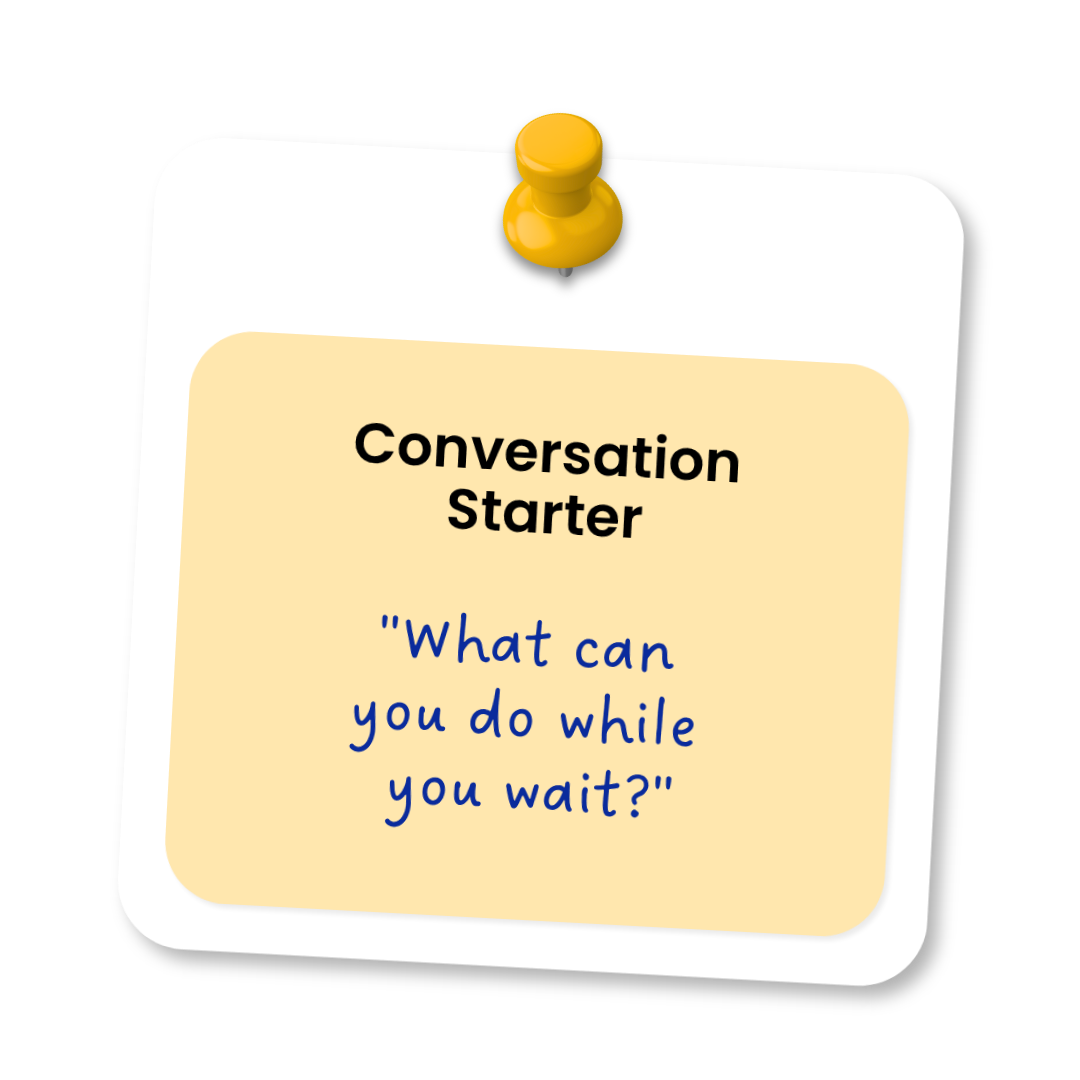
Use a timer to show you when your turn is over, and when your child’s turn starts.
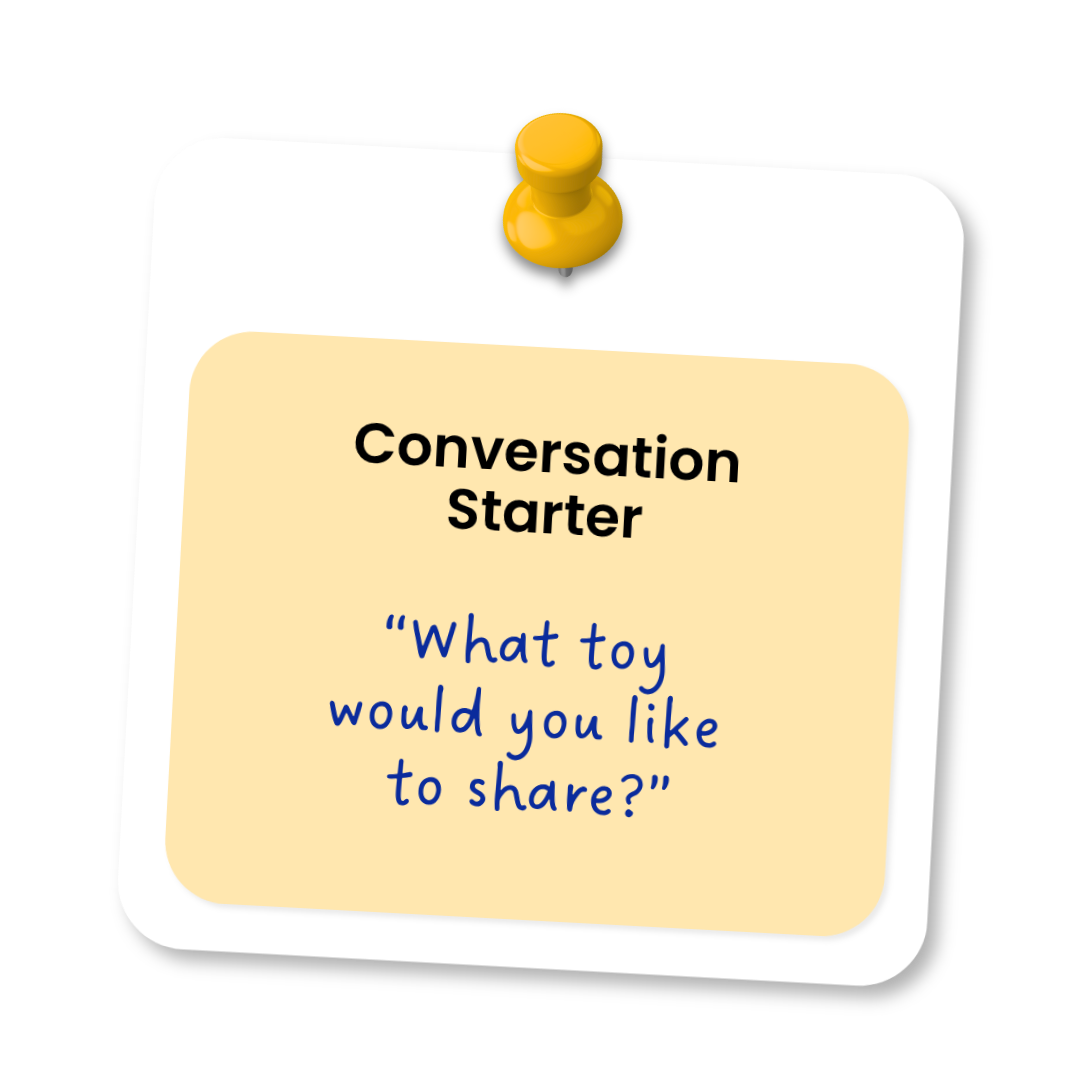
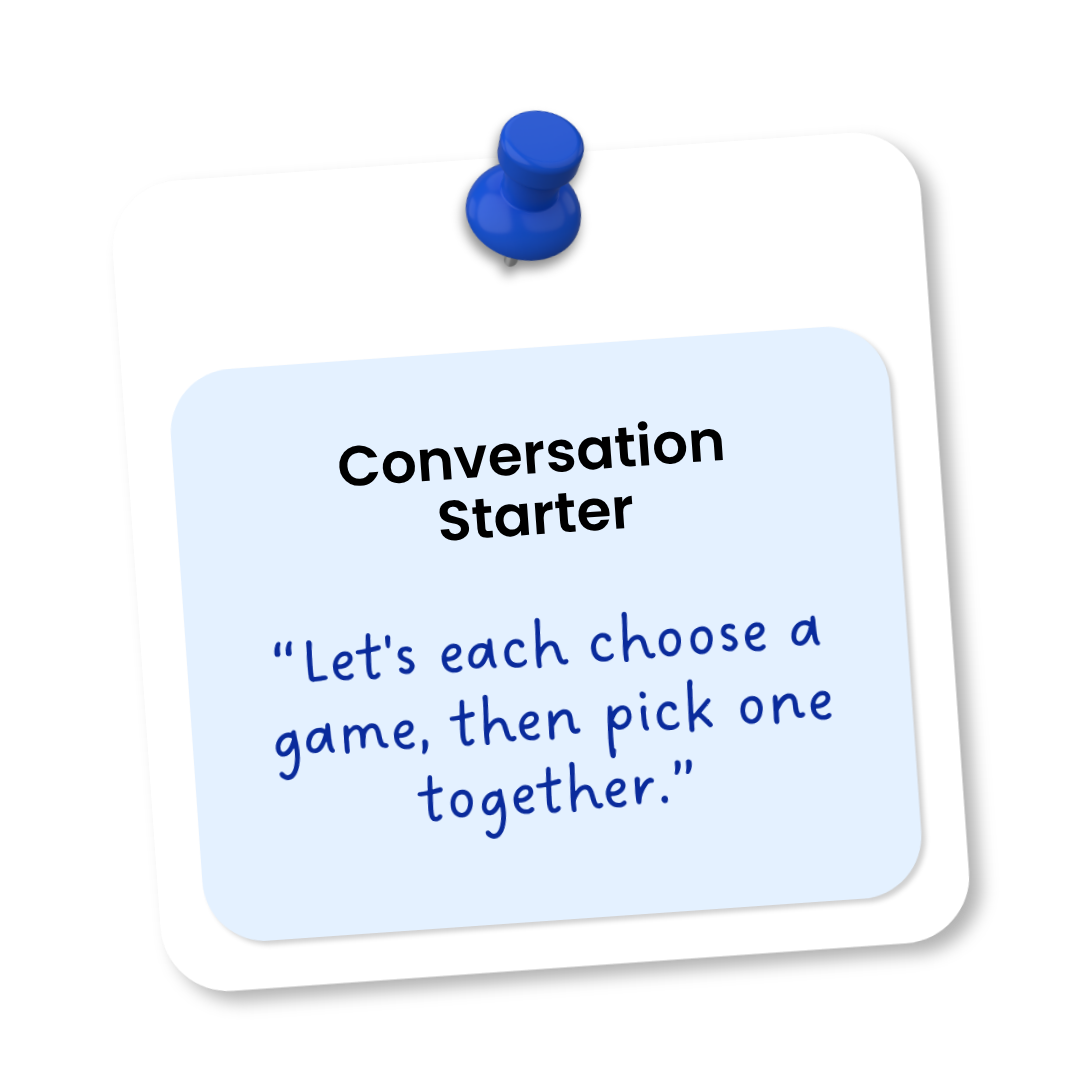
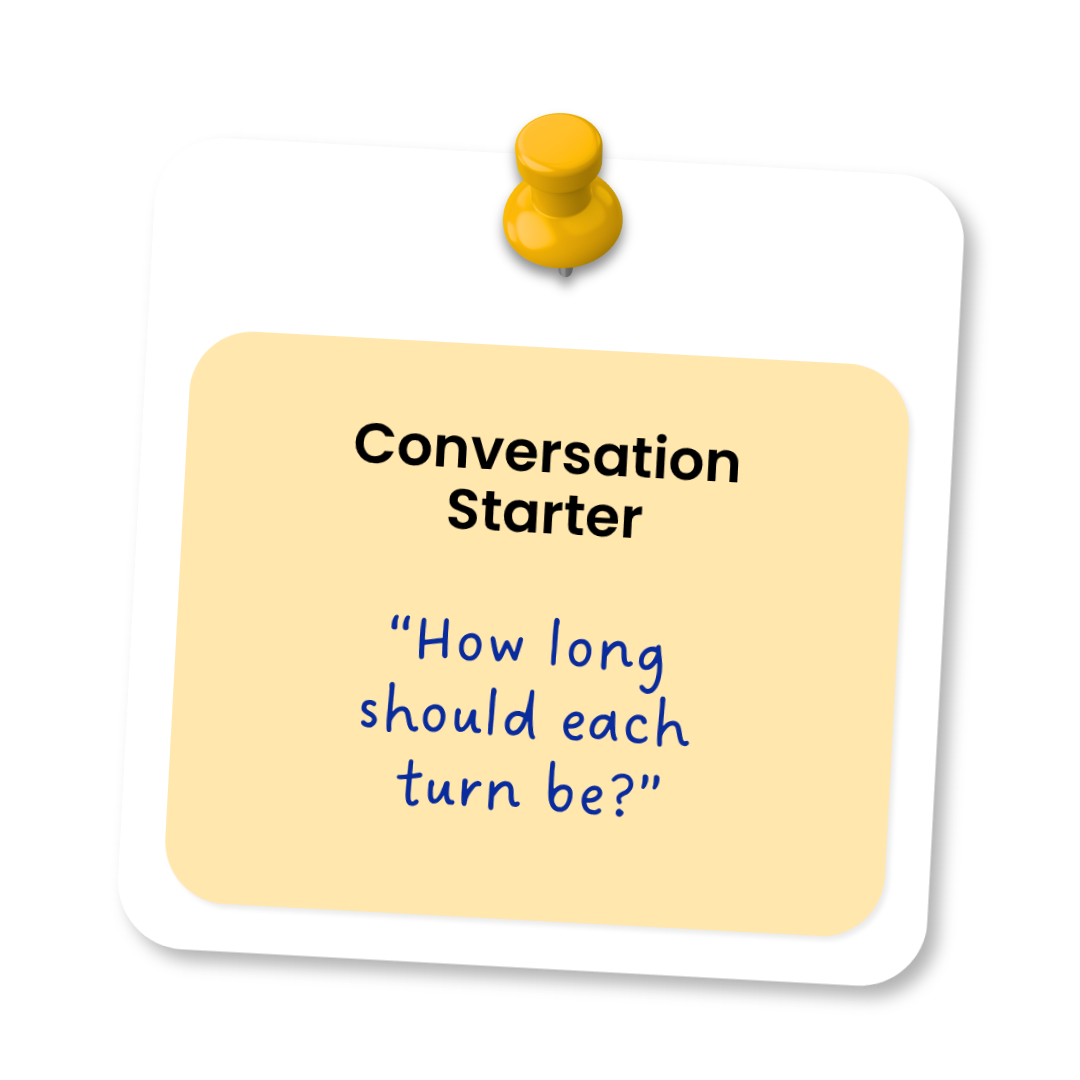
Conversation Starters For You and Your Child

OBJECTIVE #1
Teach How to Share
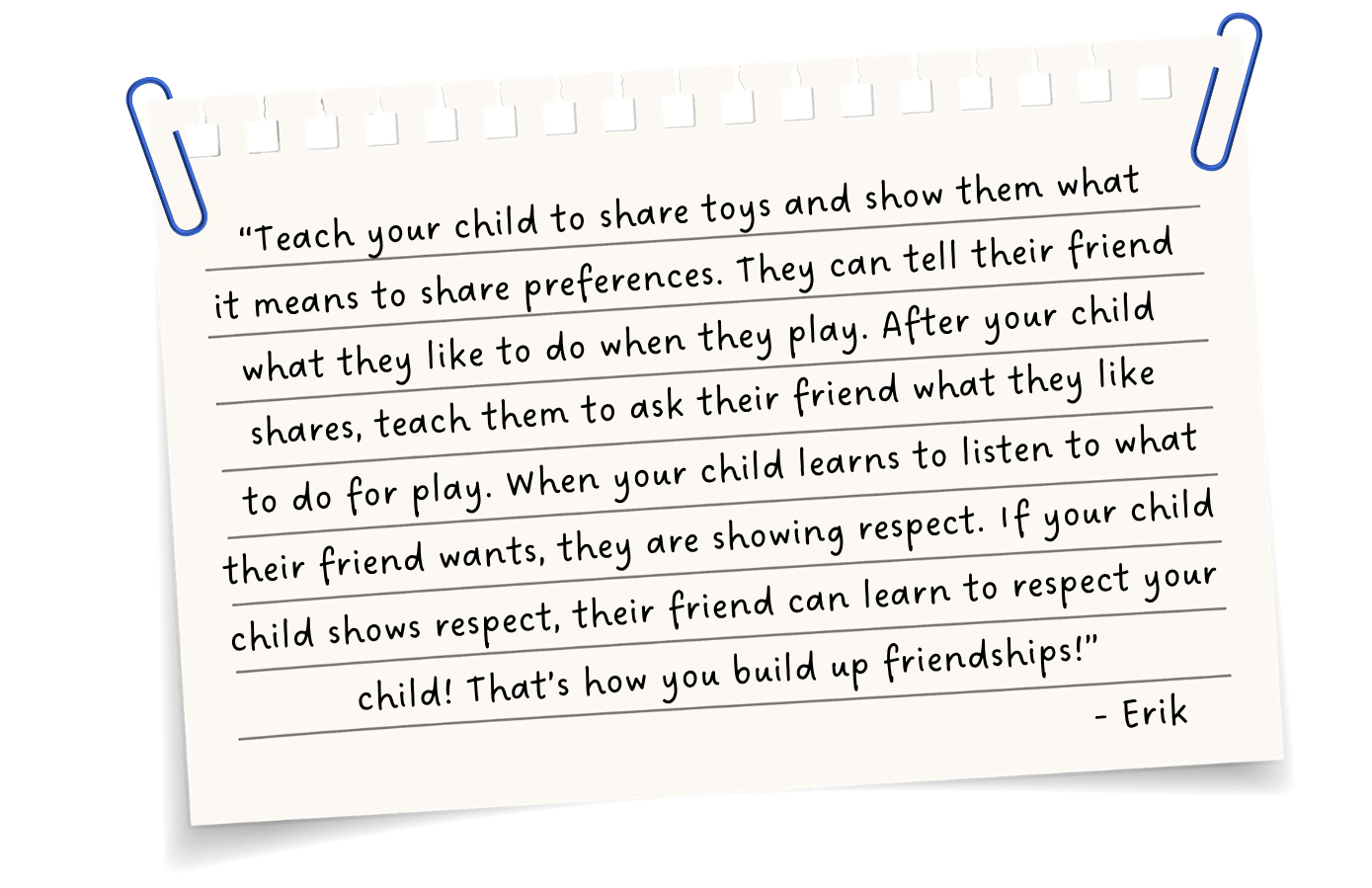
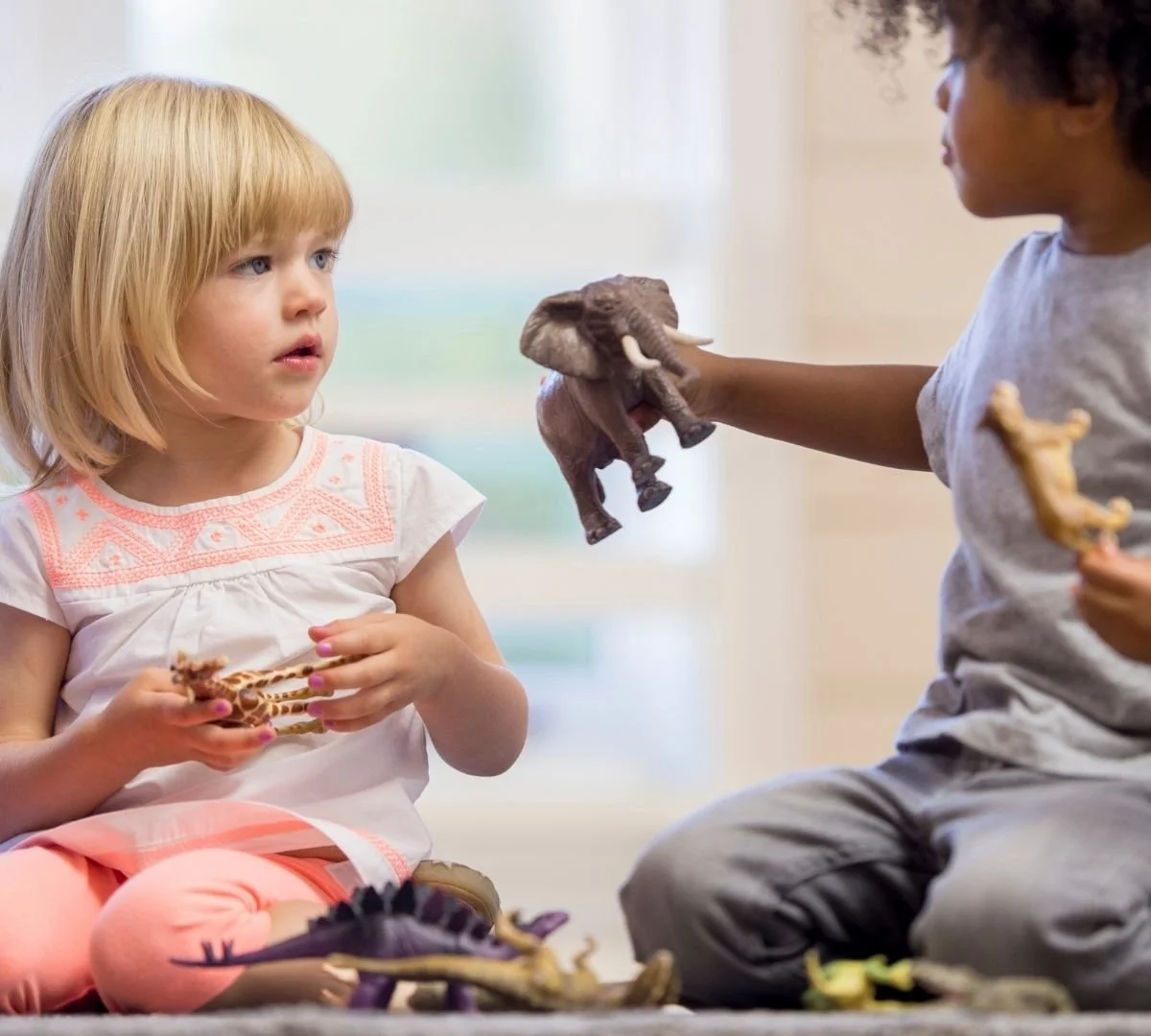
Sharing is one of the first and most important friendship skills. Help your child understand what sharing means with toys, time, and ideas.
Erik’s Choice ★
For objective #1

Start with sharing ideas, not just toys. When a child learns to suggest what to play and then listen to their friend’s idea, they are already practising the hardest part of friendship. - Erik
-
Practice sharing at home first with a parent, sibling, or familiar person. Use the mini-schedule to make turn-taking feel clear and predictable.
-
Model sharing during your own daily interactions. Point it out when it happens naturally: “See? I shared my idea, and you shared yours—that’s teamwork.”


-
⦿ Use the mini-schedule you created earlier to practice taking turns. Your child needs to “see” their turn, not just talk about it.
⦿ Connect the schedule to rules your child already follows at home to make it familiar. Taking turns can happen during meals, when doing self-care routines, and when playing.
⦿ Remind them that waiting for their turn is sort of like waiting for a privilege.
⦿ Reinforce the idea with a simple rule: “First your turn, then my turn,” just like “First work, then play.”
⦿ Keep the approach simple. Use the same activities to show turn-taking. Practice a little bit every day.
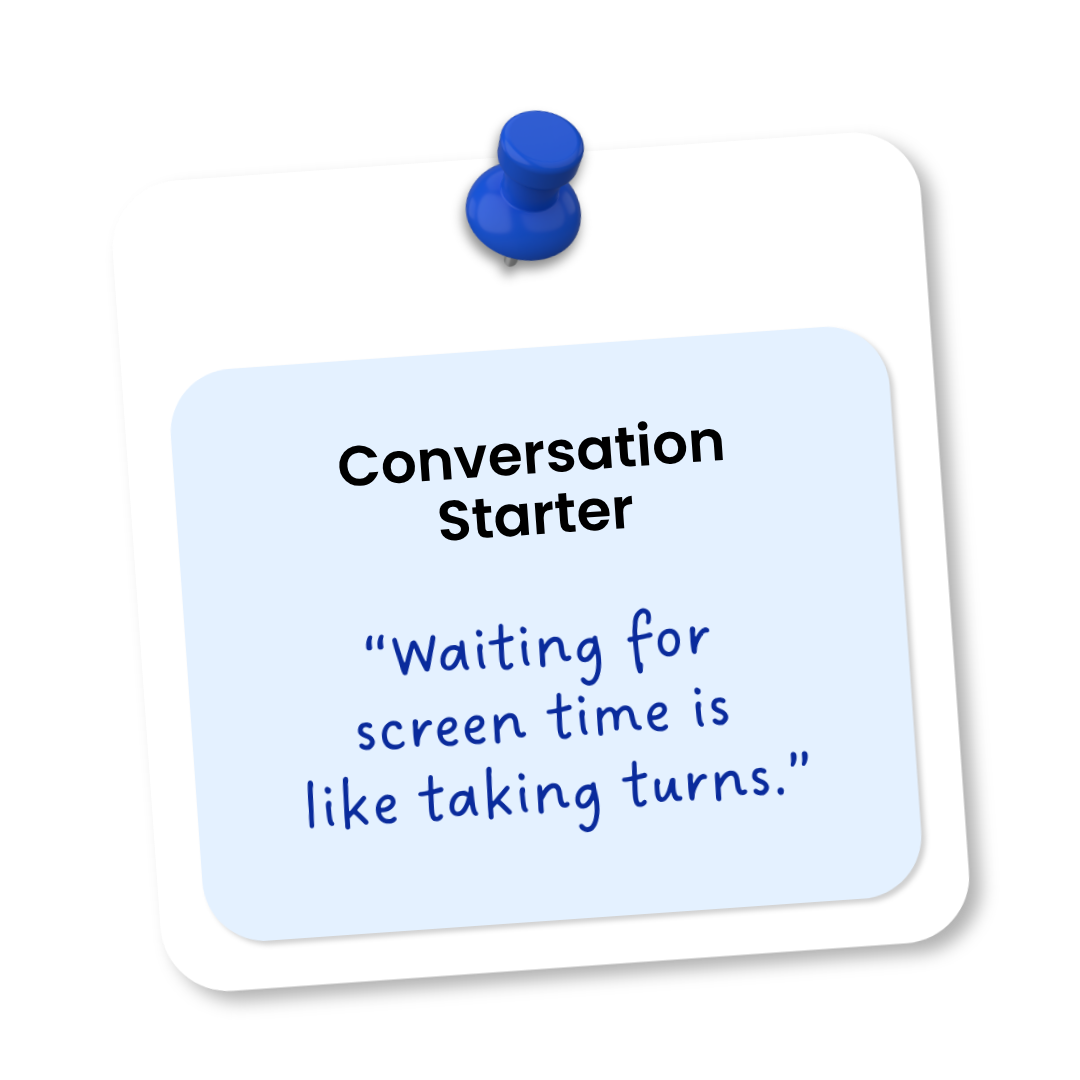
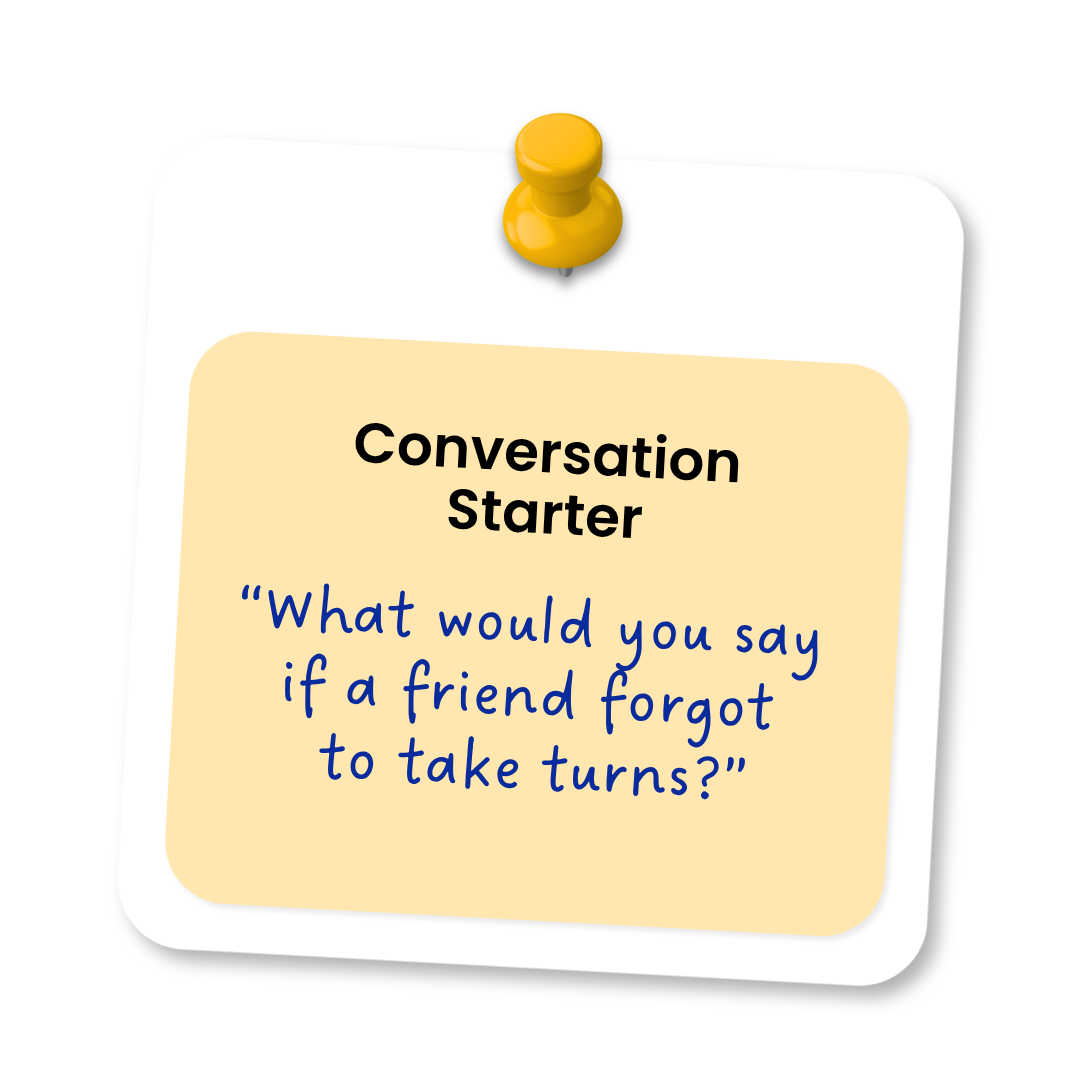
Conversation Starters For You and Your Child
OBJECTIVE #2
Understanding Taking Turns
Focus first on helping your child feel comfortable talking during play. Teach them simple phrases like greetings, asking to join in, giving compliments, and saying goodbye. Practice these at home so they feel natural. This builds confidence and makes it easier for your child to interact with others before introducing structured turn-taking.
-
Practice turn-taking during a game or activity at home. Use the mini-schedule each time so the structure becomes familiar.
-
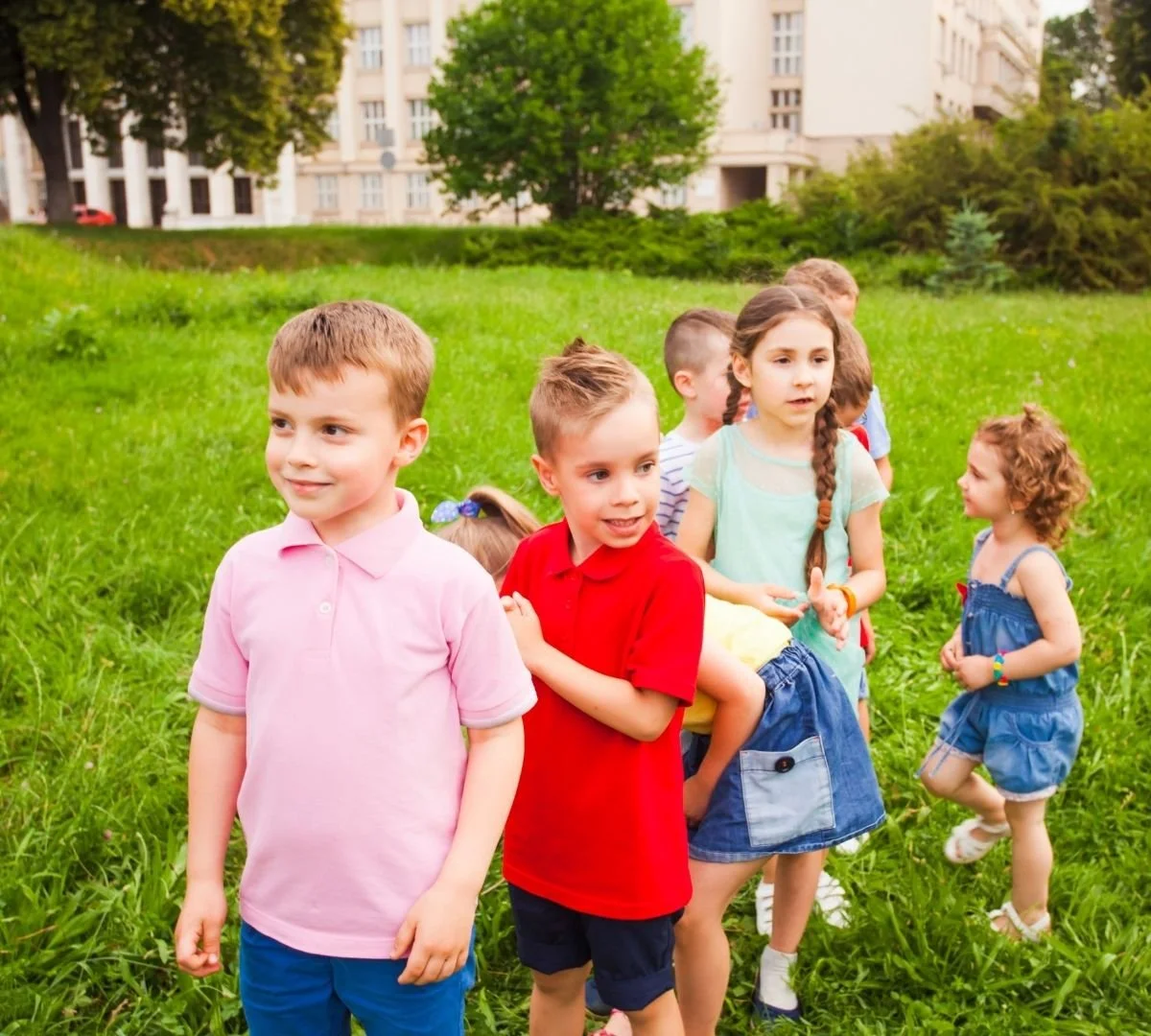
Praise your child every time they wait patiently for their turn. Keeping sessions short at first—success builds confidence.
Erik’s Choice ★
For objective #2
Praise the waiting, not just the playing. When your child waits calmly for their turn, name it out loud—that recognition matters more than the game itself. - Erik

-
⦿ Teach your child simple phrases to use when starting to play, during play, and when saying goodbye. “Hi,” or “My name is-” or “Can I play?” are scripts that your child can use in many situations.
⦿ Practice these phrases together at home before using them with friends.
⦿ Help your child learn what other kids enjoy, such as popular games, characters, or themes like Pokémon or superheroes.
⦿ Make sure they understand the basic rules of common games before playing with peers.
Conversation Starters For You and Your Child
-
⦿ “My name is… What’s your name?”
⦿ “Do you want to play together?”
⦿ “Can I have a turn, please?”
⦿ “Thanks for playing with me. Let’s play again sometime!”
OBJECTIVE #3
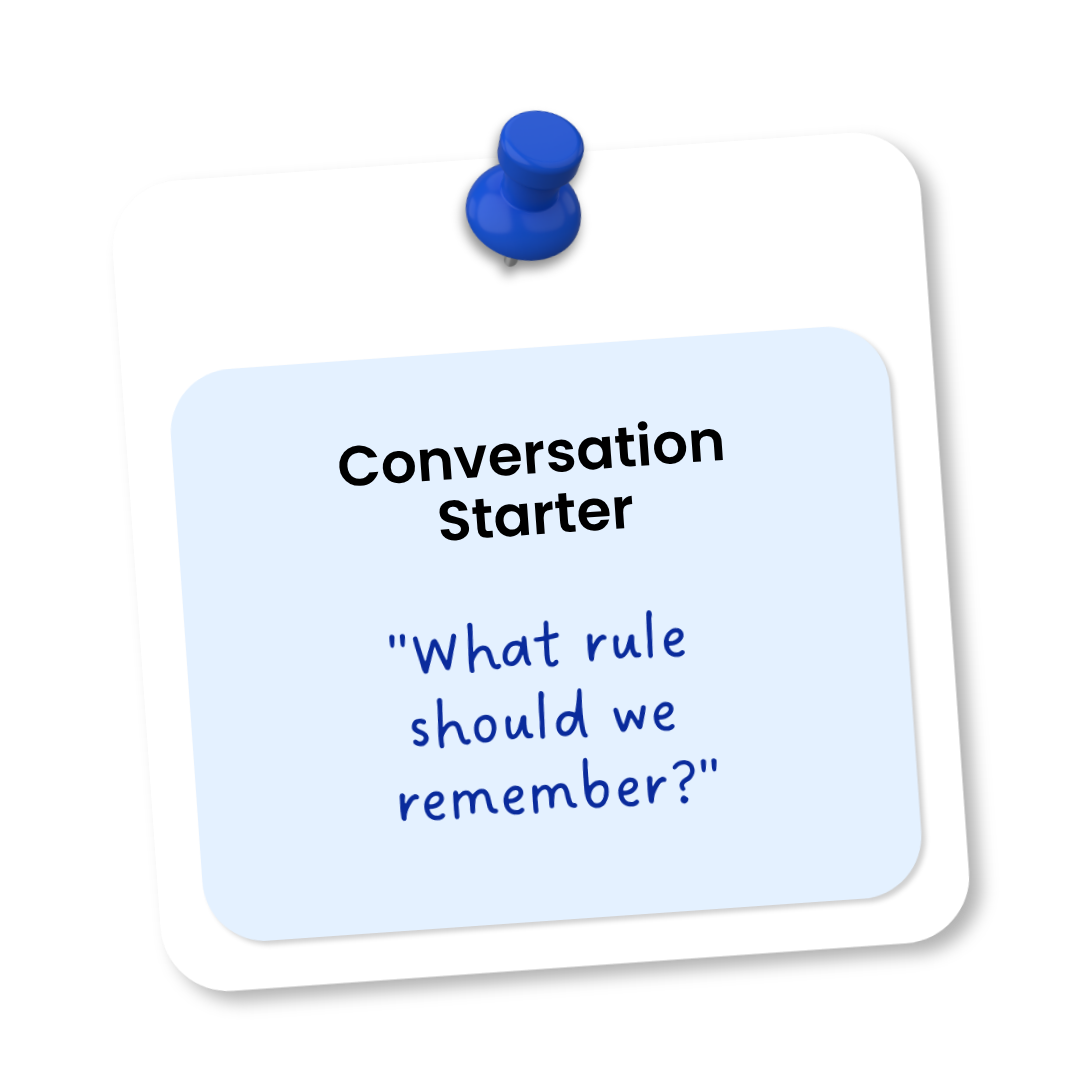
Social Conventions
Help your child learn the basic phrases and rules that make playing with others go smoothly.
Erik’s Choice ★
For objective #3
Rehearsal is the skill. Role-play the phrases at home until they feel natural—a child who has practiced them ten times will find them when it counts. - Erik
-
Practice the phrases above at home until they feel natural.
-
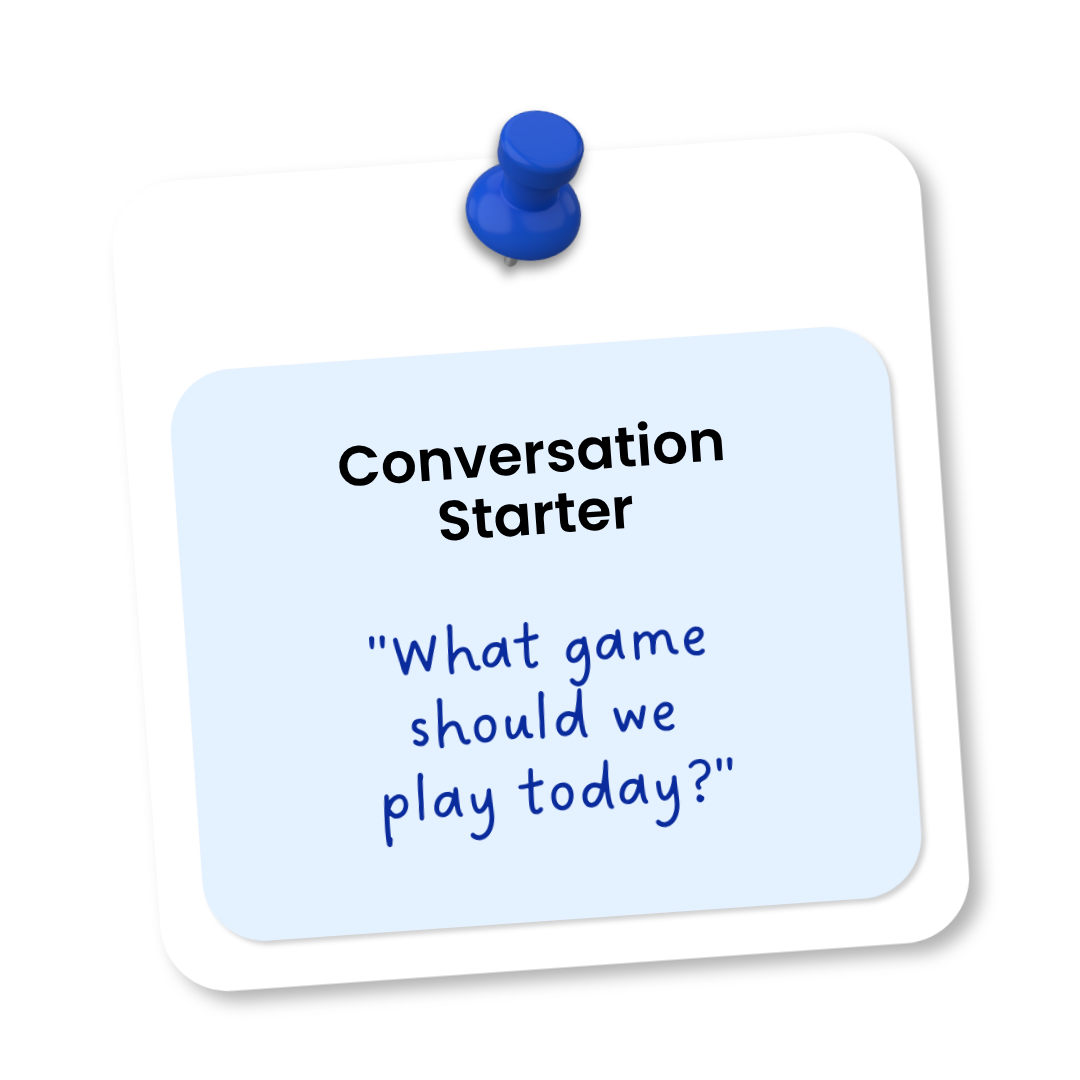
Role-play different scenarios with your child. Take turns being the one who starts the conversation. Keep it light and fun.

-
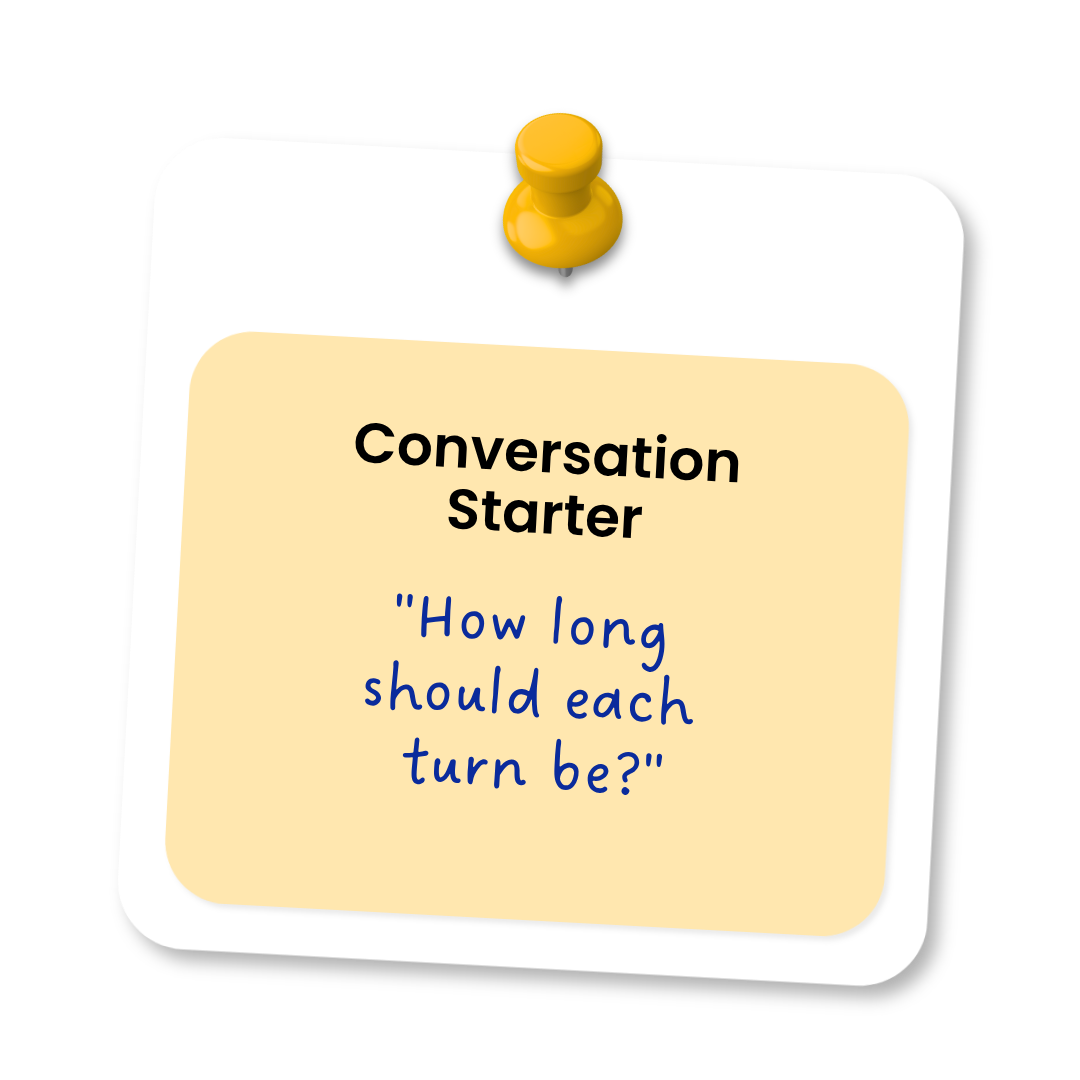
⦿ Create a simple mini-schedule before starting a play session.
⦿ Each child gets to choose a game or an activity they want to do. It can be a board game, playing with puppets, dramatic play, or another activity.
Decide what happens during the play. If its a board game or card game, your child just needs to follow the rules. If it’s imaginary play, your child might need to know what happens during imaginary play. Their playmate can help by explaining.
Decide who goes first and who goes second.
Decide for how long each child gets to play their preferred activity. Call out the time when they have to switch activities
Teach your child and your child’s playmate to set up the next round of play .
⦿ Review the schedule together so your child knows what to expect.
⦿ Use this structure to reduce anxiety, to support impulse control, and to remind each child about what they agreed upon at the beginning of their activity. .
⦿ Encourage independence by helping your child follow the plan without needing constant reminders.
Conversation Starters For You and Your Child
OBJECTIVE #4
Using Mini-Schedules During Play
A mini-schedule gives your child a clear, visual plan for playtime, so they know what to expect and when.
-
Use a mini-schedule before every play session at home. Let your child help build it. Ownership makes it easier to follow.
-
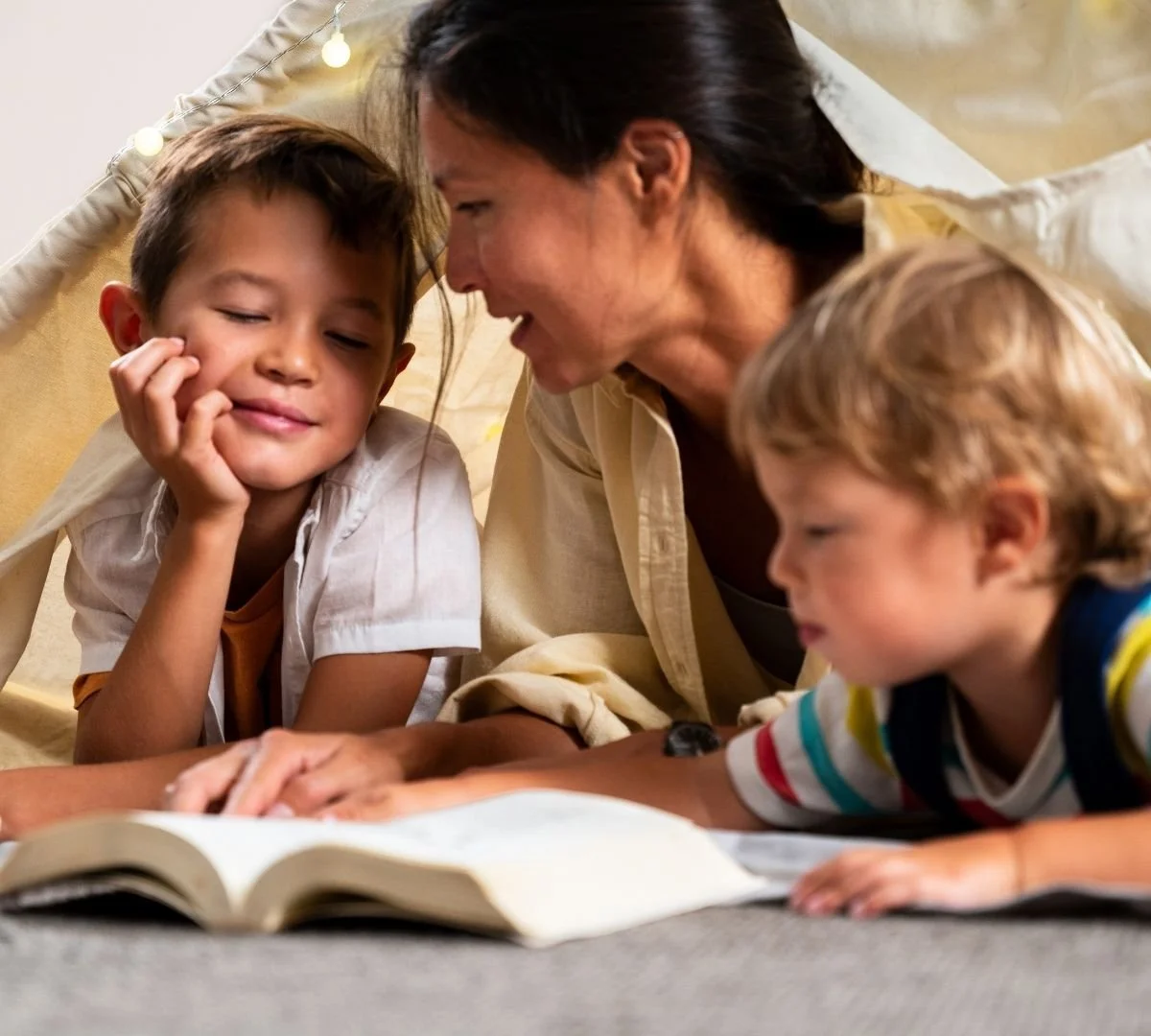
Prepare the schedule together ahead of time. Keep it short. Use pictures if you can. If you can,. use photos of your child’s own toys and their play mate’s toys. Show them turn-taking, sharing, and time intervals using a schedule with pictures.
Erik’s Choice ★
For objective #4
Build the schedule with your child, not for them. When they help write the plan, they are far more likely to follow it. - Erik

-
⦿ Start with one friend at a time in a familiar, comfortable setting like your home.
⦿ Focus only on the skills already taught—sharing, taking turns, and following rules.
⦿ Avoid introducing too many new skills at once; keep it simple and manageable.
⦿ Remember that your relationship with your child is the foundation for practicing these skills.
⦿ Reinforce that if they can use these skills with you, they can use them with others.
⦿ Before the playdate, inform the friend or their parent that your child is practicing these skills and may need gentle reminders.
⦿ Give both children simple phrases to use, such as: “Don’t forget to share and take turns!”
For older children, a play date can be to watch a movie together in your home. Have a snack after that. End the activity after an hour or so.
With practice, you can introduce board games or card games or focus on conversations. Keep it short, then build up for longer activities. After a while, you can do an activity outside your home.
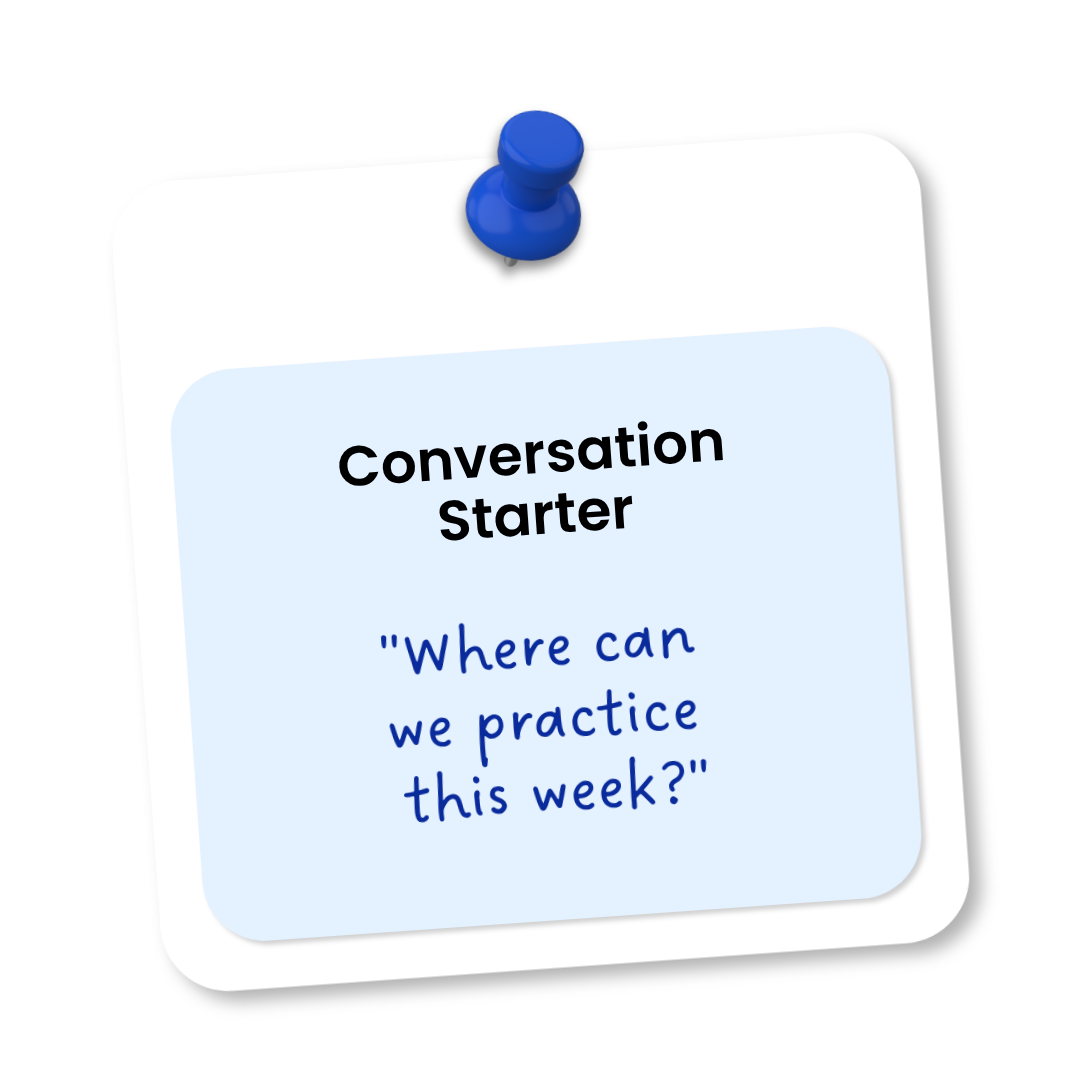
Conversation Starters For You and Your Child
OBJECTIVE #5
Practice Social Skills
Start small. Start at home. Build your child’s confidence in a familiar place and with familiar peers.
Erik’s Choice ★
For objective #5
Tell the other parent in advance. A brief conversation before the playdate prevents most problems before they start. - Erik
-
Practice with one familiar friend. Use the mini-schedule and the phrases from Objective #3. Afterwards, talk about what went well.
-
Debrief with your child after each play session—what went well, what was hard. Keep it positive and focus on progress, not perfection.

-
⦿ Help your child understand that rules stay the same everywhere.
⦿ Sharing, taking turns, and following rules apply everywhere—at school, the park, or a friend’s house.
⦿ Introduce new settings gradually. It’s harder to remember rules when you’re at an exciting place or a noisy place.
⦿ Encourage your child to use simple reminder phrases if there’s a problem.
⦿ Let them say things like: “Remember to share and take turns” and “Remember to follow the rules.” Let your child know that their playmate might use the same phrases if needed.
Let your child’s playmate know that they can be your child’s teacher- by using the same phrases.
⦿ Give your child ownership by allowing them to use these reminders independently. If they forget to use the phrases, you can ask them: What phrase can you use? Did you tell your friend what you need them to do?
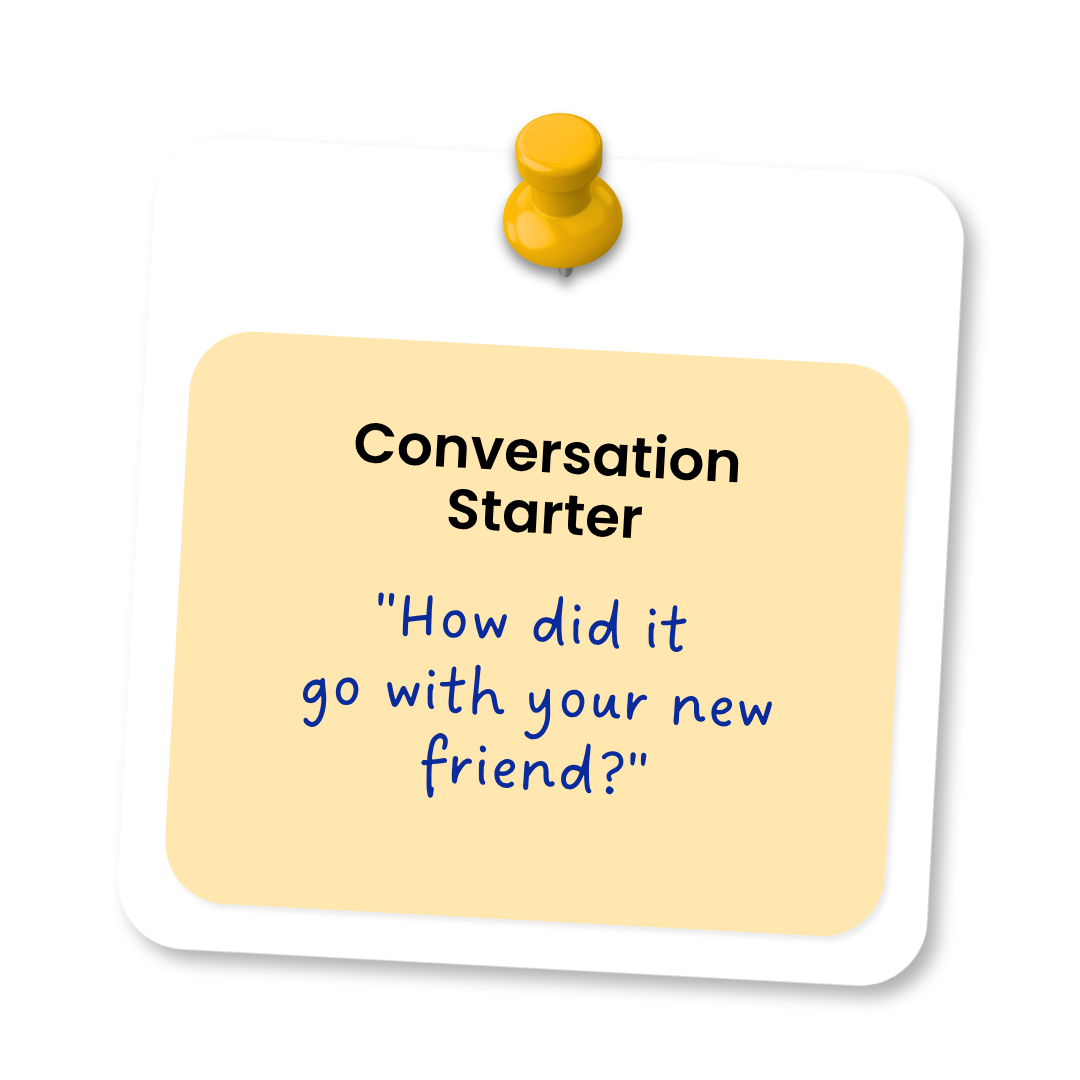
Conversation Starters For You and Your Child
OBJECTIVE #6
Practice Social Skills Everywhere
Once your child is confident at home, think of other options. Practice social skills outside the home. Practice with new friends and new places.
-
Try using your skills with someone new: a classmate, a neighbor, or a child at the park. Use the same phrases and the same rules from home.
-
Help your child make new friends by keeping things relaxed. Try a quick trip to the playground, joining a fun group activity, or signing up for a community class.
Erik’s Choice ★
For objective #6
Teach your child to say the reminder themselves, not just hear it. When they can tell a friend, “Remember to share and take turns,” the rule has become theirs. - Erik


-
⦿ Teach your child to express what they enjoy about their friendships.
⦿ Encourage kind phrases like “I like playing with you” or “I like it when we share.”
⦿ Help them show interest in others by asking about their favorite games or activities.
⦿ Help your child to manage their emotions during play, especially when they feel frustrated. Help them to use the right words to show their feelings.
⦿ Remind them that a friend is still a friend, even when there are upsets. Your child might need to share about their emotions if they are too intense.
⦿ Practice phrases like: “I sometimes get frustrated, but I still want to be your friend.”
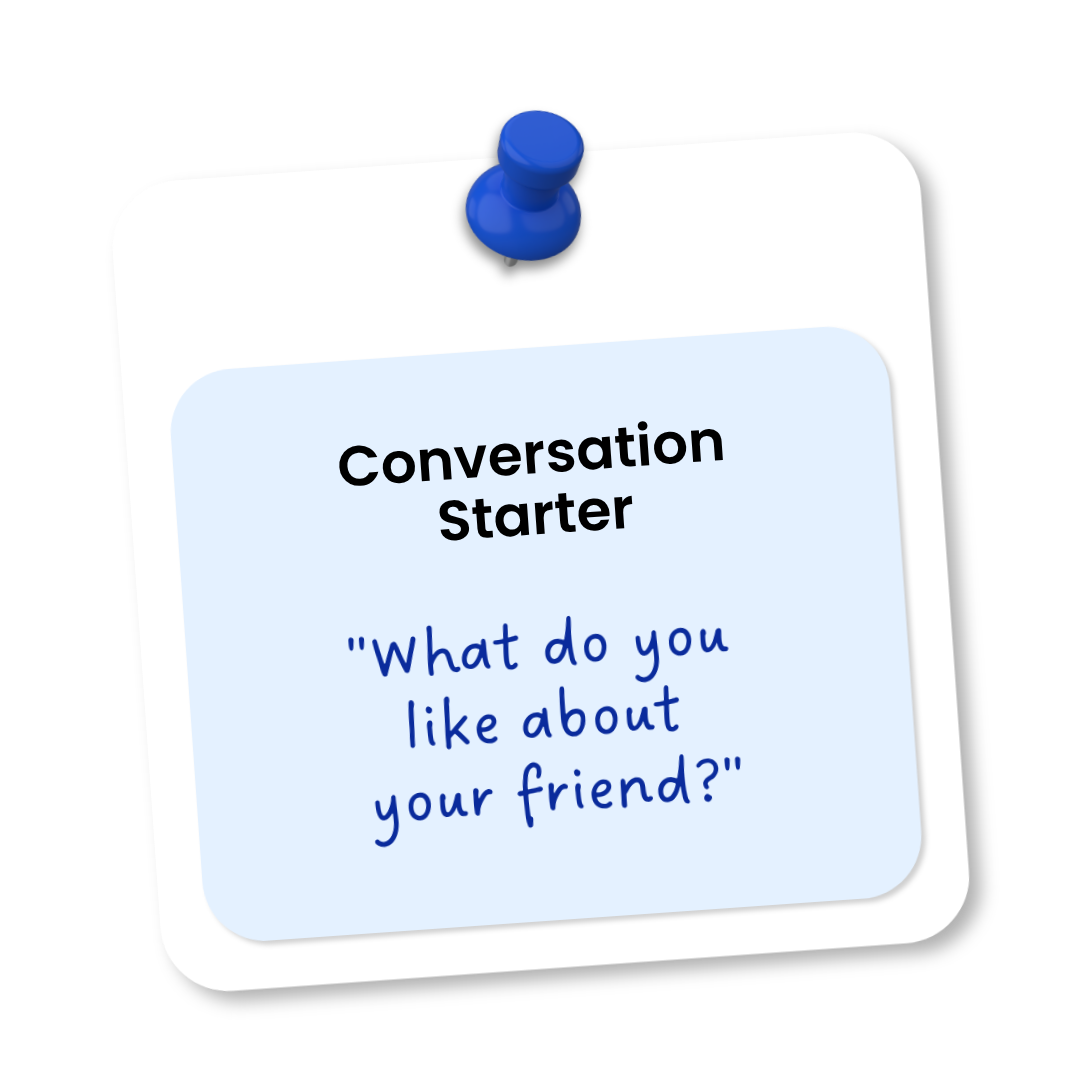
Conversation Starters For You and Your Child
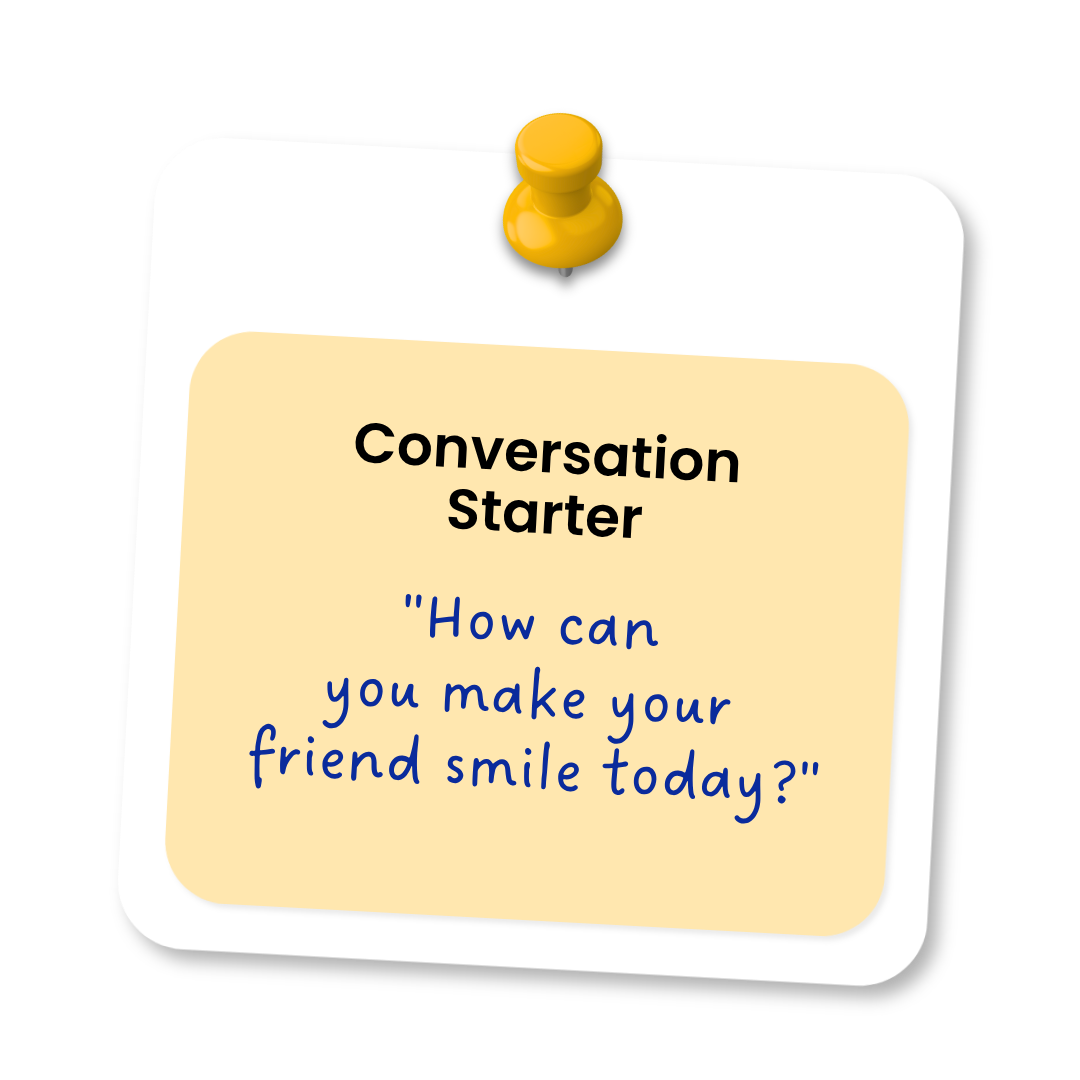
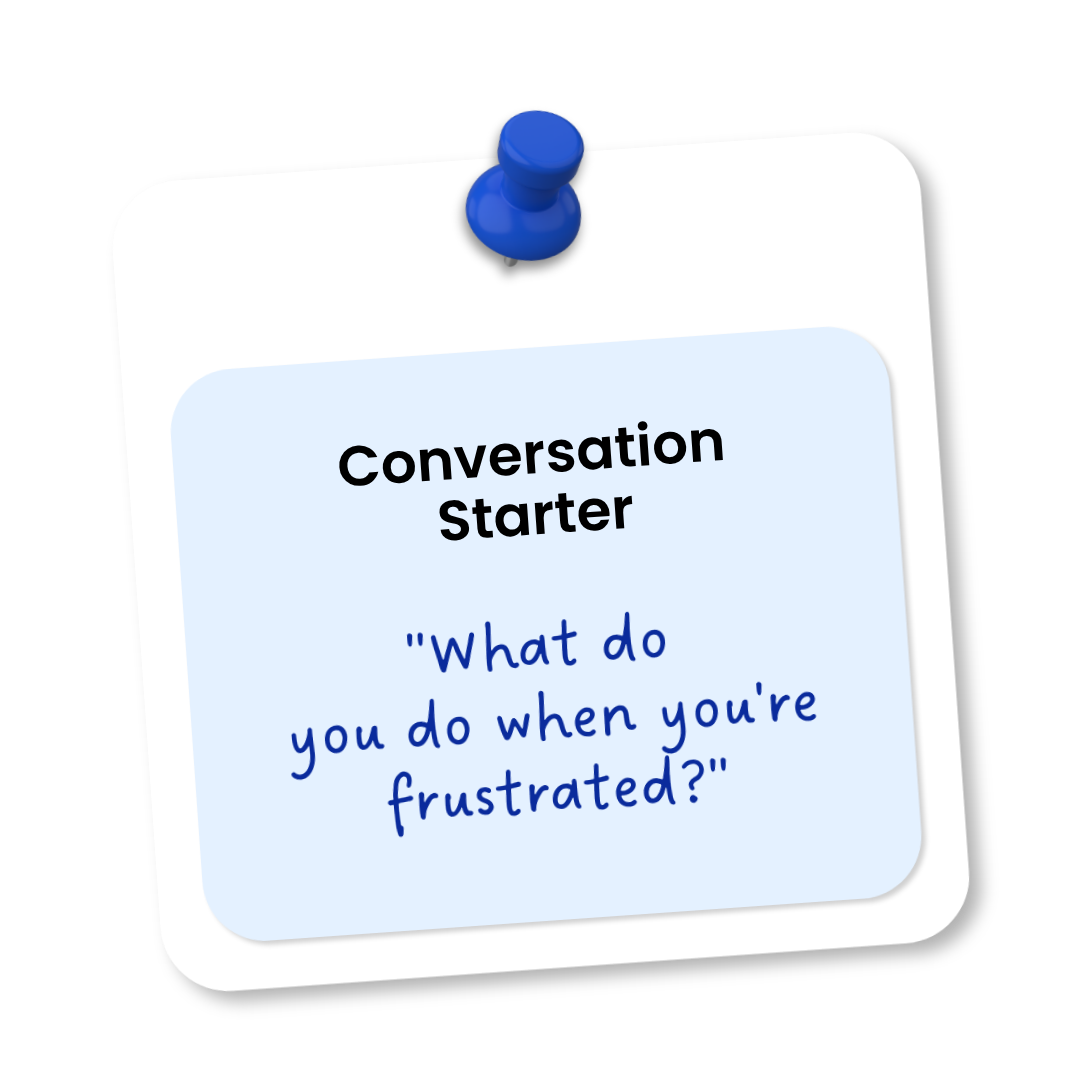
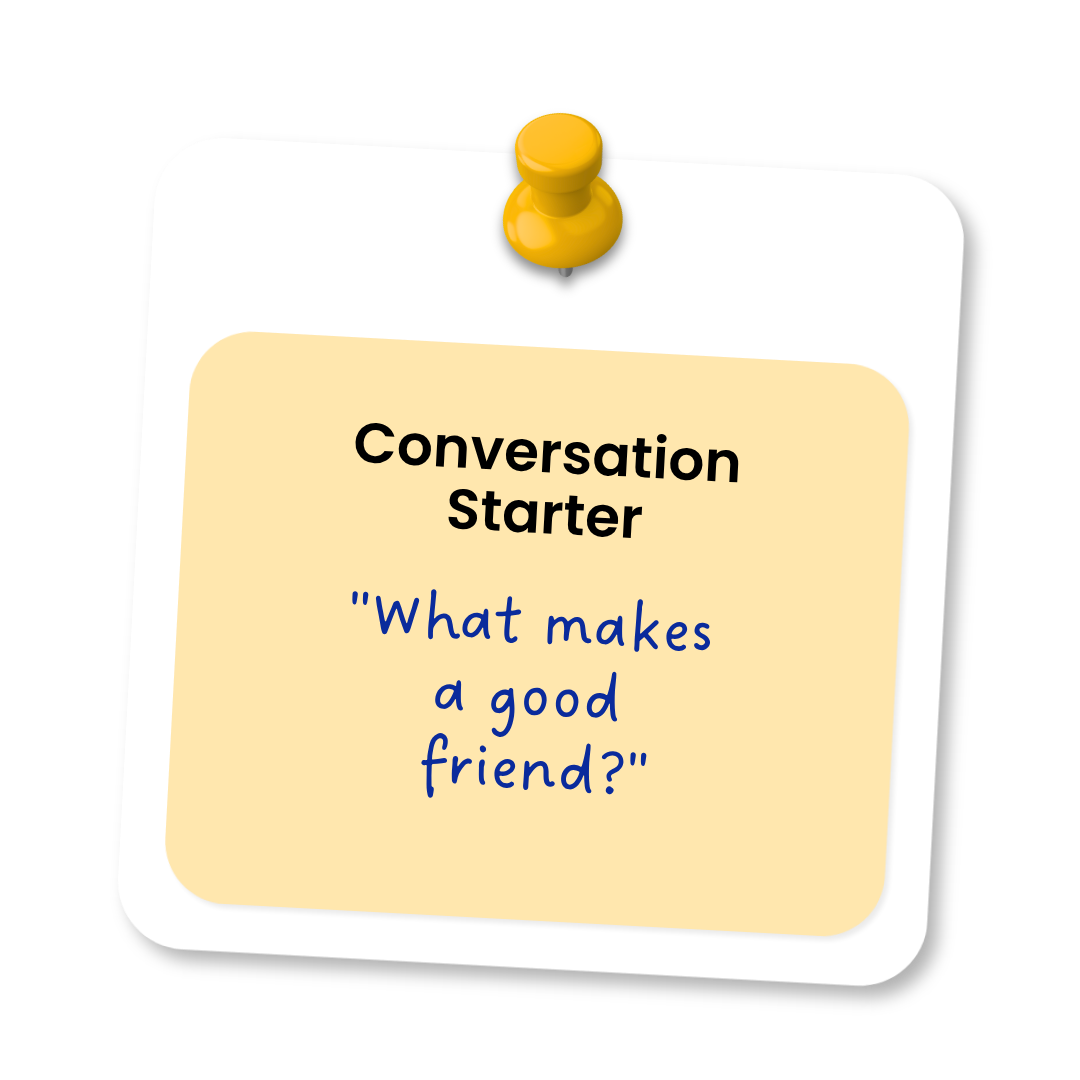
OBJECTIVE #7
Teaching About Friendships
Help your child understand what it means to be a true friend. A friend shares ideas and emotions. A friend can make you feel happy. Sometimes, a friend can hurt your feelings even if they did not want to. A true friend always has a kind word to share if you’re feeling frustrated or sad.
Erik’s Choice ★
For objective #7
Practice the emotion phrase at home before your child needs it. A child who has already said “I still want to be your friend” once will find it much more easily in the moment. - Erik
-
This week, say one kind thing to a friend during or after playtime. Practice the phrase: “I like playing with you.”
-
Talk with your child about their friendships regularly—not only when something goes wrong. Celebrate moments when they show kindness or handle frustration well.
Talk to an Expert
These suggestions work well for most children, but every child is different. Check with your child's doctor to make sure the advice fits your family. If things get hard, reach out. You do not have to do this alone.